
Sucre
Bolivia · 7 places
Photo: Wikimedia Commons, CC BY-SA 2.0
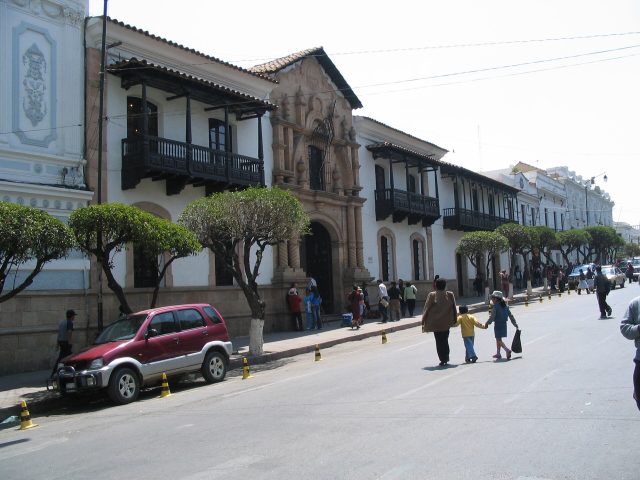
Sucre feels like a place where time has paused, gently holding onto the quiet charm of another era. Unlike the bustling capitals of South America, it moves at its own unhurried pace, its whitewashed buildings with terracotta roofs and cobblestone streets softened by greenery inviting you to slow down. There are no towering skyscrapers here, no frantic energy—just the steady rhythm of a city that has carried the same cadence since the 16th century, when Spanish conquistadors first laid its foundations.
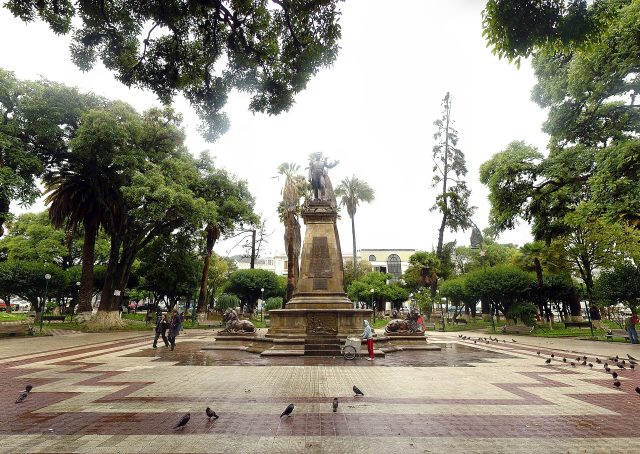
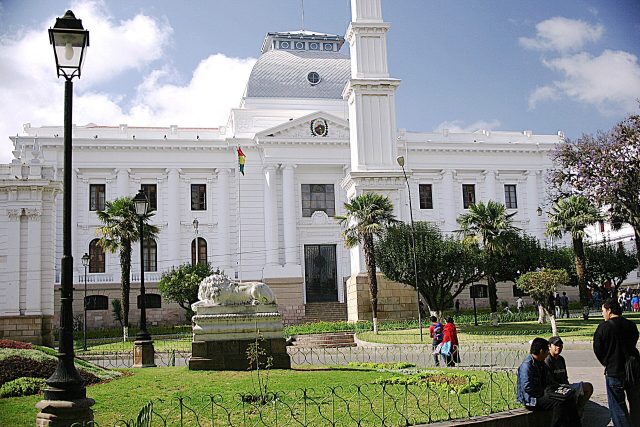
The city’s nickname, *La Ciudad Blanca*—the White City—is no exaggeration. Its historic center, a UNESCO World Heritage site, is a living postcard of colonial architecture. Houses with intricately carved balconies, wrought-iron lanterns, and wooden latticework line the streets, their details so precise they could have been lifted from an old engraving. The heart of it all is Plaza 25 de Mayo, framed by grand palaces and cathedrals, where locals and visitors gather as evening falls. At its center stands a statue of Antonio José de Sucre, the city’s namesake, surrounded by cafés serving Bolivian staples like *salteñas*—savory pastries stuffed with meat and vegetables—or *silençio*, a hearty corn and beef soup.
Beyond its architecture, Sucre is a city of students and ideas. The Universidad Mayor Real y Pontificia de San Francisco Xavier, founded in 1624, is one of Bolivia’s oldest universities, and its presence gives the city a youthful pulse. By day, students fill lecture halls and libraries; by night, they spill into bars and plazas, debating everything from politics to philosophy. This energy keeps Sucre from feeling like an open-air museum—it’s a place with a heartbeat, even if it’s a quieter one than in La Paz or Santa Cruz.
The surrounding mountains shape the city’s character as much as its history. On clear days, the hills offer sweeping views of Andean valleys and distant peaks, while the slopes themselves are dotted with towering cacti and traces of pre-Columbian settlements. Nearby, the town of Tarabuco draws visitors with its traditional markets, where artisans still weave textiles by hand and craft pottery using centuries-old techniques. These outings feel less like tourist stops and more like glimpses into a way of life that has endured.
Despite being Bolivia’s constitutional capital, Sucre doesn’t carry the weight of political frenzy. There are no grand rallies or constant headlines—just the quiet hum of daily life, as unhurried as the Pilcomayo River flowing nearby. That might be why travelers who’ve grown weary of crowded destinations find themselves drawn here. There are no throngs of tourists like at Machu Picchu or Lake Titicaca, just the unfiltered warmth of a city that remains, above all, itself—unassuming, welcoming, and just a little mysterious.
See & Do
6 places
Places on the map
Marker colour follows the categoryClimate and weather
Detailed weather: Sucre- Average temperature
- 15 °C
- Precipitation per year
- 600 mm
Average air temperature
°C
15
15
15
15
13
13
12
13
15
16
16
16
Jan
Feb
Mar
Apr
May
Jun
Jul
Aug
Sep
Oct
Nov
Dec


