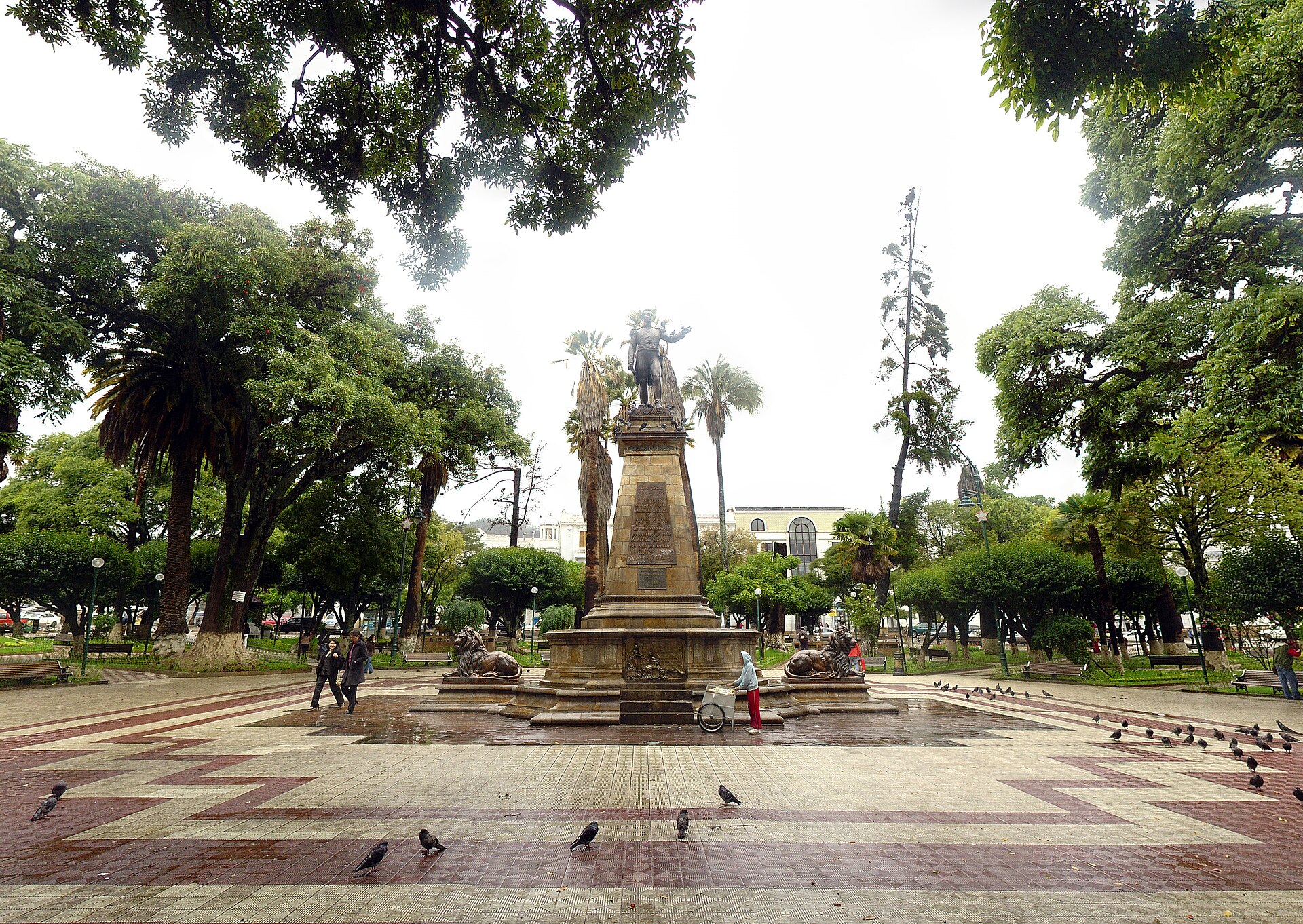
Plaza 25 de Mayo sits at the heart of Sucre, a city that wears its history like a well-loved coat. This isn’t just another town square—it’s where Bolivia’s past and present intersect in quiet, unassuming ways. The name itself marks a turning point: May 25, 1809, when the city, then called Chuquisaca, became one of the first in South America to rise against Spanish rule. That spirit of defiance lingers in the air, though today it’s more likely to be felt in the easy conversations of students or the laughter of children chasing pigeons than in grand declarations.
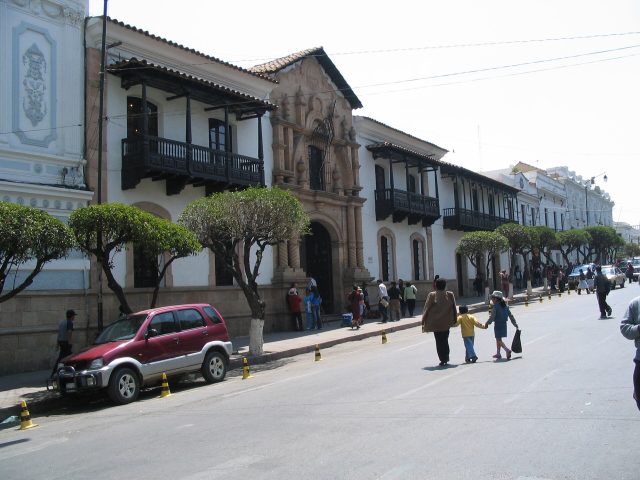
The square’s architecture tells its own story, layer by layer. The buildings framing the plaza are classic colonial—whitewashed facades, wooden balconies with intricate ironwork, and heavy wooden doors that have seen generations come and go. The Government Palace stands out with its imposing columns and carved coat of arms, a reminder of the time when Sucre was Bolivia’s capital and decisions made here shaped the nation. Nearby, the Cathedral’s twin towers rise above the rooftops, its interior holding relics that span centuries. But the real charm isn’t in the individual buildings; it’s in how they come together, creating a space that feels both grand and intimate.
What makes Plaza 25 de Mayo different from other historic squares is how effortlessly it blends into daily life. Mornings start with vendors setting up stalls, their baskets overflowing with mangoes, oranges, and bunches of local flowers. By midday, the plaza fills with university students from nearby San Francisco Xavier, their backpacks slung over chairs as they debate politics or philosophy over tiny cups of strong coffee. In the evenings, families take over—parents pushing strollers, teenagers meeting up, older couples strolling arm in arm. There’s no sense of performance here, no pressure to be anything other than what it is: a place where people live.
The square has always been a stage for Sucre’s public life. In the 19th century, it was where Bolivia’s first constitutional assembly met, where decrees were read aloud to crowds gathered in the open air. Even now, if you sit on one of the benches long enough, you might hear snippets of conversation about the latest political scandal or a local festival. The plaza doesn’t just commemorate history—it’s still part of it. On national holidays, like Independence Day, the square transforms, draped in flags and lights, with music spilling from speakers and food stalls serving salteñas and api. But even then, it never feels like a spectacle. The celebrations are for the people who live here, not for tourists.
The buildings around the plaza have their own personalities. Some were once the homes of wealthy families, their facades adorned with elaborate carvings and family crests. Today, a few house museums, while others remain private residences, their balconies draped with laundry or potted plants. This mix of public and private gives the square a lived-in feel. You might see a shopkeeper sweeping the sidewalk in front of his store, or a group of friends sharing a bottle of singani on the steps of the cathedral. It’s this everydayness that makes Plaza 25 de Mayo feel real in a way that polished tourist sites often don’t.
There’s a rhythm to the square that’s easy to fall into. In the late afternoon, when the sun slants low and the light turns golden, the facades of the buildings seem to glow. The sound of water from the central fountain mixes with the chatter of people and the occasional strum of a guitar. If you’re lucky, you might catch a street musician playing a charango, its bright, tinny notes cutting through the hum of the city. It’s the kind of place where you can lose track of time, watching the shadows lengthen and the lights come on one by one.
In recent years, the plaza has become a hub for cultural events that draw people from across Bolivia. Art exhibitions spill out of galleries onto the sidewalks, while book fairs turn the square into an open-air library. The most memorable moments, though, are the spontaneous ones—a group of dancers in traditional polleras performing to the beat of a drum, or a protest march winding its way through the streets, banners held high. These events remind you that Sucre isn’t just a relic of the past. It’s a city where indigenous traditions, colonial history, and modern life coexist, sometimes uneasily, but always vividly.
What stays with you about Plaza 25 de Mayo isn’t the architecture or the monuments, though they’re impressive. It’s the sense that this is a place where things happen—not in a dramatic, headline-grabbing way, but in the small, meaningful ways that shape a city. A couple meets for the first time on a bench. A child takes their first steps on the cobblestones. A protest begins with a single voice raised in song. The square doesn’t demand your attention; it earns it, quietly, over time. And if you let it, it will show you not just the history of Sucre, but the soul of it.