La Recoleta Monastery in Sucre is one of those rare places where time seems to slow down, allowing you to step into a quieter, more deliberate world. Perched on a hill overlooking the city, it was built in the late 17th century by Franciscan monks, its thick white stone walls and heavy wooden doors standing as silent witnesses to centuries of history. The architecture blends the austerity of colonial design with subtle local influences—courtyards shaded by greenery, arched walkways, and a sense of stillness that lingers in every corner. Unlike many historic sites that feel like relics behind glass, La Recoleta retains a lived-in warmth, as if the monks might return at any moment to resume their prayers.
The site wasn’t always a monastery. Originally, it served as a fortress, a strategic point to defend the city from attacks. When the threats of war faded, the Franciscans transformed the structure into a spiritual and educational hub. Here, they taught local communities not just theology, but practical skills—medicine, agriculture, and crafts that helped shape the region. The central courtyard, with its fountain and orange trees, still feels like a place of reflection, much as it did when the monks first planted the grove. The air carries the scent of citrus, and the sound of water trickling into the basin makes it easy to imagine the quiet conversations that once took place under these same trees.
Today, the monastery welcomes visitors, offering a glimpse into colonial life without the crowds that often gather at more famous landmarks. The small museum inside holds artifacts that tell the story of the Franciscans in Bolivia—ancient religious texts, intricately carved wooden altarpieces, and paintings that merge European techniques with Andean motifs. Some of the frescoes date back to the monastery’s founding, their colors still vibrant, as if the artists had just stepped away. The collection isn’t vast, but it feels intimate, like flipping through a family album rather than touring a grand exhibit.
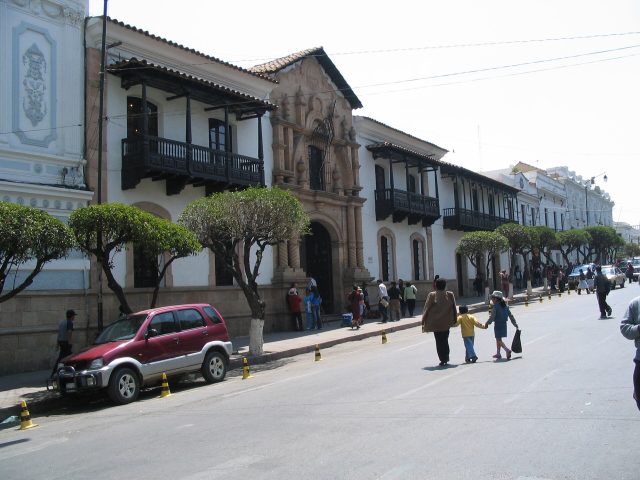
From the monastery’s terrace, Sucre unfolds below in a patchwork of whitewashed buildings and red-tiled roofs. The city, often called Bolivia’s most beautiful, has a way of making history feel tangible. The narrow streets lead toward the central plaza, where the cathedral and government buildings stand as reminders of Sucre’s past as the nation’s capital. But up here, away from the bustle, the view is different—quieter, more expansive. You can see how the city has grown over the centuries, yet somehow retained its colonial charm. The rule that all buildings in the historic center must be painted white wasn’t just about aesthetics; it was a way of preserving a sense of unity, a visual harmony that still holds today.
La Recoleta wasn’t just a religious retreat. During Bolivia’s wars for independence, it served as a hospital for the wounded, and later, as a meeting place for political leaders shaping the country’s future. Some of the most critical decisions of that era were made within these walls, and the monastery’s exhibits include documents from the time—letters, decrees, and records of debates that would alter the course of history. It’s a reminder that places like this weren’t just passive observers of change; they were active participants, their stones absorbing the weight of the events unfolding around them.
Inside, the monastery’s simplicity is striking. The chapel’s main altar is adorned with gilded carvings, and the walls are painted with scenes from the lives of saints, but there’s none of the opulence you might find in European cathedrals. The Franciscans valued modesty, and that ethos is evident in every detail—the unadorned wooden pews, the plain stone floors, even the library, where rare books are kept not as trophies, but as tools for learning. The space feels lived-in, not staged, as if the monks had just stepped out for a moment and might return to their studies.
Visiting La Recoleta is also a chance to see how Sucre has evolved while staying true to its roots. From the hill, you can trace the city’s expansion—the way the white buildings spill down the slopes, the way the newer neighborhoods blend into the older ones without disrupting the rhythm. The monastery itself has changed little, a quiet constant in a city that has seen revolutions, economic booms, and quiet, everyday lives. It’s a place where you can sit on a bench in the courtyard, listen to the rustle of orange leaves, and feel the weight of centuries pressing gently against your shoulders.
If you find yourself in Sucre, don’t rush straight to the main square or the museums. Take the time to climb the hill to La Recoleta. Wander the corridors, run your fingers along the worn stone, and let the silence settle around you. This isn’t a place that demands attention; it doesn’t need to. It simply exists, a bridge between past and present, offering a moment of stillness in a world that moves too fast. The monks are long gone, but their presence lingers—not in grand gestures, but in the quiet certainty that some things endure.