Beirut
Lebanon · 9 places
Photo: Wikimedia Commons, CC BY-SA 3.0
Beirut is the kind of city that lingers in your mind long after you’ve left. It exists at the crossroads of time and culture, where the easygoing charm of the Mediterranean collides with the intensity of the Middle East. Here, crumbling facades stand beside gleaming skyscrapers, and the past feels as present as the honking traffic jams that stretch for miles. The city doesn’t bother with pretense—it simply is, with all its scars, its chaos, and its people who smile through it all. You can spend hours in a seaside café watching the sun dip behind the Lebanese mountains or lose yourself in the labyrinth of the old city, where every stone whispers stories of Phoenicians, Romans, Ottomans, and French colonists.
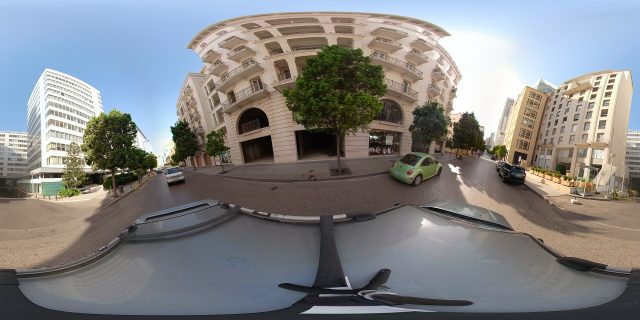
The heart of Beirut beats in Hamra, a district that was once the gathering place of intellectuals and now pulses with student life. Narrow streets are packed with bookshops, art galleries, and cafés where the scent of freshly brewed coffee mingles with warm mana’eesh straight from the oven. Amid the hustle, you’ll stumble upon remnants of the city’s former grandeur—colonial-era villas that somehow survived the war, their faded elegance a quiet testament to Beirut’s layered history. Yet the city isn’t stuck in the past. Just beyond Hamra, modern office towers rise, and the port buzzes with yachts, a reminder that Beirut has always been a gateway between East and West.
Corniche, the city’s waterfront promenade, is where Beirut reveals itself in all its raw beauty. Mornings bring joggers and families strolling with children, while afternoons see tourists posing in front of the Pigeon Rocks, the iconic sea stacks that jut from the water like giant mushrooms. By evening, the promenade transforms into an open-air stage, where the sounds of the oud and rhythmic darbuka draw crowds of locals. The sea here isn’t always gentle—winter waves crash against the railing with such force that spray reaches the pavement—but that’s part of what makes Corniche feel alive, unpredictable. Walk a little farther, and you’ll reach Zaitunay Bay, where the beaches still carry the spirit of old Beirut, when the city was the summer capital of the Arab world.
But Beirut is more than just its sea and cafés. It’s a city of contrasts, where luxury neighborhoods brush up against crowded slums, and mosques stand shoulder to shoulder with churches, as if to prove that coexistence has always been possible here. In Badaro, you can wander through leafy streets and suddenly come across Roman columns poking out of the ground, a reminder of just how old this city is. Meanwhile, in Bourj Hammoud, the Armenian quarter, life moves to its own rhythm—people speak a different language, cook different food, and time seems to slow just a little. Beirut doesn’t try to be one thing. It simply absorbs everyone who passes through.
The city doesn’t tolerate indifference. It can exhaust you with its noise, its chaos, its relentless energy, but if you look closely, you’ll see something deeper beneath the surface. Beirutis love their city, flaws and all, and that love is contagious. There’s never a dull moment here—whether because the power might cut out without warning or because the restaurant next door suddenly turns into an impromptu dance floor under the stars. Beirut isn’t for those seeking a perfect getaway. It’s for those willing to take it as it is. And that’s why people keep coming back.
See & Do
8 places




Places on the map
Marker colour follows the categoryClimate and weather
Detailed weather: Beirut- Average temperature
- 22 °C
- Precipitation per year
- 613 mm
Average air temperature
°C
15
15
17
20
23
26
28
29
28
25
21
17
Jan
Feb
Mar
Apr
May
Jun
Jul
Aug
Sep
Oct
Nov
Dec