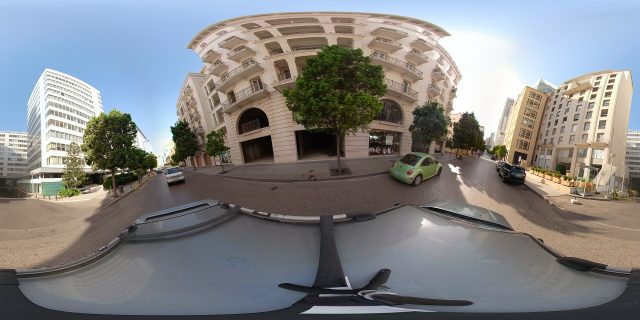
The Sursock Museum feels like a quiet pause in the middle of Beirut, a place where the city’s relentless energy softens into something more deliberate. Tucked away in Ashrafieh, the historic Christian quarter, the museum occupies a mansion that is as much a work of art as the pieces it houses. Built in the late 19th century, the building blends Ottoman elegance with Venetian flourishes and local craftsmanship. Its white façade, adorned with intricate balconies, gives way to grand interiors where marble floors stretch beneath soaring ceilings. The architecture itself tells a story—of wealth, taste, and the layered history of a city that has always been a crossroads of cultures.
The museum owes its existence to Nicolas Sursock, a member of one of Lebanon’s most prominent families. More than just a collector, Sursock was a patron who understood the importance of preserving the country’s artistic legacy. When he died in 1952, he left the mansion and its treasures to the city, and in 1961, it opened as a museum. Over the decades, the collection has grown through donations and acquisitions, evolving into one of the most significant repositories of modern and classical art in the Middle East. It’s a place where the past isn’t just displayed but given room to breathe.
The permanent collection spans Lebanese, Arab, and European artists, with works that range from the delicate to the bold. Paintings by Lebanese masters like Habib Srour share space with pieces by Salvador Dalí and Pablo Picasso, creating a dialogue between local and international art. The 20th-century Lebanese works are particularly striking, capturing the country’s turbulent history—from Ottoman rule to independence and the civil war. But the museum isn’t just about paintings. Ceramics, textiles, and decorative arts fill the galleries, each piece offering a glimpse into the region’s cultural richness.
What makes the Sursock Museum special is how seamlessly the building and its contents merge. The mansion is a masterpiece in its own right, with details that reward close attention. Courtyards with trickling fountains, stained-glass windows casting colored light, and ceilings adorned with intricate plasterwork all contribute to an atmosphere that feels both grand and intimate. The recent restoration preserved the building’s original splendor while ensuring it remained a living space, not a relic. In summer, the thick walls keep the heat at bay; in winter, the soft glow of filtered light makes the interiors feel warm and inviting.
Beyond its permanent collection, the museum is a hub for temporary exhibitions that showcase everything from classical art to contemporary experiments. These shows often highlight emerging Lebanese artists, as well as international projects that foster cultural exchange. Many exhibitions are accompanied by talks, workshops, and artist meet-ups, turning a visit into something more than just a passive experience. The museum has a way of making art feel immediate, as if the works on display are part of an ongoing conversation rather than distant relics.
The museum’s garden is one of its best-kept secrets—a walled oasis where the noise of Beirut fades into the background. It’s a place where visitors can sit under the shade of trees, surrounded by the quiet hum of the city beyond. The garden often hosts classical music concerts and poetry readings, events that draw a mix of locals and visitors. In a city that has seen its share of hardship, the Sursock Museum has become a symbol of resilience, a reminder that art and culture endure even in difficult times.
Walking through the museum is like stepping into a different Beirut—one where history isn’t just remembered but lived. The building itself is a testament to the city’s layered identity, where Ottoman influences meet French colonial touches, and Arab traditions blend with modern sensibilities. It’s not a museum in the traditional sense; it feels more like a home where art is part of the everyday. The Sursock Museum doesn’t just display Lebanon’s past; it invites you to be part of it, if only for a little while.