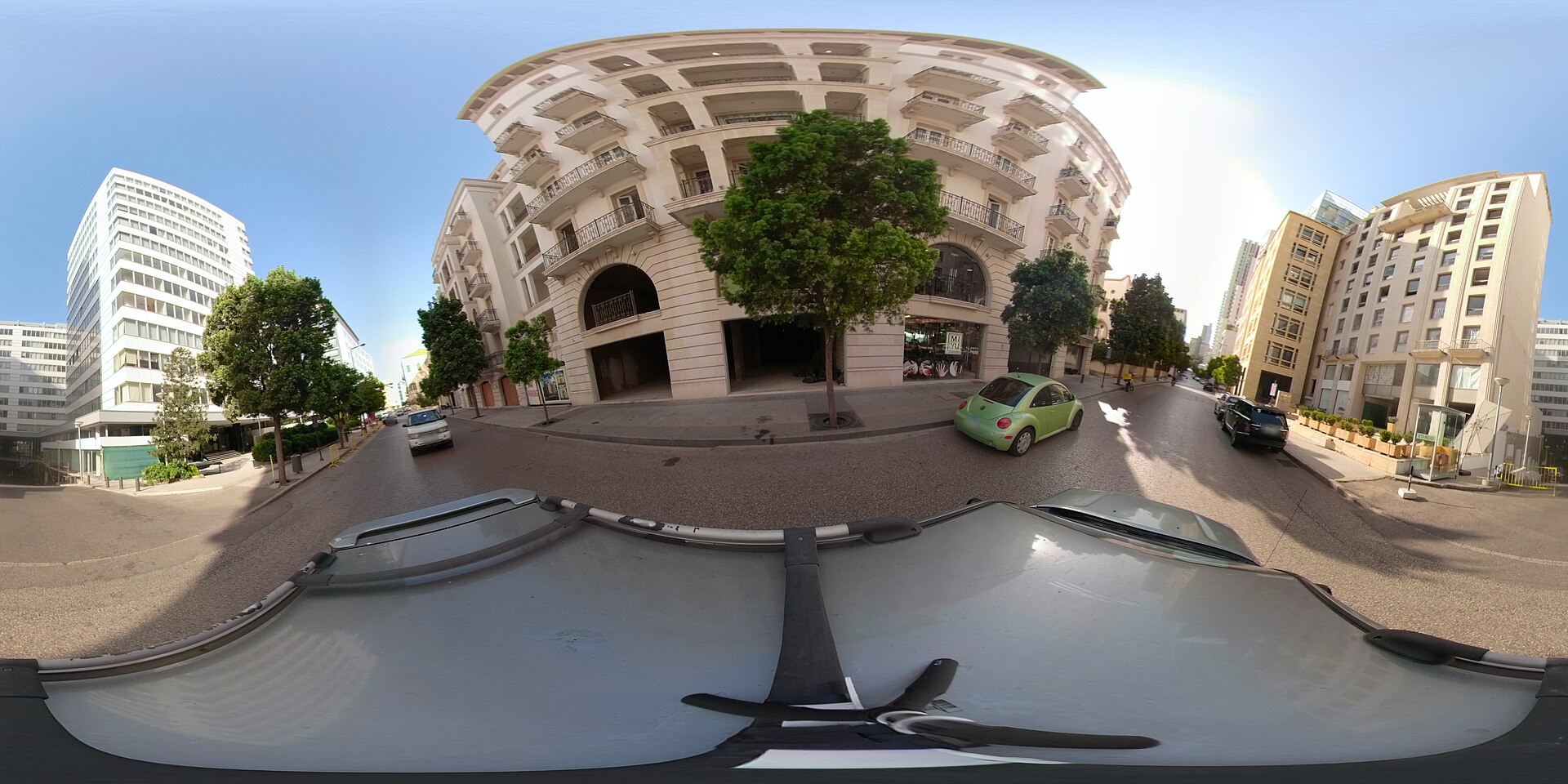
Wadi Abu Jamil sits quietly in the heart of Beirut, a neighborhood where the past lingers in the cracks of old stone and the slow rhythm of daily life. Unlike the city’s bustling commercial districts or the polished corniche, this place feels suspended in time, its narrow streets and weathered buildings holding stories that most visitors overlook. Once the center of Beirut’s Jewish community, it carries that history in its architecture, its empty storefronts, and the faint echoes of languages that once filled the air—Hebrew, Arabic, French—all woven into the fabric of the neighborhood.
The area took shape in the mid-19th century, when Jewish families began settling here, drawn by its proximity to the port and the city’s business hub. By the early 20th century, Wadi Abu Jamil had become a thriving quarter, home to synagogues, schools, and small shops where merchants sold everything from spices to textiles. The community was one of the most integrated in the region, and the neighborhood reflected that blend of cultures. Evenings brought gatherings in modest cafés, where conversations flowed as easily as the coffee. For decades, this was a place where different worlds coexisted, not in tension, but in the ordinary rhythms of shared life.
The architecture here tells its own story, a mix of Ottoman influences, French colonial details, and local Lebanese craftsmanship. The buildings are low, mostly two or three stories, with wrought-iron balconies and inner courtyards that offer glimpses of private life. Many still have their original wooden shutters, carved doors, and mosaic floors, though time and conflict have left their marks. Some of the grander houses, with arched windows and tiled roofs, hint at the wealth of the families who once lived here—merchants, professionals, people for whom this neighborhood was more than just a place to live. Even now, walking past these buildings, you can almost hear the sounds of children playing in the courtyards or the clatter of dishes from an open kitchen.
The most striking remnant of the neighborhood’s past is the Magen Abraham Synagogue, built in 1925. It stands as one of the few remaining Jewish places of worship in Lebanon, its white columns and Star of David still commanding attention despite years of neglect. Inside, the synagogue holds Torah scrolls, marble plaques bearing the names of congregants, and stained-glass windows that once cast colored light across the prayer hall. In recent years, restoration efforts have begun, a small but hopeful sign that this piece of history might not be lost entirely. The building is rarely used for services now, but its presence is a quiet testament to a community that was once an integral part of Beirut’s identity.
By the mid-20th century, the Jewish population of Beirut had begun to dwindle. Wars, economic instability, and shifting political landscapes pushed many to leave, and by the late 1970s, Wadi Abu Jamil was nearly empty. The civil war that followed only accelerated its decline, with the neighborhood finding itself on the front lines of conflict. Many buildings were damaged or abandoned, their facades pockmarked by bullets, their interiors left to decay. Today, the area feels like a shadow of its former self. A handful of elderly residents remain, along with a few families who stayed despite the odds. Empty apartments and boarded-up windows sit alongside homes where life still carries on, creating a strange, poignant contrast.
Walking through Wadi Abu Jamil, it’s not hard to imagine what it must have been like in its heyday. The narrow, stone-paved streets wind past old shops where merchants once sold bread, jewelry, and household goods. Some of these stores still operate, though their owners are often new, their wares a mix of the practical and the nostalgic—spices, vintage postcards, books in Arabic and French. Cafés are scarce, but if you’re lucky, you might stumble upon a small eatery serving falafel or hummus, the kind of place where regulars linger over cups of strong coffee. The absence of crowds makes it easy to notice the details—the peeling paint on a doorframe, the way sunlight slants across a courtyard, the occasional sound of a radio playing from an open window.
Yet Wadi Abu Jamil is not frozen in time. In recent years, artists and craftspeople have begun to move in, setting up small studios and galleries in the empty spaces. Their presence brings a subtle energy to the neighborhood, a sense of renewal that doesn’t erase the past but rather layers something new onto it. Murals appear on walls, some paying homage to the Jewish community that once thrived here. In one courtyard, a small garden has been planted, where herbs and flowers grow in repurposed containers. These changes are quiet, almost imperceptible at first, but they hint at a neighborhood that is slowly finding its way forward without losing sight of where it’s been.
For those who want to understand Beirut beyond its surface, Wadi Abu Jamil is essential. There are no tourist crowds here, no luxury hotels or trendy restaurants. What you’ll find instead is a place where history isn’t just preserved in museums but lives in the very stones underfoot. It’s a neighborhood that doesn’t try to impress, that doesn’t offer grand narratives or easy answers. Instead, it invites you to slow down, to look closely, to listen. The stories here are fragmented, half-told, but that’s part of the appeal. Wadi Abu Jamil doesn’t need to shout to be heard. It simply exists, a quiet corner of Beirut where the past and present coexist in a way that feels both fragile and enduring.