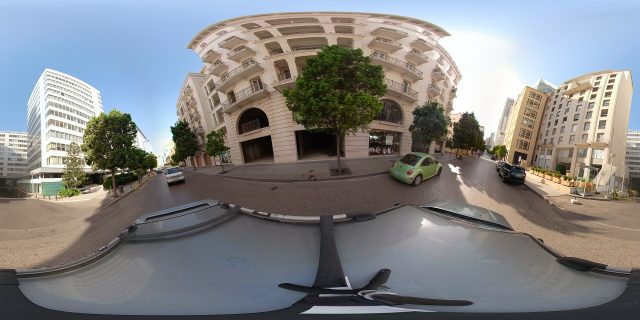
The National Museum of Beirut is one of those rare places where history doesn’t just sit behind glass—it lingers in the air, woven into the very fabric of the building. Standing at the crossroads of civilizations, the museum holds a collection that feels alive, where Phoenician sarcophagi stand near Roman mosaics and Byzantine frescoes whisper of a time when this stretch of the Mediterranean was the center of the world. Unlike sterile halls of antiquity, this museum feels more like an ongoing conversation between past and present, one that has unfolded over nearly a century.
The building itself is a piece of history. Designed by French architects Antoine Nahas and Pierre Leprince-Ringuet, it was completed in 1937, blending neoclassical elegance with local influences. The pale stone facade, tall columns, and spacious galleries bathed in natural light create an atmosphere where artifacts don’t feel distant or untouchable. During Lebanon’s civil war, the museum found itself on the front lines, its collection narrowly escaping destruction. Some pieces were hidden in basements, others evacuated, while the building itself stood abandoned for years, its walls pockmarked with bullet holes. Today, those scars remain, not as blemishes but as part of the museum’s own story.
The collection begins with prehistoric times, when the land that is now Lebanon was home to early hunter-gatherers. Stone tools, pottery, and jewelry unearthed in the Bekaa Valley and along the coast offer a glimpse into those distant days. But the museum’s true pride lies in its Phoenician artifacts. This was the heartland of one of antiquity’s greatest civilizations, where small city-states like Byblos, Tyre, and Sidon thrived as maritime traders, spreading their alphabet, crafts, and culture across the Mediterranean. Intricately carved sarcophagi, delicate gold jewelry, and the famous Phoenician inscriptions serve as reminders of that legacy.
The Roman and Byzantine periods are equally compelling. Beirut—then known as Berytus—was a vital hub of the Roman Empire, home to one of its most prestigious law schools. Mosaics depicting mythological scenes, statues of gods and emperors, and everyday objects like coins and tools paint a vivid picture of a bustling city. The Byzantine era is represented through frescoes, icons, and religious artifacts, reflecting Lebanon’s role as one of the first places outside Palestine where Christianity took root.
Islamic art also has its place here, with ceramics, weapons, manuscripts, and jewelry spanning the Umayyad, Abbasid, and Mamluk periods. The craftsmanship is striking, particularly in the carved wooden panels from mosques and palaces, as well as the geometric tilework that showcases the skill of local artisans. These pieces highlight Lebanon’s place within the Islamic world while preserving its distinct identity.
Beyond antiquity, the museum doesn’t shy away from more recent history. Exhibits cover the French Mandate, the civil war, and modern Lebanon, with photographs, documents, and personal items offering insight into the country’s turbulent past. Some of the most moving displays focus on everyday life—old postcards, tram tickets, school notebooks—small relics that make history feel immediate and personal.
Visiting the National Museum is less about ticking off exhibits and more about stepping into the soul of Beirut. The city has been called the Paris of the Middle East, but that label barely scratches the surface. Beirut is a place where cultures, religions, and traditions have intertwined for millennia, and the museum captures that complexity. Walking through its halls, you can’t help but wonder about the countless lives that have passed through these rooms, the stories left untold.
More than just a repository of artifacts, the National Museum of Beirut is a symbol of resilience. It has survived war, neglect, and time, yet its mission remains unchanged: to remind people of their roots and to show how culture can bridge even the deepest divides. There’s no grandiosity here, just a quiet reverence for the past. That’s why it remains one of the city’s most essential places—a space where history isn’t just preserved but continues to breathe.