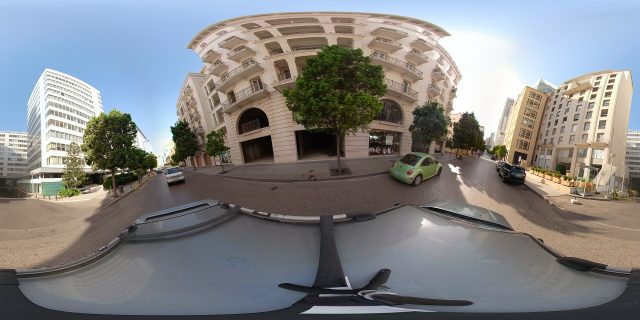
Beirut’s ancient heart beats beneath the streets of the modern city, and nowhere is that pulse stronger than at the site once known as Berytus. This was no ordinary settlement—it was the seed from which Beirut grew, a place where civilizations layered themselves like sediment over thousands of years. Today, the ruins of Berytus lie exposed in the city center, a quiet counterpoint to the bustle of contemporary life. Here, the past isn’t just remembered; it’s still present, in the worn stones of a Roman forum, the fragments of Byzantine mosaics, and the faint outlines of streets that once echoed with the voices of Phoenician merchants, Roman jurists, and Arab conquerors.
The name Berytus itself carries the weight of antiquity. It comes from the Phoenician word for "well" or "source," a fitting origin for a city that rose along the Mediterranean coast. The Phoenicians, those master navigators and traders of the ancient world, founded the settlement around the 15th century BCE, drawn by the natural harbor and the fertile land nearby. For them, this was more than just a stopping point—it was a strategic hub, a place where goods from the East met those from the West. Over time, Berytus flourished, its port becoming one of the most important on the eastern Mediterranean, a crossroads where cultures, languages, and ideas mingled long before the term "globalization" ever existed.
When the Romans arrived in the 1st century BCE, they didn’t just conquer Berytus—they reinvented it. Renaming it Colonia Julia Augusta Felix Berytus, they transformed the city into a jewel of the empire, a showcase of Roman engineering and culture. The streets were repaved, the harbor expanded, and grand public buildings rose where simpler structures had once stood. Among the most enduring legacies of this era was the city’s law school, one of only three in the Roman Empire. For centuries, students from across the Mediterranean flocked here to study under renowned jurists, their debates shaping the legal principles that would later influence much of the Western world. The ruins of the forum, with its towering columns, still hint at the city’s former grandeur, a reminder of a time when Berytus was not just a provincial capital but a center of learning and power.
The Byzantine period brought another shift. Christianity took root, and the city’s skyline changed as basilicas and monasteries were built. But Berytus was never destined to remain untouched by time. In the 6th century, two devastating earthquakes struck, reducing much of the city to rubble. The Byzantines tried to rebuild, but the damage was too severe. By the time the Arabs arrived in the 7th century, they found a city that had lost much of its former glory, though its strategic location ensured it would never be abandoned entirely. The ruins of this era—crumbling churches, broken mosaics—speak of a city that once thrived under the cross but was gradually reshaped by new rulers and new faiths.
Today, the remains of Berytus are scattered across downtown Beirut, a patchwork of history woven into the fabric of the modern city. Archaeologists have been uncovering its secrets for decades, each excavation revealing another layer of the past. The site is not a museum in the traditional sense; it’s more like an open wound in the city’s skin, a place where the past refuses to stay buried. Visitors can walk among the ruins of the Roman baths, trace the outlines of ancient streets, or stand in the shadow of columns that once supported a bustling forum. These stones aren’t just relics—they’re witnesses, silent but unmistakable, to the countless lives that unfolded here.
What makes Berytus particularly compelling is how seamlessly it blends with the present. The ruins aren’t cordoned off from the city’s daily life; they’re part of it. A café might sit just steps away from a 2,000-year-old wall, and the sound of traffic often drowns out the echoes of history. Yet there are moments—when the light slants just right, or when the city’s usual clamor fades—when it’s possible to imagine Berytus as it once was. The voices of merchants haggling in the marketplace, the murmur of students in the law school, the chanting of monks in a Byzantine church—all of it lingers, just beneath the surface.
Berytus is also a testament to resilience. Beirut has been destroyed and rebuilt so many times that its history reads like a series of rebirths. The city has survived wars, earthquakes, and occupations, each time rising again, often in a new form. The ruins of Berytus are a reminder that this cycle of destruction and renewal is nothing new. They also serve as a warning—civilizations are fragile, and even the mightiest cities can fade. Yet there’s something hopeful in the way these ruins endure, in the way they refuse to be forgotten.
For those who visit, Berytus offers more than just a glimpse into the past. It’s a place where history feels tangible, where the weight of centuries is almost palpable. Standing among the ruins, it’s easy to feel connected to the people who once walked these same streets, who built and rebuilt this city, who loved and fought and dreamed here. In a way, Berytus is still alive—not as a functioning city, but as a living memory, a thread that ties Beirut’s present to its ancient roots.
If you find yourself in Beirut, take the time to wander through these ruins. Don’t rush. Let the stones tell their stories. Listen to the silence between the columns, and imagine the city as it was—vibrant, complex, ever-changing. Berytus isn’t just a historical site; it’s a conversation between past and present, a reminder that the city you see today is built on layers of history, each one shaping the next. And in that conversation, you might just find a deeper understanding of what Beirut has always been: a place where the old and the new coexist, where every street corner holds a story, and where the past is never really gone.