Kazan in Two Days: Kremlin, Baumana and Sviyazhsk

Photo: Unknown authorUnknown author, Public domain
Kazan is a rare case when a city can be inspected without haste in two days and not feel that something was missing. The center is compact, there is a metro, and the main things are concentrated on a small patch around the Kremlin and on one pedestrian street.
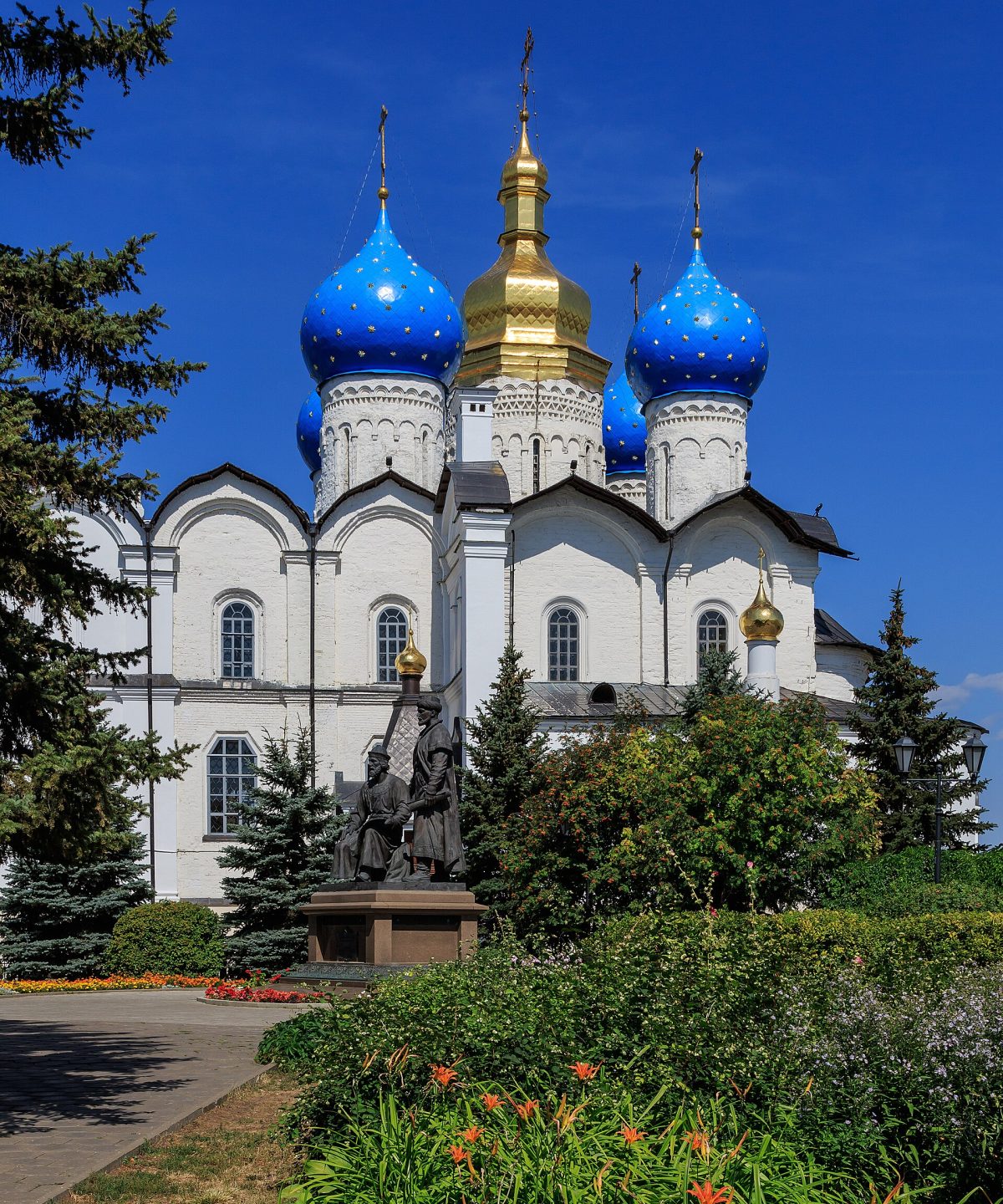
The city's feature is that the mosque and Orthodox cathedral stand in one fortress thirty meters from each other, and this is not a museum composition, but the normal state of the place for the last few centuries.
Day One: Kremlin and Center
Kazan Kremlin — the only surviving Tatar fortress, rebuilt after 1552 by Pskov masters. White walls are made of limestone, and this is visible up close: the stone is porous, with shells. The complex is included in the World Heritage List.
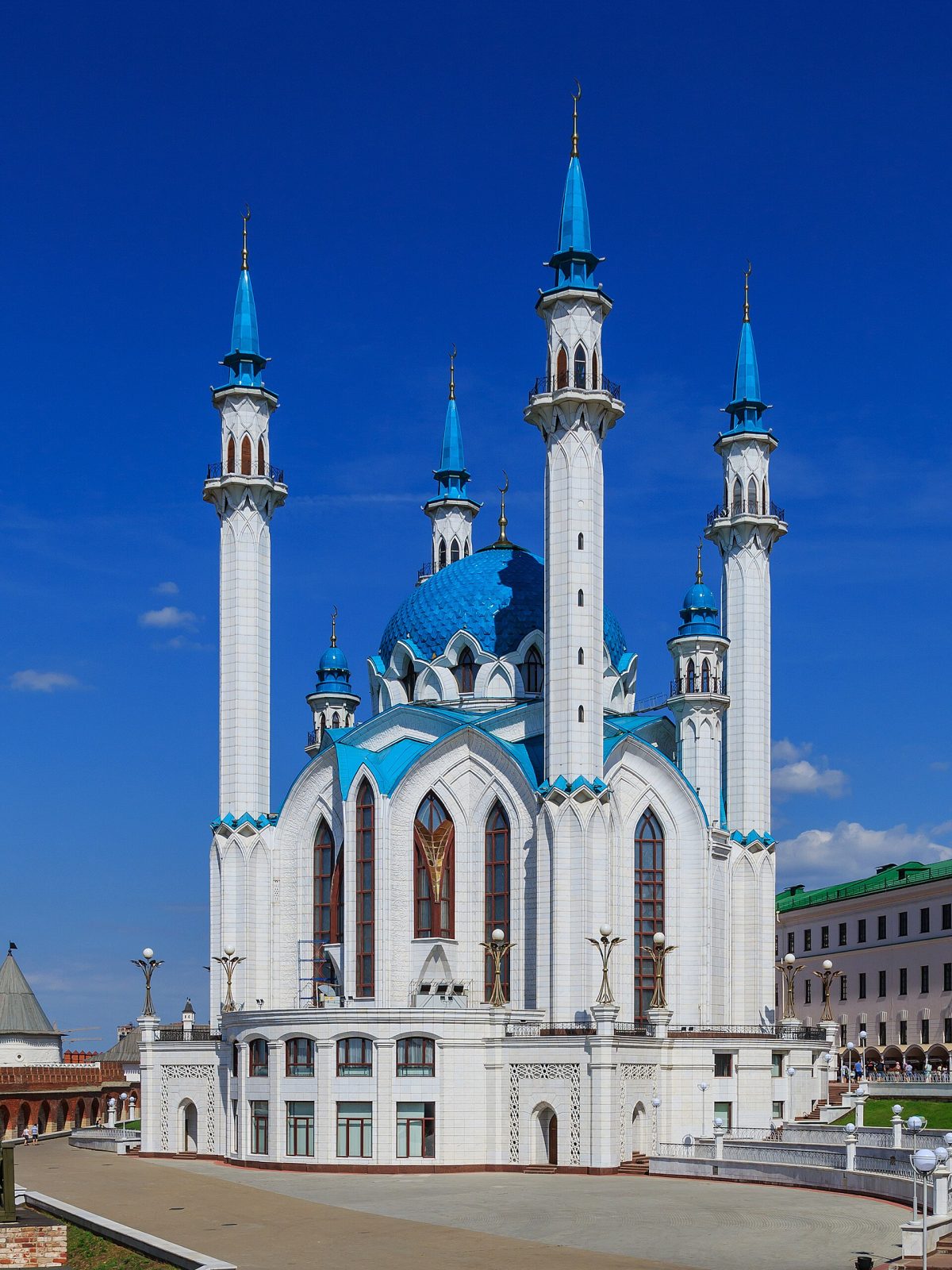
Inside stands Kul Sharif Mosque, opened in 2005 for the millennium of the city on the site of the one destroyed in the sixteenth century. Four minarets at fifty-seven meters, a dome in the shape of a Kazan hat, stained glass and a carpet brought from Iran. Entry is free, a gallery upstairs is designated for visitors.
A few dozen meters away — Suyumbike Tower, seven-tiered and leaning: deviation of the upper tier from vertical about two meters. Exact construction date is unknown, disputes continue to this day. Legend about the queen who threw herself from the tower is beautiful and unreliable.
Nearby Annunciation Cathedral of the sixteenth century with frescoes and a crypt where Kazan hierarchs are buried.
Down from the Kremlin goes Baumana Street — one and a half kilometers of pedestrian zone with fountains, a bell tower, a monument to Catherine's carriage and street musicians. Here it is easiest to have lunch: Tatar cuisine in establishments on the street itself is more expensive than in the lanes, but echpochmak and chak-chak are equally good everywhere.
Evening worth finishing at Millennium Square or at Kaban Lake: the embankment there has been rebuilt, and from it you can see the illuminated Kremlin.
Day Two: Sviyazhsk
Island-town Sviyazhsk stands sixty kilometers from the city, at the confluence of Sviyaga into Volga. Fortress was put here in 1551 in four weeks: logs prepared near Uglich, floated down the river and assembled on site. Siege of Kazan began from it.
After construction of Kuibyshev Reservoir the hill became an island; now a dam leads to it, and you can get there by car or bus. In summer a motor ship also runs — the road takes about two hours and is worth the trip in itself.
On the island preserved Assumption Monastery with cathedral of the sixteenth century and frescoes of the same time — they are included in the World Heritage List, — wooden Trinity Church, the only surviving building of that first fortress, and merchant streets.
On the way back can stop at Raifa Monastery, standing on a lake in a pine forest. Place is quiet, and it is good there after a busy day.
If Time Remains
Temple of All Religions in Staroye Arakchino — not an operating temple, but an art object, which sculptor Ildar Khanov built from 1992 until his death. Inside there are no services, but outside domes, minarets and stars of different faiths are collected in one building.
Museum of Socialist Life — private collection of things from the seventies and eighties, arranged without pathos and with humor.
Practical
Metro in Kazan is single-line and connects railway station, center and stadium; for the route above it is almost not needed — everything is within walking distance.
Best time — May, June and September. In winter in the Kremlin it is beautiful, but windy and open to all winds from the river.
Everything else that is open in the city is collected on the Kazan page.


