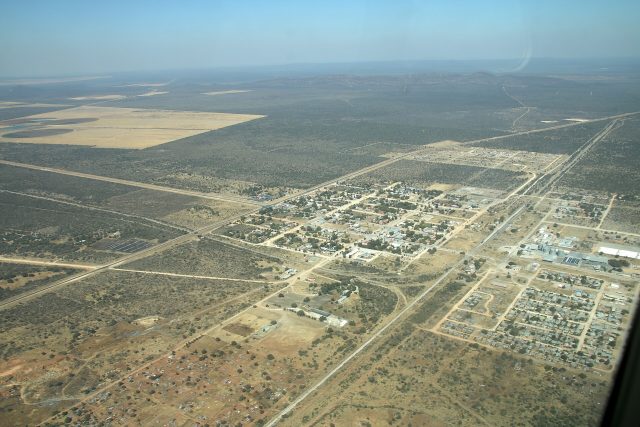
Otavi sits in northern Namibia. Most travelers pass it by.
The town has no famous wildlife reserves or coastal views. Instead, it moves at its own pace. Among the few remnants of its past, the old post office stands at the intersection of the main streets. It has seen the days when Otavi was more than just another dot on the map.
A link to the mining era
The post office was built in the early 1900s. Back then, Otavi was at the heart of Namibia’s mining industry. Copper, tin, and tungsten were pulled from the earth. The town grew quickly.
The post office connected miners, colonial administrators, and the German empire. Roads, railways, and communication hubs were the veins of control. The post office was where business, power, and everyday life intersected.
Built to last
The building’s architecture is practical. Thick stone walls, low ceilings, and small windows with wooden shutters keep the heat out. The facade is simple, with molded cornices and pilasters. Inside, high wooden counters where clerks sorted mail still stand. Heavy doors and sturdy locks remain.
If you listen, you might hear echoes of footsteps, the murmur of voices, the rustle of paper.
A role that faded
After World War I, Namibia came under South African administration. Mining declined, and Otavi shrank. The post office stayed in use for a while, but its functions moved to newer spaces. Today, it stands abandoned, though not entirely ruined.
Locals treat it with quiet respect. No one rushes to restore it.
Life around the building
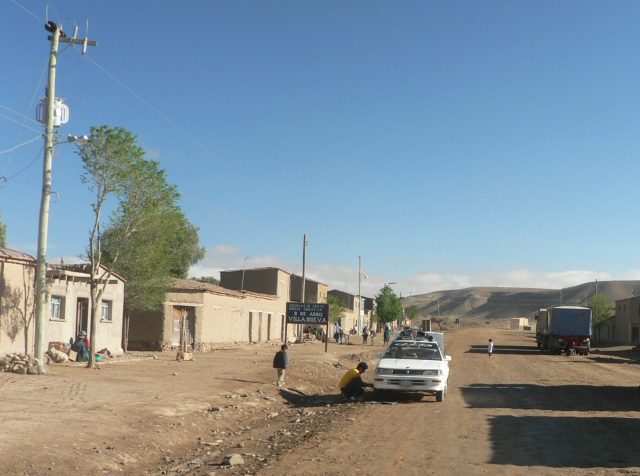
The streets of Otavi are quiet, especially in the midday heat. Old trees cast patches of shade. In the mornings, vendors set up stalls with fruits and vegetables. Occasionally, a truck loaded with ore rumbles past. Tourists on the way to Etosha National Park slow down, but few stop.
To most, it’s just another piece of history.
A story in stone
The old post office tells of a time when Namibia was part of a different empire. Otavi was a hub of industry and movement. The post office was a lifeline to the outside world. Miners from Europe sent money and news home. Local workers encountered bureaucracy, telegrams, and postage stamps for the first time.
It was where the global and the local collided.
No signs, no crowds
The building is now a monument to a vanished era. There are no signs marking it as historic. No guided tours. No fuss. You can walk up to it, run your fingers over the rough stone, peer through the dusty windows. Imagine the activity that once filled the space.
For Namibia, places like this are reminders. Borders shift. Economies rise and fall. People come and go. The old post office in Otavi is one such trace. It doesn’t demand attention. It holds onto a piece of the past.