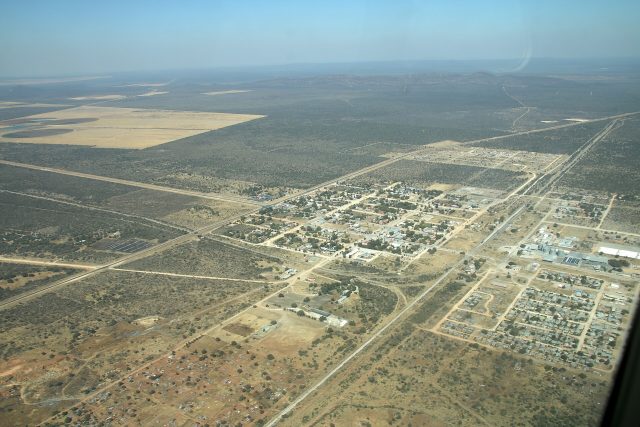
The Khorab Memorial sits quietly on the edge of Otavi, a small town in northern Namibia where the road from Tsumeb dissolves into the savanna. It doesn’t demand attention—just a modest obelisk of pale stone, enclosed by a low fence, nearly swallowed by the sparse acacia trees and dry grass. Yet for those who know the history of this part of Africa, Khorab is more than a dot on a map. It marks a turning point, a moment when an empire crumbled under the weight of its own missteps.
This was where, in October 1914, one of the last acts of a colonial drama played out. German forces, clinging to their hold over what was then known as German South West Africa, surrendered to South African troops acting on behalf of the British Empire. The capitulation at Khorab formally ended German rule in the region, though by then the fighting had already all but stopped. The memorial itself wasn’t erected until 1969, long after the event, when Namibia was still under South African control. Its construction felt more like an administrative formality than an attempt to preserve memory.
The design of the memorial is starkly simple. The obelisk resembles those built across Europe to honor fallen soldiers, but here there are no names, no grand inscriptions. One side bears the date July 9, 1915, though the actual surrender happened earlier. Whether this is a mistake or a reference to another event tied to the end of German rule isn’t clear. Around the obelisk, a small park with a few benches offers a place for locals to sit, though most who picnic here probably don’t give much thought to the history beneath their feet.
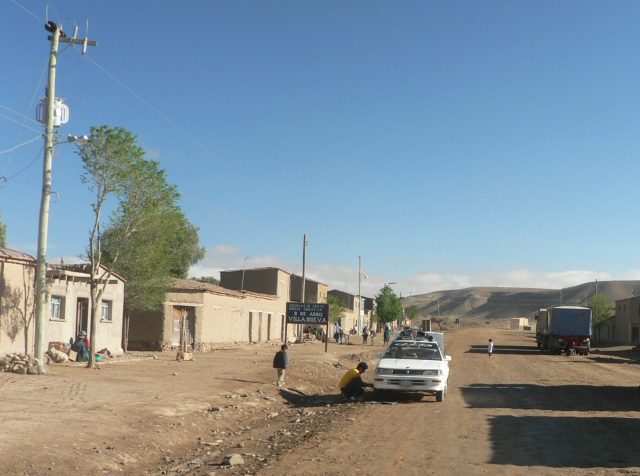
Otavi itself is an unassuming town, built around a railway station and copper mines. In the early 20th century, it was an important transport hub, funneling goods from the interior toward the coast. The Germans left behind a school, a church, and a handful of administrative buildings, but little remains of that era today. Now, Otavi moves at a slow pace, where the biggest events of the day might be the arrival of a train from Tsumeb or the opening of a shop on the main street. For most residents, the Khorab Memorial is just a landmark they pass on their way to farms or Etosha National Park.
Still, for historians and those interested in Africa’s colonial past, Khorab holds significance. It was here that one of the last chapters of European dominance on the continent came to a close, though not the bloodiest. German South West Africa had been the site of brutal conflicts, including the genocide of the Herero and Nama peoples, but Khorab was more of an epilogue than a climax. After the surrender, the territory fell under South African control, eventually becoming independent Namibia decades later. The memorial stands as a quiet reminder of how borders and powers shifted, while the land and its people endured.
Visiting Khorab is easy—it’s just a short drive from Otavi’s center, near the road to Grootfontein. There are no signs or information boards, so most travelers passing through would miss it entirely. But if you stop and walk around the obelisk, the silence is striking. The wind rustles through the grass, birds call in the distance, and the road stretches toward the horizon. In that stillness, the past feels present—not as a list of dates, but as something almost tangible.
In recent years, Namibia has begun to grapple more openly with its colonial legacy. Monuments erected during the apartheid era have sparked debate, with some seeing them as historical artifacts and others as symbols of oppression. Khorab, however, rarely enters these conversations. Perhaps it’s too modest, or perhaps the events it marks no longer seem as significant against the backdrop of more painful history. Yet it remains, a quiet witness to the way history is written not just in grand battles, but in quiet surrenders far from the world’s attention.
For those who come to Otavi, Khorab isn’t so much a tourist attraction as a reason to reflect on how places change over time. What was once a symbol of one empire’s defeat and another’s victory has become just another corner of the savanna, where antelope graze and time moves at its own pace. Maybe that’s its real value—not in preserving the past, but in showing how the past slowly fades into the present.