St. Barbara’s Church in Otavi is one of those quiet places that seem frozen in time, a relic of Namibia’s early colonial era. Perched on a gentle hill above the town, it stands out not for grandeur but for its unassuming charm. Unlike the imposing Gothic or neoclassical churches found elsewhere in the region, this one feels almost whimsical—its rounded arches, low bell tower, and light stone facade give it a modest, almost playful appearance. Locals sometimes call it the "gnome church," a nickname that captures its small scale but overlooks the deeper story it holds. Built in 1910, it was more than just a place of worship; it was a symbol of the German presence in southern Africa, a fragment of a chapter in history that shaped the land and the people who lived here.
Otavi wasn’t always the sleepy town it is today. In the late 19th century, the area became a focal point of colonial ambition when rich copper deposits were discovered. German settlers arrived in waves, bringing with them miners, engineers, and laborers—some from Europe, others from local communities like the Ovambo. The church was built to serve this diverse, transient population, a spiritual anchor in a place where fortunes were made and lost underground. For the miners who worked in the nearby shafts, St. Barbara’s was more than a building; it was a sanctuary. The saint it was named after, the patron of miners, offered protection from the dangers of their work, a promise of safety in a profession where death could come without warning. Even now, long after the mines closed, that connection lingers in the quiet corners of the church.
The architecture is unlike anything else in Namibia. There’s no soaring Gothic spires or austere Lutheran simplicity here. Instead, the church has a warmth to it, almost like a child’s drawing of a house of worship—rounded windows, a red-tiled roof, and walls made of local stone. The design feels intimate, as if it were built not for grand ceremonies but for ordinary people who needed a place to gather. That unpretentiousness is part of what makes it so fitting for Otavi, a town that never had the wealth of Windhoek or the bustle of the coastal cities. It was meant for the miners, the shopkeepers, the families who called this place home, however briefly.
Over the decades, the church’s role shifted. When Namibia came under South African control after World War I, the German community dwindled, and Otavi’s economic importance faded. The mines shut down, the population shrank, and the town settled into the quiet rhythm it follows today. St. Barbara’s remained, though its congregation was no longer the same. It became a monument to a past that was slipping away, a place where the echoes of history were easier to hear than the voices of the present. Now, it’s mostly visited by travelers curious about Namibia’s colonial legacy or locals who pass by without a second thought, as familiar as the old eucalyptus trees lining the main road.
Step inside, and it’s as if the years fall away. The wooden floors creak underfoot, the air carries the scent of old paper and candle wax, and the light filtering through the simple stained glass casts a soft glow on the walls. Memorial plaques bear the names of those who once prayed here—German families, miners, soldiers—some of whom died in the First World War, others who simply lived out their lives in this corner of Africa. The names are all that’s left of them now, etched into marble, a quiet reminder of the people who once filled these pews. There’s a melancholy here, a sense of lives lived and lost, of a time that can’t be reclaimed but isn’t entirely gone either.
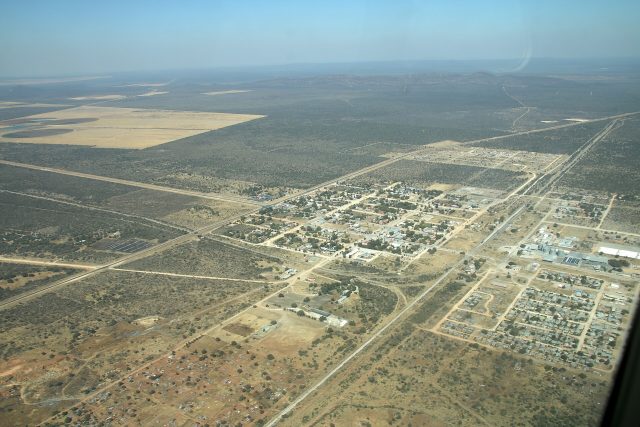
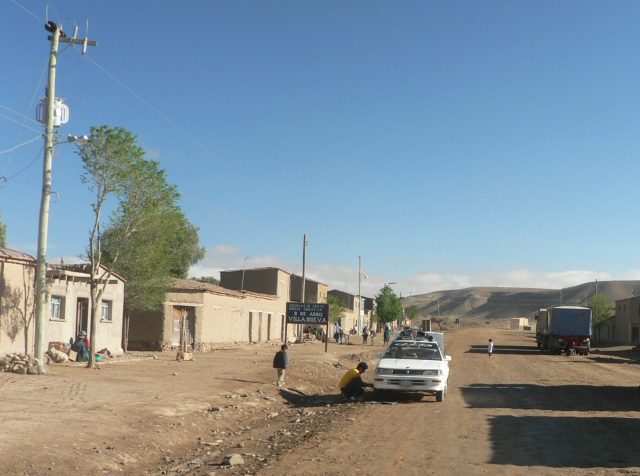
The view from the church is worth the climb. Otavi sprawls below, a small town nestled among low hills dotted with sparse vegetation. In the distance, the skeletal remains of old mining structures stand like ghosts of the past, a reminder of the industry that once defined this place. Today, life in Otavi moves at a slower pace. The morning market sells vegetables and meat, children play in the dusty streets, and elders sit on benches, talking about the day’s news. The church is part of this landscape, as much a fixture as the hills themselves, a silent witness to the changes that have swept through the town.
What makes St. Barbara’s worth visiting isn’t just its history or its architecture, but the atmosphere. There are no crowds here, no souvenir stalls, no guides rushing you along. Just the quiet, the dry scent of the savanna, and the feeling that time moves differently in this place. You can sit on one of the benches outside, close your eyes, and imagine the people who came here a century ago—miners hoping for a lucky strike, families seeking a new start, laborers who had nowhere else to go. Otavi was never a place of great wealth or fame, but for a time, it was a place where lives were built, and St. Barbara’s was at the heart of it.
Today, the town is a shadow of what it once was, but the church endures. It’s not a grand monument, not a tourist hotspot, just a small, unassuming building that has outlasted the era that created it. For those who take the time to visit, it offers something rare—a glimpse into a past that’s still tangible, a sense of connection to the people who walked these same paths long ago. In a country where history is often overshadowed by the vastness of the landscape, St. Barbara’s stands as a quiet testament to the lives that shaped it.