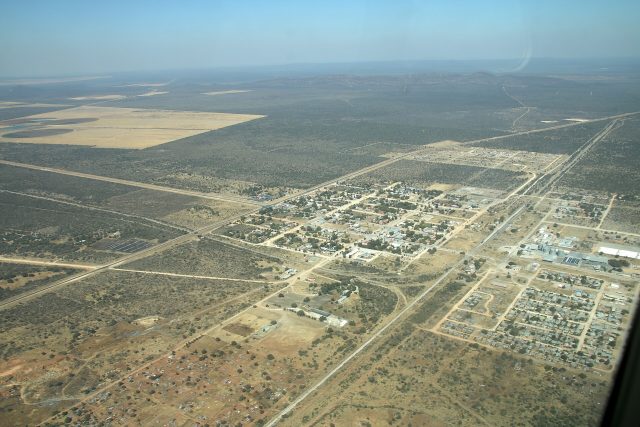
Otavi Park feels like a place where time has quietly settled, leaving behind the unhurried rhythm of old Africa. Tucked away in the small town of the same name in northern Namibia, it sits where the open savanna softens into gentle hills, and scattered trees stretch their shadows across the red earth. There are no crowds here, no tourist traps, no guides trying to sell you a story. Just the quiet hum of the wind through the grass and the occasional call of a bird. Unlike the rigid boundaries of a national park, this place feels more like a natural extension of the landscape, where people and nature move around each other without fuss.
The park’s history is woven into Namibia’s colonial past. In the late 1800s, when this land was part of German South West Africa, Otavi became an important stop along the railway that connected the coast to the interior. German settlers built a town here, and by the early 1900s, farms began to appear in the surrounding countryside. The park itself came much later, after Namibia gained independence, as a way to protect the region’s unique ecosystem and give locals a place to unwind. You can still see traces of that era—old stone and timber buildings, rusted railway tracks that hint at Otavi’s former importance, and even a few weathered graves of German colonists half-hidden in the brush.
The landscape here isn’t dramatic like the towering dunes of Sossusvlei or the deep gorges of Fish River Canyon. It’s quieter, more understated, but no less captivating. Small ponds, fringed with reeds, draw in birds—herons, ducks, and sometimes rarer species—with around two hundred different kinds recorded in the area. In the dry season, the ponds shrink into cracked clay, but with the first rains, they fill again, teeming with life. Along the edges, acacia and mopane trees sway in the breeze, their shade offering refuge to small antelope and dassies, those curious little creatures that look like oversized rodents but are actually distant relatives of elephants.
The park’s architecture is simple and practical. There are no luxury lodges or restaurants with sweeping views, just a handful of cozy cabins built in the local style, using wood and stone. They sit on a low rise, offering a quiet vantage point over the surroundings, and feel more like farmhouses than tourist accommodations. At the heart of the park is an open shelter where visitors can escape the sun or set up a picnic. Nearby, an old stone-lined well still serves its purpose, watering the plants. It all has the easy, unpretentious feel of someone’s private retreat, where guests are welcome but not fussed over.
Otavi and its surroundings move to the slow beat of a small Namibian town. There’s none of the hustle you’d find in Windhoek or the tourist hubs. Mornings start with locals heading to the market for fresh vegetables and meat, while children make their way to school along dusty roads. By midday, the heat drives everyone into the shade, and the town dozes until evening, when life stirs again. The park comes alive then, too—families on weekend outings, school groups learning about the local wildlife, or the occasional small festival where handmade crafts and traditional food, like dried meat or maize porridge, are sold.
For those who enjoy walking, the park offers a few trails of varying lengths. The easiest leads to one of the ponds, where you can watch birds or just sit by the water. Another winds through the hills, opening up views of the countryside, while a third takes you to an old railway bridge, a remnant of the line that once connected Otavi to the coast. The walks aren’t strenuous—distances are short, and the paths are well-trodden—but it’s still wise to bring water and sun protection, as even the shade can feel warm.
At night, the park transforms. Far from the glow of city lights, the sky here feels vast and endless, the stars so bright it’s as if you could reach out and touch them. In the dry season, the air is especially clear, and the Milky Way stretches across the sky in a dazzling display. Locals sometimes organize night drives to spot animals that come alive after dark—genets, jackals, and, if you’re very lucky, a leopard, though sightings are rare. It’s moments like these that make Namibia a magnet for stargazers and photographers, offering skies you won’t find anywhere else.
Otavi Park isn’t the kind of place you visit for high-octane adventures or luxury getaways. It’s a corner of the world where you can step away from the noise, breathe in the quiet pulse of the African bush, and touch a piece of the region’s history. There are no crowds, no souvenir shops, no forced hospitality—just space, silence, and the sense that time moves a little slower here. Some might find it uneventful, but for those who prefer unhurried travel and authentic experiences, it offers something rare: the chance to feel like part of the landscape, not just a visitor passing through.