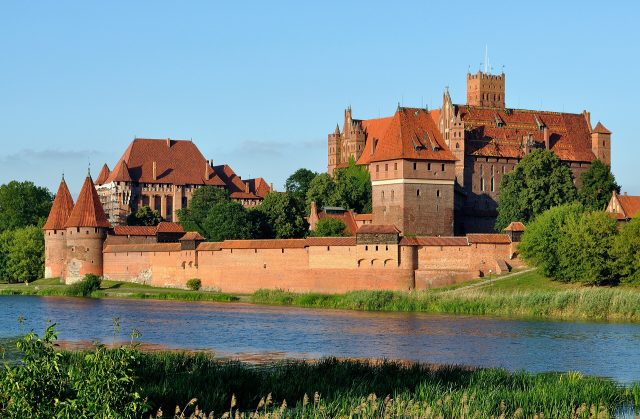
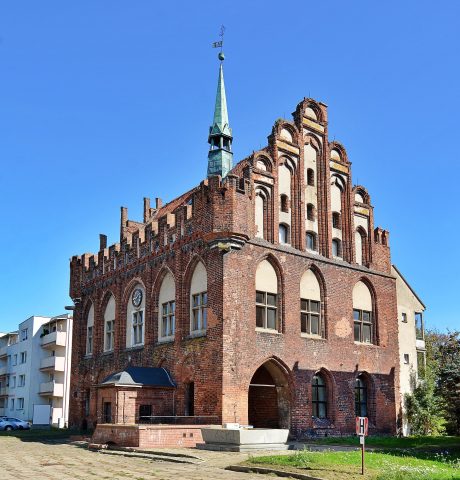
Malbork Castle stands as a monumental witness to centuries of European history, its towering brick walls holding more than just the weight of time. Built in the 13th century by the Teutonic Knights, it was conceived not merely as a fortress but as a statement of power—a bastion of Christianity in the Prussian lands. Over the decades, it grew into the largest brick castle in the world, its sheer scale reflecting the ambitions of an order that sought to dominate the Baltic region. The castle’s expansion mirrored the rise of the Teutonic Knights themselves, evolving from a military stronghold into a self-sufficient complex that housed knights, administrators, and artisans alike.
The construction of Malbork began in 1274, shortly after the Teutonic Order relocated its headquarters from Venice to this strategic site along the Nogat River. The castle was designed in three distinct sections—High, Middle, and Low—each serving a specific purpose. The High Castle, the oldest part, was the heart of the order’s spiritual and administrative life, while the Middle Castle housed the grand halls where the Grand Masters held court. The Low Castle, with its workshops, stables, and storage rooms, functioned almost like a small town, ensuring the fortress could withstand prolonged sieges. The Palace of the Grand Masters, with its soaring vaulted ceilings and intricate stonework, remains one of the most striking examples of Gothic secular architecture, its underfloor heating system a testament to the ingenuity of medieval engineers.
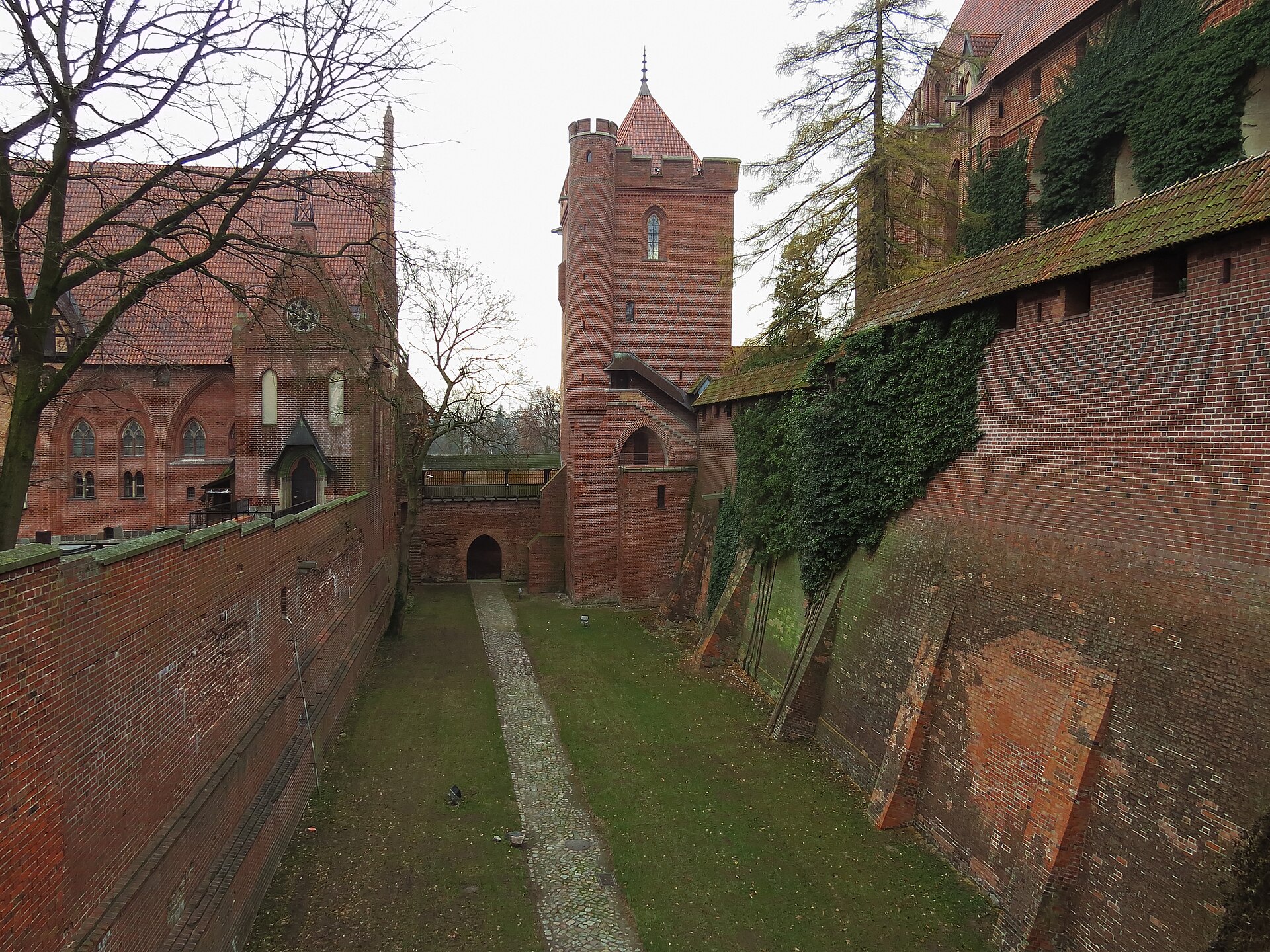
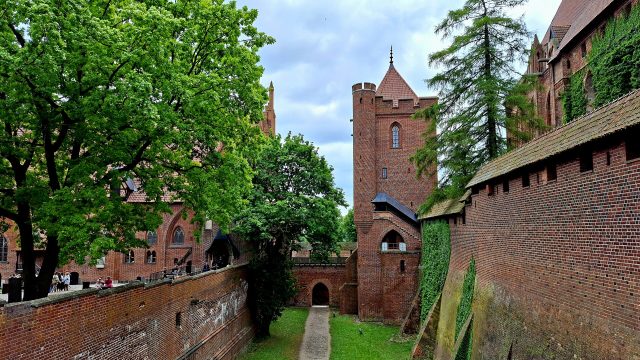
What sets Malbork apart from other European castles is its uncompromising architecture. Unlike the delicate spires of French cathedrals or the romantic ruins of English fortresses, Malbork is built for endurance. The deep red of its brick walls, the imposing buttresses, and the narrow, defensive windows all speak to a time when survival depended on strength. The castle’s design was not about beauty for its own sake but about projecting power. Even the remnants of St. Anne’s Chapel, where the Grand Masters were laid to rest, carry an air of solemnity, their weathered stones bearing silent witness to the passage of centuries.
The history of Malbork is inseparable from the rise and fall of the Teutonic Order. At its height in the 14th century, the order controlled vast territories, and the castle served as both its administrative center and a symbol of its invincibility. Yet the tide turned after the Battle of Grunwald in 1410, when a Polish-Lithuanian alliance dealt a crushing blow to the knights. Though the order clung to power for decades more, Malbork eventually passed into Polish hands, later falling under Swedish and Prussian rule. Each era left its mark—some through renovations, others through destruction. The most devastating blow came during World War II, when the castle was nearly reduced to rubble. Yet the meticulous post-war restoration has allowed it to stand once more, a near-perfect recreation of its former self.
Today, Malbork is more than a museum; it is a place where the past feels tangible. Walking through its courtyards, one can almost hear the clatter of armor, the murmur of knights in the great hall, or the distant clang of a blacksmith’s hammer. The castle’s atmosphere shifts with the seasons—golden in the summer twilight, stark and silent under winter snow. Inside, the museum’s exhibits offer glimpses into the daily life of the order: suits of armor, medieval weaponry, and everyday objects that humanize the knights who once ruled here. The collection of amber, once a key trade commodity for the Teutonic Knights, is particularly striking, its warm hues contrasting with the castle’s austere stone.
There is nothing delicate about Malbork. It does not invite whimsy or nostalgia in the way that some European castles do. Instead, it commands respect through its sheer presence, a reminder of an era when faith, conquest, and survival were intertwined. The castle does not seek to charm; it simply endures, a physical manifestation of history’s unrelenting march. For those who visit, it offers no easy answers, only the weight of the past pressing down on the present.
To truly appreciate Malbork, one must take time. This is not a place to rush through, snapping photos of the main halls before moving on. The castle rewards patience—whether it’s studying the intricate details of the Grand Masters’ palace, lingering in the quiet of the inner courtyards, or imagining the bustle of life that once filled these spaces. Returning in different seasons reveals new facets of its character, from the soft light of autumn to the crisp stillness of winter. Each visit peels back another layer of its story.
Malbork’s location adds to its allure. Situated in a small town in northern Poland, far from the well-trodden tourist paths, it retains an air of authenticity. The surrounding streets are quiet, lined with modest cafés serving local dishes, while the Nogat River flows nearby, just as it did when merchant ships once docked here. The town itself is unassuming, its scale only emphasizing the castle’s grandeur. Visiting Malbork is not just about seeing a historical site; it’s about stepping into a living piece of history, one that continues to exist alongside the modern world, unchanged in its essence.