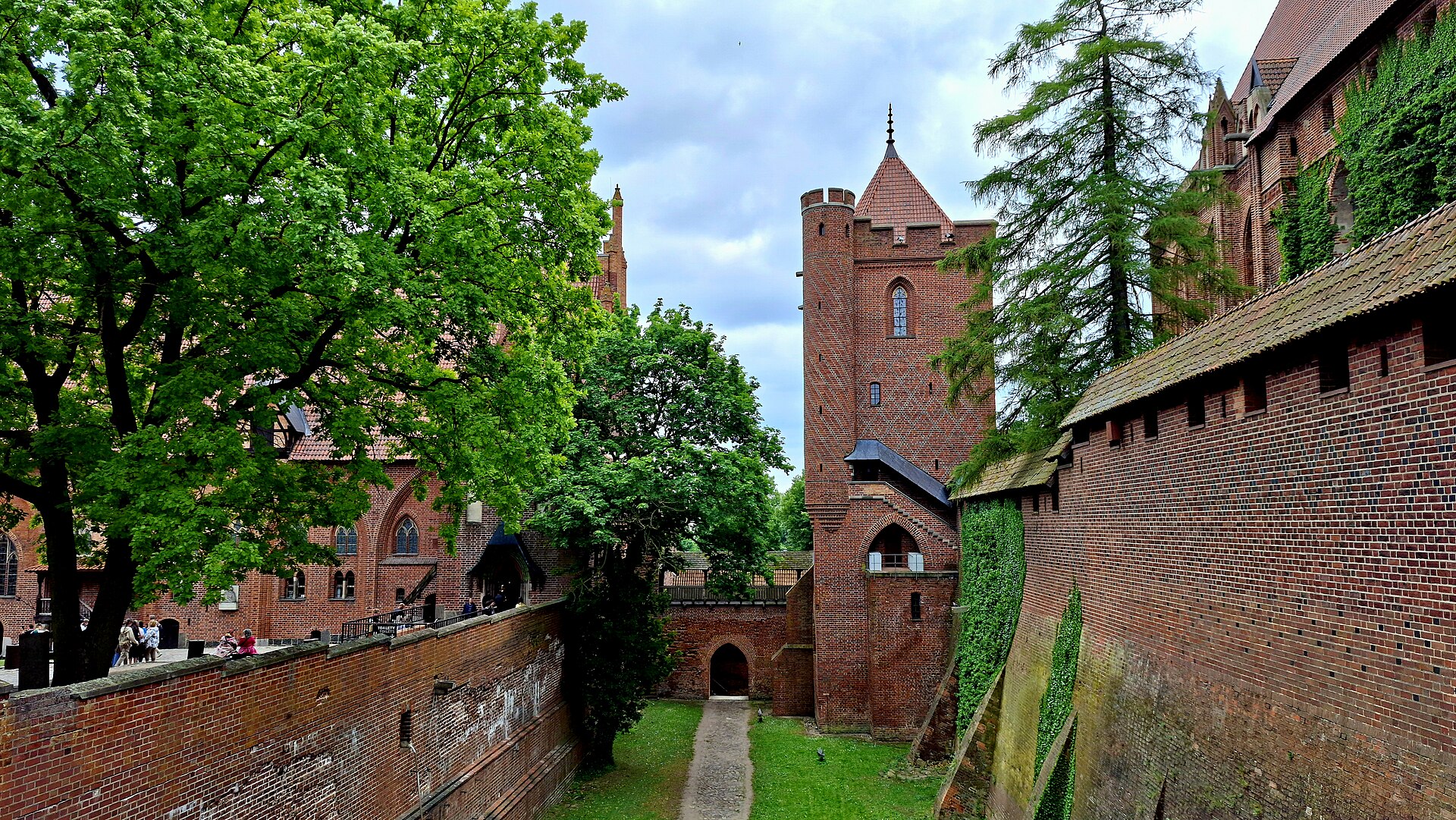
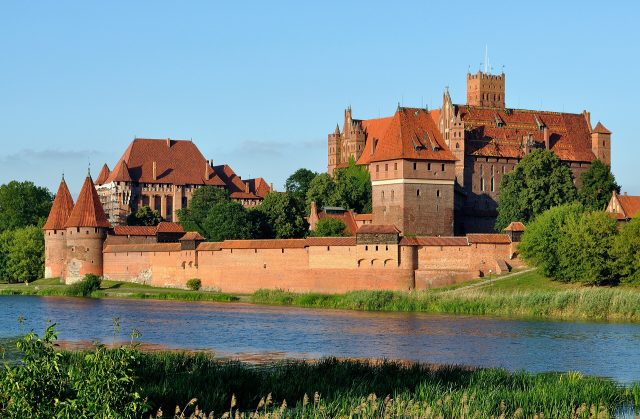
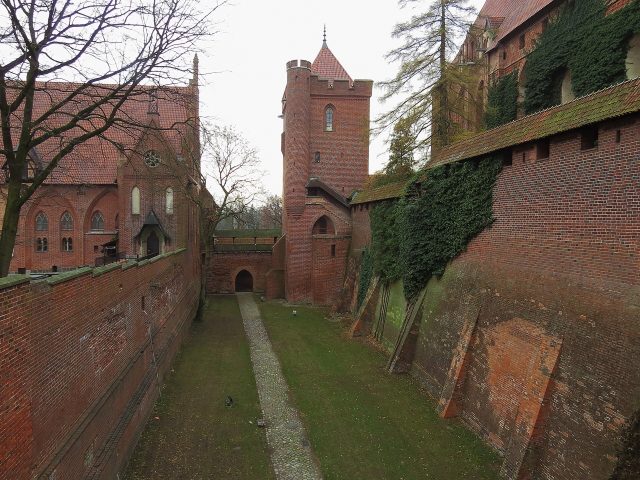
Malbork’s Castle Park is one of those rare places where history and nature feel inseparable, as if time itself moves at a different pace here. Nestled at the foot of Malbork Castle—the largest brick fortress in the world—the park doesn’t just complement the castle’s grandeur but becomes part of its story. Unlike the crowded tourist paths inside the castle walls, this green space offers quiet, unhurried moments. The trees, winding paths, and stillness make it the perfect place to pause after exploring the castle’s vast halls and towers, letting the weight of history settle in without the rush of guided tours.
The park wasn’t always here. In the Middle Ages, the land around the castle was purely functional—ditches, earthworks, stables, and workshops served the needs of the Teutonic Knights who ruled from Malbork. It wasn’t until the 19th century, when the castle underwent major restoration, that the idea of a park took shape. Landscape architects softened the fortress’s imposing presence with tree-lined avenues, flowerbeds, and benches, creating a space that now feels timeless despite its relatively recent origins. What was once a military and administrative hub slowly transformed into a place of reflection, where visitors could step away from the castle’s overwhelming scale and simply breathe.
Walking through the park, it’s easy to imagine the knights of the Teutonic Order returning from hunts or campaigns, their armor clinking as they crossed the same ground. Built in the 13th century, Malbork wasn’t just a fortress but the political heart of the order, later becoming the residence of its grand masters. The land around it bore the marks of that era—ridges where defensive walls once stood, depressions where buildings used to be. Even now, the park’s gentle slopes and old trees seem to echo that past, as if the earth itself remembers the people who once walked here.
Though small, the park offers variety. Shaded alleys provide relief on hot days, while open clearings frame the castle in all its medieval splendor. Autumn is especially striking, when the leaves turn gold and crimson, and the air carries the scent of damp earth. In summer, the park comes alive with families picnicking, children playing, and locals escaping the midday heat. Winter, by contrast, is quiet, the castle’s snow-dusted towers looming like a scene from a fairy tale. The seasons change the park’s mood, but its essence remains the same—a place to slow down.
One of the park’s defining features is its stretch along the Nogat River, a tributary of the Vistula. The river is narrow but steady, its banks lined with willows and wild grasses. A path runs alongside the water, offering a peaceful route for walks, with the current’s murmur blending into the rustling leaves. Ducks and swans are common sights, and if you’re lucky, you might spot a beaver slipping into the water. The river adds a sense of continuity, tying the park to the broader landscape and reminding visitors that this place has always been shaped by both human hands and nature.
Castle Park isn’t a destination in itself, but it plays a crucial role in how people experience Malbork. After hours spent exploring the castle’s labyrinthine corridors, towering walls, and dimly lit chambers, the park offers a chance to decompress. The castle is overwhelming in its scale and history, while the park provides a counterbalance—space to sit, think, and let the past sink in without the pressure of exhibits or guides. There’s no museum-like formality here, just the quiet understanding that you’re still standing in the same place where history unfolded.
Over the years, the park has become woven into the daily life of Malbork. Locals bring their children here to play, spread out blankets for picnics, and pose for photos with the castle as a backdrop. For tourists, it’s a moment of respite from the relentless pace of sightseeing, a place to simply exist without an agenda. There are no signs dictating where to go or what to feel, just the natural rhythm of the seasons and the faint imprint of the past. That lack of pretense is what makes the park so appealing—it asks for nothing but your presence.
Recent years have seen minor improvements—paths have been smoothed, and the park’s boundaries slightly expanded—but its character remains unchanged. There’s no attempt to modernize or impress; instead, the focus is on preserving the sense of calm that has defined this place for generations. Castle Park isn’t about grand gestures or dramatic views. It’s a quiet corner where the past feels tangible, where the simplest pleasures—a walk by the river, the shade of an old tree—become the most meaningful. And perhaps that’s why it endures.