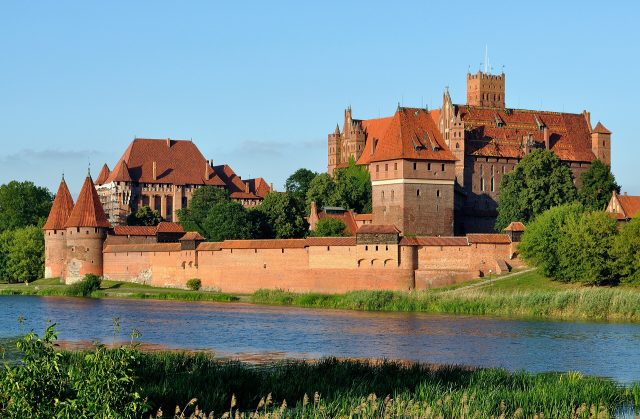
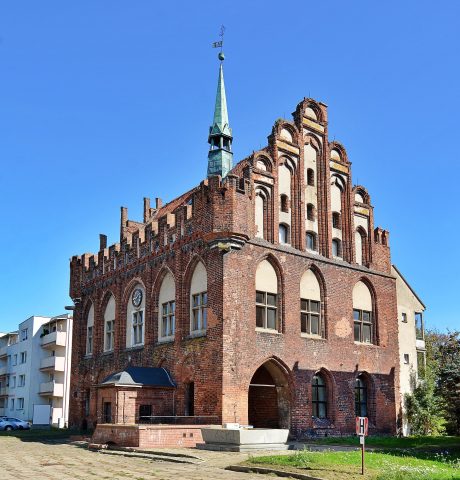
St. John the Baptist Church in Malbork is one of those places where history lingers in the air, in the weight of the stones, in the silence between footsteps. Built in the 14th century as part of the Teutonic Order’s fortress complex, it was never just a place of worship. These walls bore witness to whispered strategies, solemn vows, and the quiet tension of an order that shaped medieval Europe. The church was the spiritual heart of the castle, a counterpoint to its military might, and today it remains an example of Gothic architecture in the region.
The exterior demonstrates Gothic severity. Tall, narrow windows stretch toward the sky, their pointed arches framing the light. Flying buttresses brace the structure, not just for support but as a statement of power—this was a building meant to endure. The rose window above the entrance is a flourish, its tracery a contrast to the fortress-like solidity of the walls.
Inside, the space is vast and uncluttered, with a nave that feels both austere and intimate. The lack of ornamentation forces the eye to the essentials: the play of light on stone, the echo of footsteps, the sense of standing in a place where every detail was intentional.
The altar, added later, is Baroque. Gilded wood and carvings contrast sharply with the Gothic stillness around it. It shows how the church evolved, adapting to changing tastes and beliefs. Nearby, the tombs of Teutonic knights lie embedded in the floor, their effigies worn smooth by centuries of footsteps. Some of these men were once among the most powerful figures in Europe, and their graves feel like echoes of a world that once revolved around this place.
The church’s history is tied to Malbork Castle. For decades, the castle was the seat of the Teutonic Order’s grand masters, a center of political and military power. The defeat at Grunwald in 1410 marked the beginning of the order’s decline, but the church endured, surviving fires, wars, and time. Each restoration has preserved the atmosphere—the way the light falls through the windows, the way the air moves in the nave. You can imagine the knights gathering here before battle, their voices low, their presence heavy with purpose.
What makes St. John the Baptist unusual is its role. Unlike a cathedral, it wasn’t the seat of a bishop. It was an order’s church, a place where faith and duty intertwined. There’s no grandiosity here, no sense of being a tourist attraction first. Instead, there’s a quiet authenticity, a feeling that this place was built for a purpose and has never quite shaken it off. Even now, when the organ plays during summer concerts, the music seems to rise from the stones themselves.
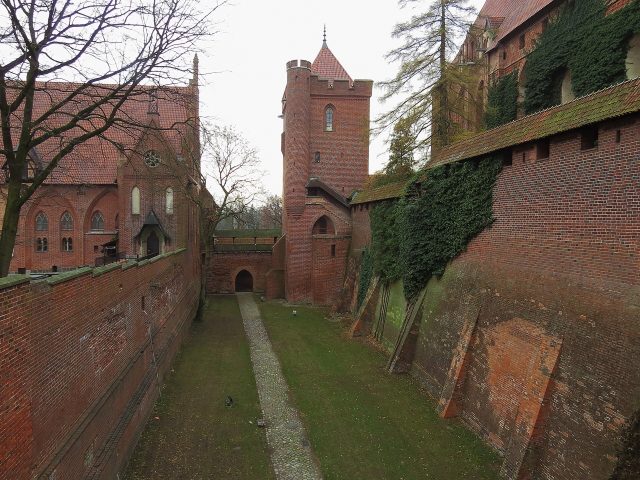
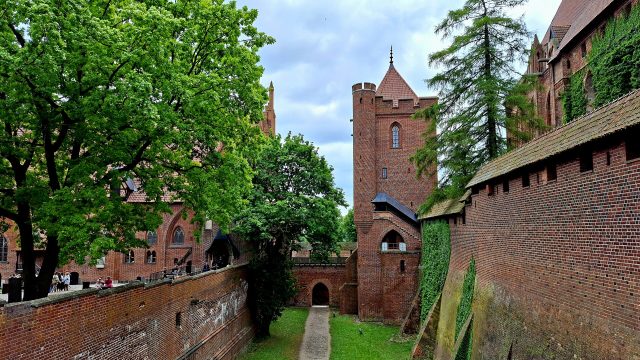
Visiting the church today is a lesson in contrasts. The castle outside is a fortress, all battlements and towers. The church, by comparison, is a place of reflection. The two complement each other, showing what life here must have been like. The knights who prayed in this nave were the same ones who marched out to war, and the monks who tended the altar were part of an institution that shaped the region’s destiny. The church doesn’t romanticize that history—it lets the stones speak for themselves.
From the slight rise where the church stands, the view stretches over Malbork and the countryside. On clear days, the Nogat River glints in the distance, a reminder of the trade routes that once made this region prosperous. Today, Malbork is a quiet town, its past more visible than its present. But the church remains a connection to that past, a place where the weight of history isn’t just observed—it’s felt.