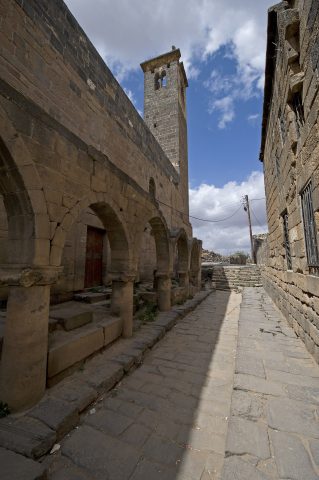
Perched on a quiet hillside near the village of Kabelias, Kfar Kouk Castle stands where time has worn into the stones. The ruins overlook the Bekaa Valley, shaped by trade, conquest, and daily work. Below, olive groves and vineyards stretch toward the Mediterranean, their rows contrasting with the castle’s jagged walls.
The place is empty of crowds. No guided tours hurry visitors along. Only the wind moves through the grass, and birds call now and then. The quiet makes it easier to imagine the past—not as a story, but as something you could almost touch.
No one knows when the castle was built. Historians say the 12th century, when Crusader forces built strongholds across the region. This part of Lebanon belonged to the County of Tripoli, a feudal state carved out by European knights after the First Crusade. Kfar Kouk guarded the roads between the coast and the interior. From here, defenders watched caravans from Damascus and Baghdad pass through. The castle was more than a military post; it marked control in a land where power never stayed still.
The thick limestone walls, weathered golden, still stand in places. Arrow slits and the remains of towers break the lines. One may have been a keep, the last defense during an attack. Inside, faint outlines of rooms remain—living quarters, water cisterns, a small chapel where knights prayed. The castle changed hands often. The Mamluks took it in the 13th century, then the Ottomans, who altered the structure. Yet the core of Kfar Kouk stays medieval, a rare survivor of an era when castles were homes and fortresses.
By the 19th century, the castle was falling apart. Locals took stones to build their houses. Nature crept in. Preservation efforts began in the 20th century. Today, Kfar Kouk isn’t restored. It’s a fragment of history—crumbling walls, overgrown courtyards, no signs or gift shops. Just ruins, open to whoever comes.
Visiting feels like finding a secret. You can walk freely, climb the walls, sit on a warm stone. Early morning or late afternoon is best. Light softens the ruins, shadows stretch long. The wind and leaves break the silence. You can almost see the castle as it was—alive, not just a relic.
The Bekaa Valley adds to the visit. It’s one of the oldest wine regions in the world. Nearby wineries press grapes as they have for generations. Olive oil and local cheeses are part of the valley’s life. Villages move slowly, their streets lined with golden stone houses. Hospitality here isn’t staged.
Kfar Kouk doesn’t ask for admiration from afar. It lets you step close, touch the stones, wonder about the people who walked here before. No grand story is told. No plaques explain. The castle has seen empires rise and fall. It endures not as a monument to power, but as a reminder of ordinary lives. For those who like their history plain, Kfar Kouk offers something rare: a connection to the past that feels real.