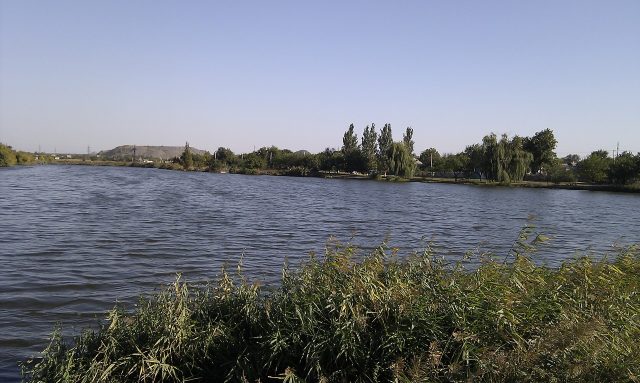
Kabeliai Lake
Lebanon · 7 places
Photo: Rasvegas, CC BY-SA 3.0
Kab Elias sits quietly in the Beqaa Valley, where the pace of life moves as gently as the Litani River flowing nearby. There’s no rush here, no crowds of tourists or the constant hum of a capital city. Instead, you’ll find narrow streets lined with olive and cypress trees, old houses with intricately carved balconies, and people who greet strangers with a warmth that feels genuine. The town seems suspended in time, though it’s not entirely frozen—it changes slowly, absorbing new influences without losing the quiet charm of a place where life still revolves around the land and the seasons.
The Beqaa Valley is known for its mild climate and fertile soil, a rare combination in Lebanon. Summers are hot but not oppressive, while winters bring a crisp coolness, occasionally dusting the hills with snow. The land here is generous, yielding grapes, olives, and vegetables that sustain the local economy. Small family-run wineries dot the countryside, where wine is still made the old way—not for export, but for sharing with neighbors. The result is a bold, earthy drink, full of character, meant to be enjoyed slowly, like everything else in this part of the world.
Kab Elias isn’t the kind of place that makes it onto postcards or travel brochures, and that’s precisely what makes it special. There are no luxury hotels or flashy restaurants, just simple cafés where locals sip fresh *laban*, the tangy yogurt drink that starts every morning. The central square is where you’ll find elderly men hunched over backgammon boards, their games unfolding at a leisurely pace. In the evenings, young people stroll along the riverbank, watching the sun dip behind the mountains. The town’s few historic churches and mosques stand side by side, a quiet testament to centuries of coexistence between different faiths and cultures.
Though it may seem unassuming, Kab Elias has played its part in Lebanon’s history. Ancient trade routes once passed through here, connecting the Mediterranean coast to the country’s interior. During the Ottoman era, the town was a resting place for merchants and travelers, a stopover on long journeys. You can still find traces of that past—crumbling caravanserais and Roman ruins scattered across the landscape. They’re not as grand or well-preserved as the ruins in other parts of Lebanon, but that only adds to their appeal. There’s something intriguing about these half-forgotten remnants, as if they’re holding onto stories just waiting to be uncovered.
For those seeking an escape from the noise of modern life, Kab Elias offers something rare: a place where time moves differently. You could spend days exploring the surrounding countryside by bike or on foot, staying in small guesthouses where hosts serve homemade meals and share tales of local traditions. The Beqaa Valley has its share of famous sights—Ba’albek’s ancient temples, Zahle’s vineyards, nature reserves—but Kab Elias isn’t about spectacle. It’s about the quiet rhythm of daily life, the way the land shapes the people and the people shape the land. Here, simplicity isn’t a lack of something; it’s the foundation of everything.
See & Do
All of them

Places on the map
Marker colour follows the categoryClimate and weather
Detailed weather: Kabeliai Lake- Average temperature
- 17 °C
- Precipitation per year
- 669 mm
- Sunshine hours per day
- 7.2 h
Average air temperature
°C
7
7
11
15
20
23
26
26
24
19
13
8
Jan
Feb
Mar
Apr
May
Jun
Jul
Aug
Sep
Oct
Nov
Dec