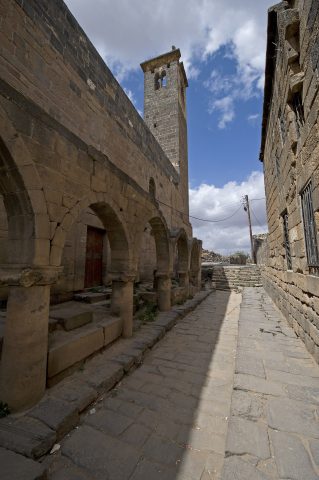
Jubb Jannine is one of those places that feels untouched by the rush of modern life. Tucked away in Lebanon’s Bekaa Valley, it’s a world apart from the country’s more famous destinations—no crowded ruins, no trendy wine bars, no Mediterranean views framed by luxury hotels. Instead, there’s a quiet that settles over everything, a rhythm that moves with the seasons rather than the clock. The village doesn’t try to impress; it simply exists, as it has for centuries, shaped by the land and the people who work it.
The name itself hints at its essence. *Jubb* means well or water reservoir in Arabic, and in Jubb Jannine, water has always been the lifeblood. The Bekaa Valley, stretching between the Lebanon and Anti-Lebanon mountain ranges, has long been one of the region’s most fertile stretches, and this village sits at its heart. Underground springs feed the fields, vineyards, and olive groves that surround the settlement, their green and gold hues shifting with the seasons. In summer, the heat is dry but bearable, softened by the altitude. Winter brings snow, blanketing the valley in white and turning the landscape into something almost unrecognizable. The air carries the scent of wild herbs, turned earth, and the faint sweetness of ripening grapes.
History here is written in layers, though few grand monuments remain. The Bekaa Valley was settled as far back as Phoenician times, later becoming a crossroads for trade routes linking the Mediterranean to the interior of the Levant. The Romans, who prized the valley’s fertility, established settlements nearby, and traces of their presence—crumbling walls, scattered stones—still surface in the fields. By the Middle Ages, the valley was contested ground between Crusaders and Muslim rulers, then absorbed into the Ottoman Empire. Through it all, Jubb Jannine remained a quiet agricultural village, its fortunes tied to the harvest and the reliability of its water.
The architecture reflects this unassuming past. Houses are built from local limestone, quarried from the surrounding hills, their thick walls designed to keep out the summer heat and trap warmth in winter. Windows are small, roofs flat—used for drying fruit or storing tools. The streets wind narrowly, more suited to donkeys than cars, and in the village center, a modest mosque stands beside the remnants of an old church, a reminder of the religious coexistence that once defined the area. There’s no grand design here, just practicality, passed down through generations.
The real attraction, though, isn’t within the village itself but in the land around it. From Jubb Jannine, the Bekaa Valley unfolds in all directions, framed by the rugged peaks of the Lebanon Mountains to the west and the Anti-Lebanon range to the east, where Syria begins. In spring, the valley floor erupts in wildflowers; by autumn, it glows amber as the grape harvest ripens. Locals will tell you this is where Lebanon’s best wines come from, though the nearest wineries are a short drive away. The landscape feels vast, almost timeless, a place where the horizon seems to stretch forever.
Life here moves at its own pace. Mornings start with the smell of fresh bread from the village bakery and the bitter tang of Turkish coffee. By midday, men are in the fields or tending to the vines, women work in their homes or gardens, and children dart through the streets. Evenings belong to the local café, where men gather to play backgammon, sip mint tea, and debate everything from politics to the weather. On weekends, relatives arrive from Beirut or Zahle, filling the village with laughter, music, and long meals of mezze. The older generation shares stories of the past, while the young listen—or don’t, too busy chasing each other through the alleys.
For travelers, Jubb Jannine offers something rare: a glimpse of Lebanon without the filters. There are no guided tours, no souvenir stalls, no scripted experiences. Instead, there’s the chance to wander without an agenda—to hike the surrounding hills, peer into an ancient irrigation well, or sit on a bench outside the mosque, watching the slow ebb and flow of village life. The people are welcoming but not intrusive, used to the occasional visitor and happy to offer a cup of coffee or point the way to a nearby spring. Conversations happen naturally, over shared meals or in the shade of an olive tree, with no rush to move on.
This isn’t a place for those seeking luxury or entertainment. It’s for those who want to understand how life unfolds when it’s tied to the land, when traditions aren’t preserved for tourists but lived every day. The concerns of the outside world feel distant here, replaced by simpler, more immediate things: the taste of fresh figs, the sound of a donkey’s hooves on stone, the way the light slants across the valley at dusk. Time doesn’t just slow down—it seems to expand, filling the space between one moment and the next.
Perhaps that’s why people return. Not for any particular landmark, but for the way the place makes them feel—grounded, connected, part of something older and larger than themselves. Jubb Jannine doesn’t offer answers, but it does offer perspective. And sometimes, that’s enough.