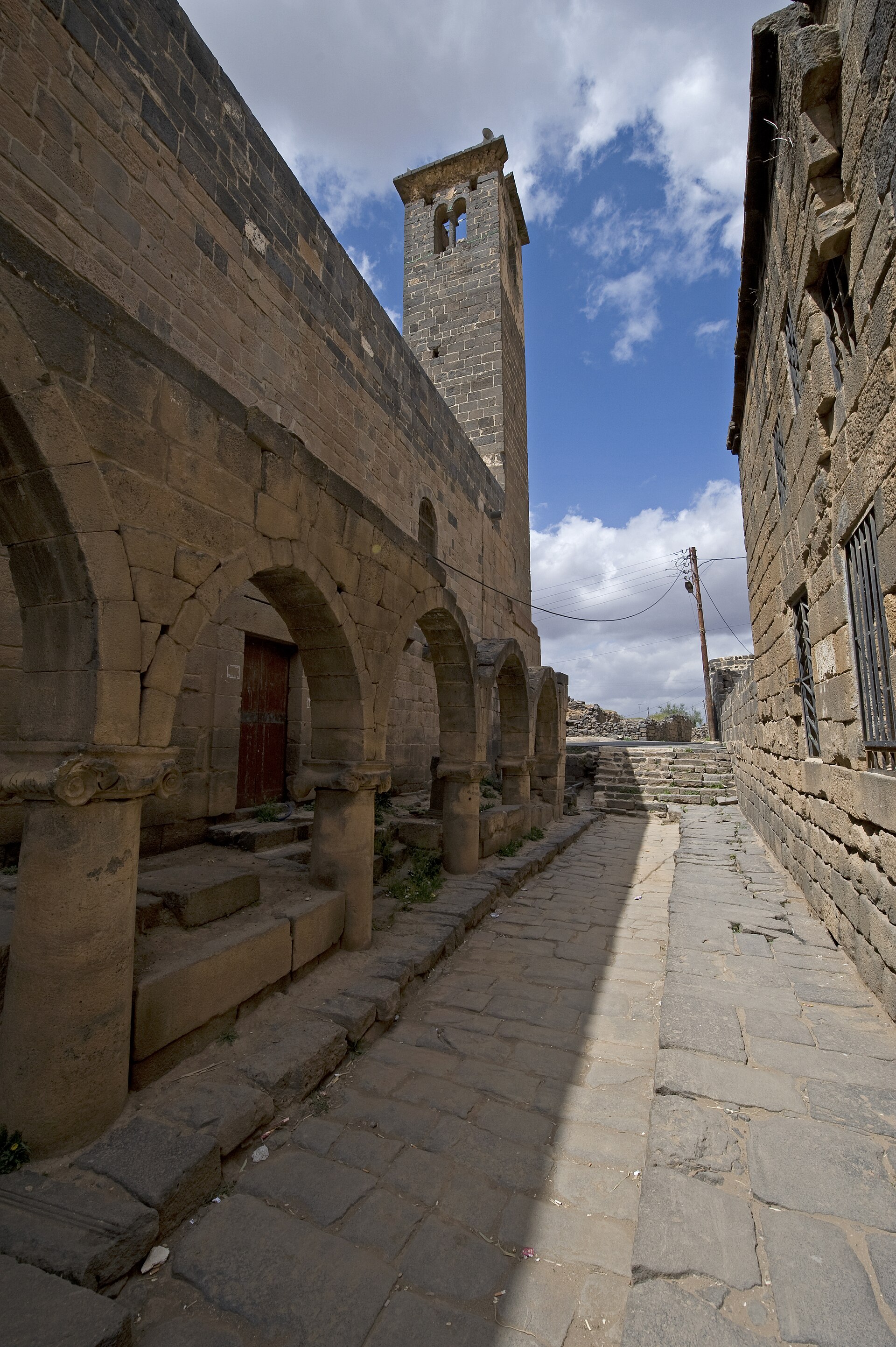
Al-Omari Mosque in Kab Elias is one of those rare places where history isn’t just preserved in stone—it breathes, shifts, and endures alongside the town itself. This isn’t merely a religious landmark but a living intersection of eras, cultures, and human stories. Built in the 13th century on the site of an ancient temple, the mosque has witnessed the rise and fall of rulers, wars, and quiet everyday life, yet it has never strayed from its original purpose: a place of worship and a sanctuary for those seeking stillness and reflection.
The architecture of Al-Omari is a quiet conversation between past and present. The building blends Mamluk influences with later Ottoman touches, evident in the clean lines of its minaret, adorned with intricate carvings, and the spacious inner courtyard framed by arched walkways. The main prayer hall, with its soaring ceilings and sturdy columns, feels vast and uncluttered. Light filters through lattice windows, casting soft patterns across walls inscribed with Arabic calligraphy. There’s no ostentatious decoration here—just the quiet craftsmanship of mosaic floors, wooden doors, and stonework that speaks of patience and skill.
Kab Elias is a small town in the Bekaa Valley, far from Lebanon’s tourist trails, and that’s precisely what makes Al-Omari so special. It hasn’t been turned into a museum piece; it remains a living part of the community. On Fridays, worshippers gather for prayers, while on weekdays, you might see elderly men reciting the Quran under the arcades or children playing in the courtyard. The pace here is unhurried, matching the rhythm of life in the valley, where time moves slower than in bustling Beirut.
The mosque’s history is deeply woven into Lebanon’s own. Over the centuries, it has served not just as a place of prayer but as a refuge, a school, and at times, a hub of social life. During the Crusades, it withstood sieges, and under Ottoman rule, it became part of the *waqf* system—religious endowments that supported not only mosques but also hospitals, schools, and shelters. Even during Lebanon’s civil war in the 20th century, Al-Omari stood as a symbol of stability for locals, a reminder that some things endure beyond the chaos of the moment.
Today, the mosque is more than a religious site; it’s a cultural touchstone. In recent years, it has hosted small exhibitions of calligraphy and lectures on Islamic history, open to anyone interested in the region’s heritage. These aren’t grand events but quiet efforts to preserve and share knowledge. Al-Omari doesn’t seek to attract crowds, but if you find yourself in Kab Elias, it’s worth stopping by—even just for a few minutes—to see how history lives in the details.
The surroundings of the mosque are worth exploring, too. Kab Elias is a typical Lebanese town, where narrow streets wind past low stone houses, and the central square always has a café serving strong coffee and fresh baklava. The Bekaa Valley, where the town sits, is known for its vineyards and olive groves, and local wineries have gained a reputation for their wines, though that’s another story. The mosque, meanwhile, remains a quiet anchor, a place to step away from the rush and consider how much in this world has outlasted centuries without losing its essence.
If you visit Al-Omari, remember that it’s an active place of worship, not a tourist attraction. There are no guides or explanatory signs, and that’s part of its charm. You don’t need them. Just sit in the courtyard, listen to the distant sounds of the town, and feel the unhurried passage of time. In an age where everything changes too quickly, places like this remind us that some things—faith, tradition, memory—remain constant.