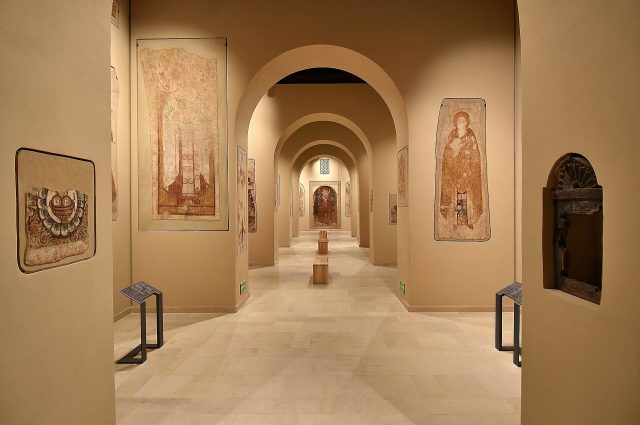
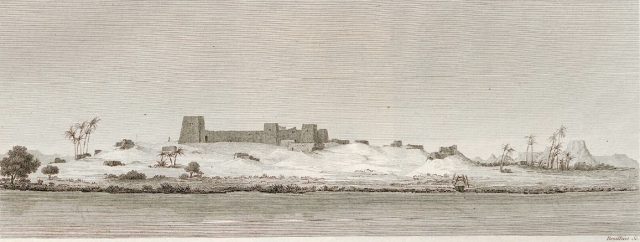
Faras is one of those places that barely registers on a map, a quiet settlement in northern Sudan where the Nile is still narrow, just beginning its long journey through the desert. Here, half-buried in the sands of Nubia, stands the Temple of Thutmose III, a monument that feels worlds away from the grand Egyptian ruins of Luxor or Karnak. There are no crowds, no tour buses, no vendors hawking souvenirs—just the wind, the shifting dunes, and the quiet weight of history pressing against the stones. Time moves differently in this corner of the world, as if the past hasn’t quite let go.
Built over three thousand years ago, the temple was commissioned by Thutmose III, one of ancient Egypt’s most formidable rulers. His reign in the 15th century BCE marked the height of Egyptian expansion, and Nubia was far more than a distant outpost—it was a land of gold, ivory, and strategic importance. The pharaohs saw it as both a prize and a challenge, a territory that needed to be subdued and assimilated. Thutmose III, often called the Napoleon of Egypt, left his mark here as he did across the empire, constructing temples to assert divine authority and remind local tribes of Egyptian dominance. This temple was never meant to rival the grandeur of Karnak or Abu Simbel; it was a statement, a foothold in a land that resisted easy conquest.
The architecture reflects the era’s typical style, though with subtle Nubian influences. The temple is modest in scale, a small hypostyle hall leading to a sanctuary, its walls carved with scenes of the pharaoh in the company of gods. Amun-Ra, the supreme deity of the Egyptian pantheon, appears frequently, reinforcing the connection between the divine and the ruler. Some reliefs depict Thutmose III in the classic pose of smiting enemies, a motif that symbolized Egypt’s triumph over Nubia. Yet here, in this remote setting, the imagery feels less like propaganda and more like an attempt to weave Nubia into the Egyptian worldview. The temple was a bridge, however fragile, between two cultures that were often at odds.
Like many monuments in Nubia, the temple’s fate was tied to the rise and fall of empires. After the New Kingdom’s decline, it gradually fell into disrepair. Local tribes, no longer under Egyptian rule, viewed it through different lenses—some revered it as sacred, others saw it as a relic of foreign domination. When the Kingdom of Meroë emerged centuries later, Nubia reclaimed its independence and even threatened Egypt’s borders. It’s possible the temple was repurposed for new rituals, though little evidence remains. The desert, relentless in its work, buried half the structure under sand, eroded the carvings, and left the columns cracked and weathered.
What stands today is a shadow of its former self, yet the ruins still command attention. Perched on a low rise, the temple overlooks the Nile, its waters still the lifeblood of the region. In ancient times, the river was the highway that connected Faras to the rest of the world; now, it’s a quiet presence, a reminder of how little has changed in some ways. The surrounding landscape is almost untouched by modernity—just a handful of mud-brick houses in the distance, built far enough away to preserve the sense of isolation. Visiting feels like stepping into a different era, one where the only sounds are the wind and the occasional call of a bird.
This is a place where history feels tangible, where the boundaries between Egypt and Nubia blur. The temple isn’t just a relic of conquest; it’s a testament to the complex relationship between two civilizations that shaped each other in ways that are still being uncovered. For the people of Faras, the ruins are part of the landscape, a familiar sight that doesn’t always carry the weight of its past. Tourists are rare, and those who make the journey are often drawn less by the temple itself than by the chance to see Nubia as it once was—unfiltered, unpolished, and untouched by mass tourism.
Reaching Faras is an adventure in itself. The journey begins in Khartoum, followed by a long drive through the desert, where paved roads give way to dirt tracks and eventually to sand. Along the way, small villages appear like mirages, their rhythms dictated by the Nile. The people here are welcoming but unobtrusive, accustomed to the occasional visitor but expecting nothing beyond respect for their land and customs. There’s no infrastructure for tourists, no signs pointing the way—just the open road and the knowledge that you’re heading somewhere few others have bothered to go.
The Temple of Thutmose III is more than just an archaeological site; it’s a reminder of how empires rise and fall, leaving behind only fragments of their ambitions. Nubia was never just a colony of Egypt—it was a world unto itself, with its own gods, its own traditions, its own struggles for independence. This temple is one of the few surviving witnesses to that era, a time when the lines between conqueror and conquered were never as clear as they seemed. The stones may be worn, the carvings faded, but the sense of history lingers, stubborn and unshakable.
Standing among the ruins, it’s easy to imagine the priests who once walked these halls, the soldiers who passed through on their way to battle, the merchants who traveled the Nile with goods from distant lands. The temple was a symbol of power, but it was also a place of quiet significance, a point of contact between two cultures that would never fully understand each other. Today, it stands as a quiet monument to that complexity, a place where the past isn’t just remembered—it’s still felt.