Khartoum
Sudan · 5 places
Photo: Arwa51o, CC BY-SA 4.0
Khartoum is where two great rivers, the White and Blue Nile, merge into one of Africa’s most striking natural landmarks. The city rises from the desert’s edge, a place where ancient rhythms meet the pulse of modern life. There are no crowds of tourists, no neon-lit boulevards, no towering glass skyscrapers—just the quiet, steady flow of the Nile cutting through dusty streets and low-slung buildings. Khartoum moves at its own pace, unhurried, as if shaped by the river that has carried its stories for centuries.
This is a city of contrasts, where the past and present exist side by side. In the heart of Khartoum, colonial-era buildings with their high ceilings and heavy wooden doors stand alongside sleek, modern offices housing local businesses and international organizations. The markets, like Souk el-Arab, buzz from dawn till dusk—vendors sell spices, fabrics, and handcrafted jewelry, while the air hums with the scent of freshly brewed coffee and warm bread. Here, you can try *ful medames*, the country’s beloved breakfast dish of slow-cooked fava beans, or watch as meat sizzles on open grills, served straight from the fire.
Khartoum is deeply tied to Sudan’s history, a legacy that lingers in its museums and the stories of its people. Though the ancient pyramids of Meroë lie far beyond the city, their presence is felt in the artifacts displayed at the National Museum of Sudan. The exhibits trace thousands of years of civilization, from prehistoric rock carvings to the treasures of Nubian kings. Even the streets seem to whisper of the Kingdom of Kush, once one of Africa’s most powerful empires, its influence still woven into the fabric of daily life.
Life in Khartoum unfolds slowly, deliberately. Mornings begin with the call to prayer, and by midday, the streets grow quiet as people retreat from the heat into shaded courtyards or cool cafés. But as the sun dips, the city stirs to life—families stroll along the Nile, children play in parks, and music drifts through the evening air. The most beautiful moments come at sunset, when the sky blazes in shades of orange and pink, and the river mirrors the city’s soft glow.
This is not a place for those seeking the familiar comforts of European capitals. There are no subways, no wide sidewalks, no 24-hour supermarkets. Instead, Khartoum offers something rarer: a sense of authenticity, the warmth of its people, and the feeling of stepping into a world where time moves differently. It doesn’t try to impress visitors, and that’s precisely why it leaves a lasting impression.
See & Do
All of them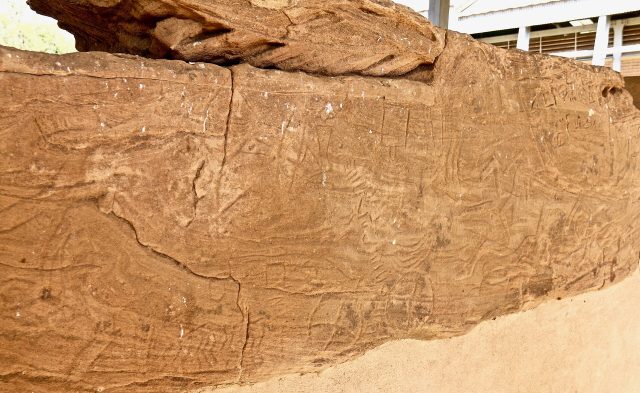


Places on the map
Marker colour follows the categoryClimate and weather
Detailed weather: Khartoum- Average temperature
- 31 °C
- Precipitation per year
- 96 mm
Average air temperature
°C
24
25
30
33
36
35
33
31
33
33
29
25
Jan
Feb
Mar
Apr
May
Jun
Jul
Aug
Sep
Oct
Nov
Dec