Faras is a quiet settlement in northern Sudan, nestled along a bend of the Nile where the river carves its way through the desert near the Egyptian border. Today, the place feels almost forgotten, home to only a handful of locals and the occasional traveler drawn by its ancient ruins. But over a thousand years ago, this remote corner of Nubia was a thriving center of Christianity, and the cathedral at Faras stood as one of its most important symbols. Built in the 6th century, when Byzantine influence spread across the region and local rulers adopted Christianity as their state religion, the cathedral was more than just a place of worship. It was the heart of a bustling city, where prayers were offered, decisions were made, and treasures and chronicles were kept safe behind its walls.
The architecture of the Faras cathedral is a rare example of early Christian design adapted to the harsh conditions of Nubia. Constructed from sun-dried mudbrick, a material typical of the region, the building still bears traces of Byzantine basilica traditions. Its three naves, east-facing apse, and thick walls were built to withstand the relentless desert sun and sandstorms. Inside, the space was once filled with carved columns and vibrant frescoes covering the walls from floor to ceiling. Little remains of them today, but the fragments that survive hint at the cathedral’s former grandeur, a place of both spiritual and worldly significance.
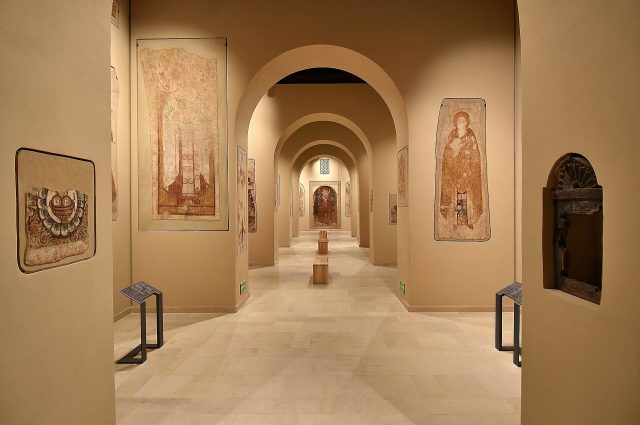
What makes the Faras cathedral truly remarkable are its frescoes, a discovery that reshaped historians’ understanding of early Christian art in Africa. In the mid-20th century, Polish archaeologists uncovered over a hundred paintings executed in tempera on dry plaster. The images depict biblical scenes, saints, angels, and local rulers dressed in Byzantine-style robes, blending Coptic, Byzantine, and Nubian artistic traditions into something entirely unique. Some of the figures, like the archangel Michael with his sword or the Virgin Mary cradling the infant Christ, are striking in their expressiveness, their faces almost lifelike. These paintings weren’t just decoration—they served as a visual catechism for a congregation where many couldn’t read, telling stories of faith in a language everyone could understand.
The cathedral’s fate is intertwined with the broader history of Nubia, a region caught between the spread of Christianity and Islam. By the 7th century, Arab influence had reached the area, yet local rulers clung to their Christian faith for centuries. The cathedral was rebuilt and restored multiple times, its walls reinforced and its frescoes renewed. But by the 14th century, Islam had taken hold in Nubia, and the cathedral fell into disuse. The desert sands slowly buried it, and its existence faded from memory until the 1960s, when the construction of the Aswan High Dam threatened to submerge ancient sites like Faras. Archaeologists returned, racing against time to uncover what remained before the waters rose.
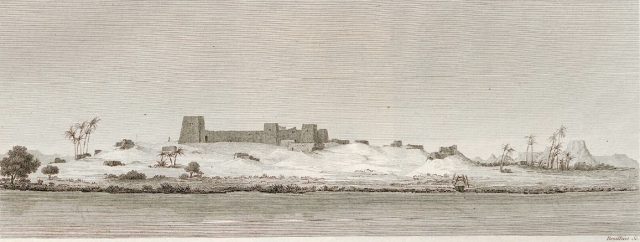
Today, the Faras cathedral is more of an archaeological site than a place of worship. Its ruins stand exposed to the elements, and time continues to wear away at what little remains. Yet even in its current state, the site leaves a deep impression. Standing among the crumbling walls, it’s hard not to wonder about the countless lives that passed through here—the prayers whispered under its vaulted ceilings, the decisions made within its chambers, the people who once called this place home. The surrounding desert stretches endlessly, the silence broken only by the occasional cry of a bird or the whisper of wind through the sand.
Visiting Faras is less about ticking off a tourist attraction and more about stepping into a living piece of history. Unlike crowded destinations, this place has no souvenir stalls or guided tour groups—just the quiet presence of the past. If you’re lucky, a local might share stories passed down through generations, like tales of hidden treasures beneath the cathedral’s foundations or the supposed magical power of its frescoes. These legends, whether true or not, add a layer of mystery to the site, making it feel even more like a bridge to another time.
For those fascinated by the history of Christianity or early medieval architecture, the Faras cathedral is a revelation. It serves as a reminder that Christianity in Africa developed in ways distinct from its European counterparts. The Nubian church, shaped by Byzantine influence yet retaining its own identity, produced art and architecture that were both familiar and entirely unique. The cathedral lacks the soaring grandeur of European cathedrals, but its modest beauty and authenticity make it all the more compelling. Here, the past feels tangible, as if the walls themselves could tell stories if only they could speak.
Reaching Faras isn’t easy. The journey requires traveling to Wadi Halfa first, then venturing into the desert for dozens of kilometers. There’s little in the way of tourist infrastructure, so it’s best to arrange a guide or join an organized expedition in advance. But those who make the effort are rewarded with something rare: the chance to walk through history, undisturbed and unfiltered. The Faras cathedral isn’t just a relic of the past—it’s a testament to how faith, culture, and art can merge to create something enduring, even in the most unlikely of places.