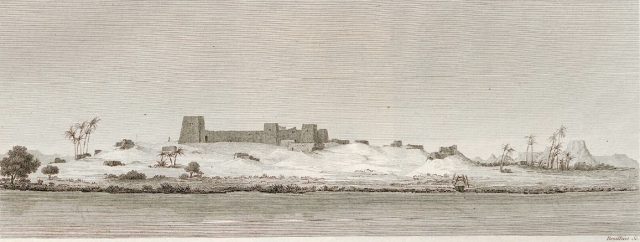
Faras is a quiet settlement in northern Sudan, tucked near the border with Egypt where the Nile bends around rocky shores. Far from the well-trodden tourist paths, it holds traces of an ancient civilization that once thrived in this land. Among its most intriguing remnants is a temple dedicated to Hatshepsut, one of the few female pharaohs of ancient Egypt. Unlike her grander monuments at Deir el-Bahri, this temple is modest, yet it offers a rare glimpse into how the histories of Egypt and Nubia intertwined.
Built in the 15th century BCE during Egypt’s New Kingdom, the temple was part of Hatshepsut’s ambitious building program. Her reign, which lasted around two decades, was marked by both military campaigns and architectural projects. Faras, then known as Pakhoras, was a strategic and religious outpost on Egypt’s southern frontier. It stood at the edge of Nubia, a region that oscillated between Egyptian control and independence. The temple served as a symbol of Egyptian influence, a place where gods worshipped in the Nile Valley were also revered beyond its borders.
The temple’s architecture reflects the style of the New Kingdom, though on a smaller scale than the grand complexes of Luxor or Karnak. What remains today are fragments of walls and columns, enough to imagine its original form—a rectangular structure with carved reliefs and an inner sanctuary. The surviving carvings depict Hatshepsut in the traditional guise of a pharaoh, complete with a ceremonial beard and royal regalia. Scenes of worship show her paying homage to gods like Amun-Ra, the supreme deity of the Egyptian pantheon. Over time, the temple was repurposed by later cultures, adding layers to its history.
After the New Kingdom’s decline, Faras remained significant. During the Meroitic period, when Nubia regained independence, the site continued to be a center of religious and political life, though in a different architectural style. The temple of Hatshepsut was likely modified to suit new rulers. Later, as Christianity spread, it became a church, and in the medieval era, a Muslim shrine. This transformation makes Faras a rare place where the evolution of faith and culture can be traced through stone.
Today, the temple stands as a shadow of its former self, yet its ruins are striking. Many Nubian monuments were lost when the Aswan High Dam was built in the 20th century, submerging entire sites under Lake Nasser. Faras survived because it sat on higher ground, but the silence here is profound. The Nile flows as it has for millennia, and the wind carries the whispers of the past. Few visitors come, which only deepens the sense of stepping into another time.
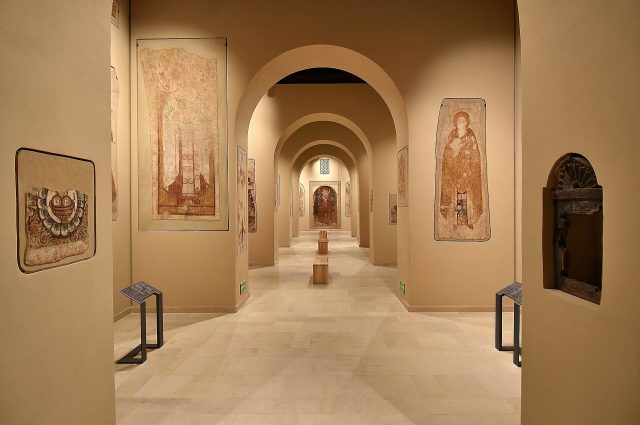
For those drawn to Nubian history, Faras is a quiet revelation. There are no crowds, no souvenir stalls, just the chance to walk where ancient priests, warriors, and ordinary people once did. The temple of Hatshepsut is only one piece of the puzzle—nearby lie the remains of Christian churches from the 6th and 7th centuries, when Nubia embraced the new faith, as well as traces of later settlements. Together, they tell a story of continuity and change.
Reaching Faras takes effort. The nearest major town is Wadi Halfa, from where you can travel by car or boat. There are no tourist facilities, so bringing supplies is essential. But those who make the journey are rewarded with an unfiltered connection to history. Time seems to slow here, and it’s easy to imagine the footsteps of those who walked these same paths centuries ago.
Faras is more than just a temple—it’s a crossroads of civilizations. Here, trade routes intersected, cultures blended, and religions succeeded one another, each leaving behind its mark. The site is a reminder of how fragile the past can be, and how vital it is to preserve what remains. Under the Sudanese sun, far from the noise of the modern world, the weight of history feels tangible. It’s not just about dates and names, but about the lives and beliefs that shaped this land.