Byblos is one of those rare places where the weight of history presses down on you with every step. The Temple of the Obelisks, tucked within this ancient city, is a quiet testament to the Phoenician civilization that once thrived along the Mediterranean coast. Byblos—or Jbeil, as it’s known locally—holds the distinction of being one of the oldest continuously inhabited cities in the world, and this temple is just one layer of its deep, layered past. Yet there’s something about this site that lingers in the mind, a sense of mystery woven into its weathered stones.
The temple’s name comes from its most striking feature: the rows of obelisks that once stood here in precise formation. These tall, slender pillars, some reaching several meters high, were dedicated to Phoenician deities like Baal and Astarte. Scholars believe they served as conduits between the earthly and divine realms, their arrangement reflecting ancient cosmological beliefs. Today, only a handful remain, but their presence is still commanding. There’s a stark beauty in their simplicity, a reminder of how the Phoenicians saw the sacred in verticality and order.
Discovered in the early 20th century by French archaeologists, the temple wasn’t an isolated structure but part of a larger religious complex. Excavations revealed altars, sacrificial platforms, and other ritual spaces, all hinting at the site’s long evolution. Beneath the temple, traces of even older settlements emerged, suggesting that this spot had been sacred for millennia. The Phoenicians built here first, but Greeks and Romans later left their mark, each civilization adding to the site’s story. The temple, in many ways, is a palimpsest of faith and time.
What makes the Temple of the Obelisks unusual is its architecture. Unlike the grand, imposing temples of Egypt or Mesopotamia, this site feels almost minimalist. There are no towering columns or elaborate carvings—just the clean, unadorned lines of the obelisks rising from the earth. The stones are roughly hewn, yet their placement is deliberate, as if they were meant to appear as natural extensions of the landscape. Perhaps that was the point: to blur the line between the divine and the earthly, to make the sacred feel like part of the world itself.
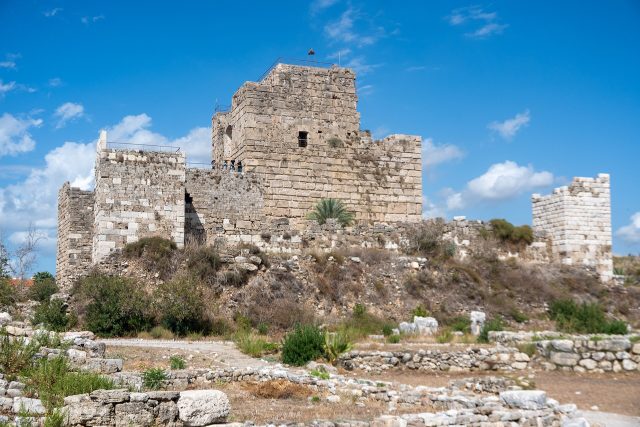
Today, the temple sits within the sprawling ruins of ancient Byblos, a short walk from the sea. The air carries the scent of salt and sun-warmed stone, and the sound of waves mingles with the silence of the past. Nearby, the remnants of a Roman theater, crumbling city walls, and old residential quarters stretch out, each telling its own piece of the city’s history. Byblos was once a bustling hub of trade and religion, and the temple was at its heart. Standing among the obelisks, it’s easy to imagine merchants and worshippers moving through these same spaces, seeking favor from the gods.
Visiting the Temple of the Obelisks is a quiet experience. There are no crowds here, no grand reconstructions—just the stones and the stories they hold. It’s a place that invites reflection, where you can wander among the ruins and wonder about the people who built them. The Phoenicians were master sailors and traders, and Byblos was one of their most important ports. Perhaps it was here, at the base of these obelisks, that they prayed for safe voyages or bountiful harvests. The temple doesn’t offer answers, but it doesn’t need to. Its power lies in the questions it raises.
Compared to the monumental ruins of other ancient civilizations, the Temple of the Obelisks might seem modest. But that’s part of its charm. It doesn’t demand awe; it earns it. The Phoenicians left behind more than just stone—they gave the world the alphabet, a system of writing that became the foundation for many modern scripts. Byblos was where that innovation took root, and while the temple is just one fragment of that legacy, it’s a tangible link to a civilization that shaped the course of history.
If you find yourself in Byblos, take the time to visit this site. It won’t overwhelm you with grandeur, but that’s precisely why it’s worth seeing. There’s a stillness here, a sense of time suspended, where the past feels almost within reach. Walk among the obelisks, run your fingers over the ancient stones, and listen. The echoes of history are faint, but they’re there—whispering of a world that once was, and of the people who built it. Byblos is a city where every stone has a memory, and the Temple of the Obelisks is one of its most enduring.