The royal necropolises of Byblos are one of those rare places where history feels almost tangible. Tucked away on the edge of what was once one of the most influential Phoenician city-states, these tombs date back to the Bronze Age, belonging to rulers who shaped the fate of a civilization that connected the Mediterranean with the inland regions of the Near East. Byblos, known today as Jbeil, was never just another settlement—it was a hub of trade, culture, and power, a place where goods, ideas, and people flowed between continents. The necropolises are more than just graves; they are a silent record of how these rulers lived, died, and were remembered over three thousand years ago.
Discovered in the early 20th century by French archaeologists, the tombs have since become a cornerstone for understanding Phoenician civilization. Unlike the towering pyramids of Egypt or the grand ziggurats of Mesopotamia, the tombs of Byblos are unassuming, carved directly into the rock with a simplicity that makes them all the more intriguing. Yet this modesty is deceptive. The artifacts found within—gold jewelry, finely crafted pottery, weapons, and even Egyptian amulets—paint a picture of a city that was not only wealthy but deeply connected to the wider world. These objects weren’t just grave goods; they were evidence of Byblos’s role as a diplomatic and commercial powerhouse of its time.
The architecture of the necropolises is distinctly Phoenician: underground chambers accessed through narrow passageways, sometimes with steps leading down into the earth. The entrances were often concealed, and the tombs themselves were divided into multiple levels, reflecting a practical yet reverent approach to burial. Some chambers still contain stone sarcophagi, their surfaces adorned with carvings or inscriptions. The most famous of these belongs to King Ahiram, discovered in 1923. The sarcophagus bears one of the earliest known Phoenician inscriptions, a discovery that has been invaluable in piecing together the language and script of this ancient people.
Ahiram ruled Byblos in the 11th century BCE, and his tomb is among the best-preserved in the necropolis. The inscription on the sarcophagus is a warning—a curse against those who would disturb the king’s rest, a testament to the importance the Phoenicians placed on the afterlife. Interestingly, Ahiram’s remains were not found inside; instead, the tomb contained the bones of others, possibly family members or high-ranking officials. This suggests that the necropolises served not just as royal burial sites but as resting places for the elite, a place where the powerful were laid to rest together, bound by blood or loyalty.
Today, the necropolises are open to visitors, though they remain one of Lebanon’s lesser-known ancient sites. Perched on a small hill, they offer a quiet vantage point over the modern city and the Mediterranean beyond. There are no souvenir stalls or cafes here, no crowds to distract from the weight of the place. It’s easy to imagine the archaeologists who first explored these chambers a century ago, their lanterns casting long shadows on walls that had not seen light in millennia. The absence of modern distractions makes it easier to focus on the tombs themselves, to feel the passage of time in the cool, still air of the underground chambers.
Visiting the necropolises is more than just a step back in time; it’s a chance to reflect on how different cultures have viewed death and remembrance. The Phoenicians, a people of seafarers and merchants, did not build monumental tombs like their contemporaries. Instead, they invested in the objects that would accompany their rulers into the afterlife—gold, imported vessels, weapons—each item a symbol of status and connection. Yet the tombs themselves are unadorned, their simplicity suggesting that for the Phoenicians, the true significance lay not in grandeur but in the act of remembrance itself.
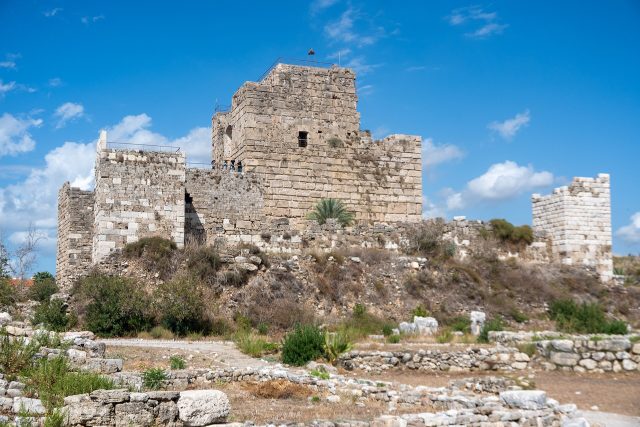
Byblos is a city layered with history. Roman ruins, a Crusader castle, and an ancient harbor all tell their own stories, but the royal necropolises add something deeper. They remind visitors that beneath the visible layers of history—beneath the Roman stones and Ottoman walls—lies an even older past, one that shaped the region long before empires rose and fell. The tombs are a quiet but powerful presence, a link to a time when Byblos was at the heart of a network that spanned the Mediterranean.
If you find yourself in Byblos, take a moment to step away from the sea and the bustling streets. Walk up the hill where the necropolises lie, and descend into one of the tombs. In the dim light of the underground chambers, time seems to stand still. There are no crowds here, no noise—just the silence of centuries and the sense that you are touching something real, something that mattered to people three thousand years ago and still matters today.