The ancient port of Byblos is one of those rare places where history isn’t just something you read about—it’s something you feel beneath your feet. This small bay along Lebanon’s Mediterranean coast isn’t just part of a modern city; it’s a living record of trade, conflict, and cultural exchange that shaped the entire region. Known locally as Jbeil, Byblos is often called one of the oldest continuously inhabited cities in the world, and its port has been at the heart of that story for millennia.
People have lived here since the Neolithic era, but Byblos truly flourished during the Bronze Age, when it became a cornerstone of Phoenician civilization. The Phoenicians, renowned as master sailors and traders, turned this harbor into a vital hub of Mediterranean commerce. Ships set sail from here carrying cedar wood, prized for its durability, along with purple dye extracted from local mollusks, glassware, and other goods that were highly sought after in Egypt, Greece, and Mesopotamia. Some scholars even suggest that the word *Bible* itself may derive from *Byblos*, as the city was a major supplier of papyrus to the ancient world.
The port wasn’t just a place for ships to dock. It was a complex network of docks, warehouses, workshops, and residential quarters, all humming with activity. Phoenician shipbuilders used local cedar, known for its resistance to rot, to construct vessels that could withstand long voyages. From Byblos, these ships reached Cyprus, Crete, and even farther shores. But the Phoenicians traded more than just goods—they spread ideas. Their alphabet, a precursor to many modern writing systems, traveled across the Mediterranean through ports like this one.
When the Romans arrived, the port didn’t lose its importance, though its role evolved. The Romans expanded the harbor, reinforced the shoreline, and built new structures, including baths and public buildings. Byblos became not just a commercial center but a cultural crossroads where Eastern and Western traditions blended. Remnants of that era still stand today, like the Roman theater that once seated thousands and the mosaics that adorned the villas of the local elite.
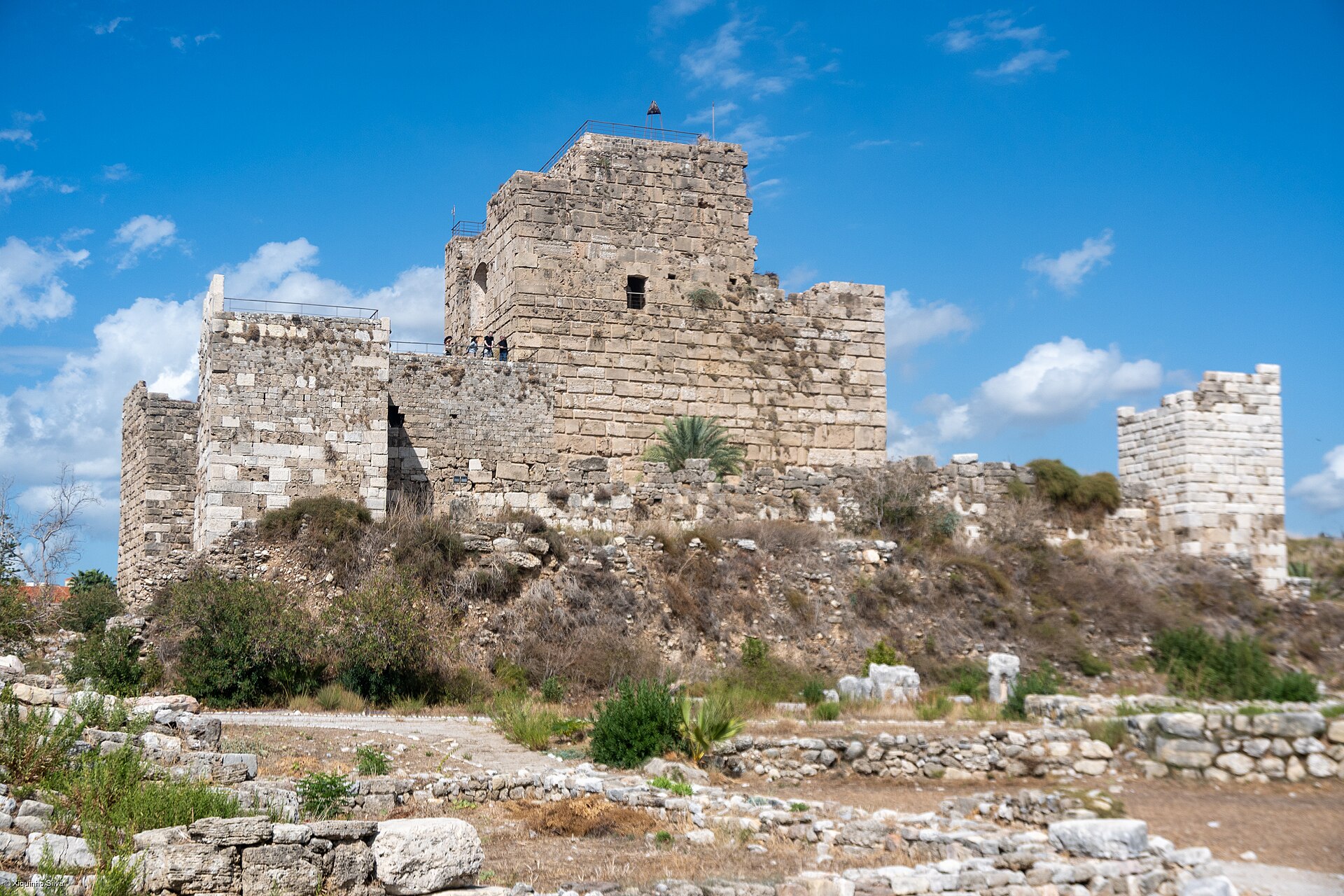
The Middle Ages brought new challenges. The Crusades turned Byblos into a strategic prize, fought over by European knights and Muslim rulers. The port was used to supply fortresses and transport troops, while the city itself changed hands multiple times. The Crusaders built a fortress here, which still looms over the harbor, a stark reminder of those turbulent centuries. Constructed from local stone, the castle looks imposing, yet inside, fragments of older structures—including Roman columns repurposed in its walls—hint at the layers of history beneath its surface.
Today, the ancient port of Byblos is a quiet place where life moves at an unhurried pace. Fishing boats still tie up along the shore, and locals come to sit by the water or sip coffee in one of the small cafés. The archaeological park stretching along the coast offers a walk through the ruins of different eras—from Phoenician walls to Roman colonnades and medieval fortifications. The best times to visit are early morning or late afternoon, when the sunlight warms the stones and the shadows of ancient walls stretch across the sand.
Byblos doesn’t feel like an open-air museum. It’s a living city where history and everyday life coexist. You might see fishermen mending their nets or children playing on the beach, much as they have for centuries. Yet there’s none of the hustle of major tourist destinations—the atmosphere remains peaceful, almost intimate. The pride locals take in their city is palpable, woven into the fabric of the place.
For anyone interested in history, Byblos is a treasure. You could spend hours here, moving from one layer of civilization to the next—from Phoenician times to Roman, from the Middle Ages to the Ottoman era. Every stone seems to hold a memory, and that sense of continuity makes the place special. A port that once connected continents now connects us to those who lived here thousands of years ago.
Byblos doesn’t try to impress with grandeur or opulence. Its strength lies in its authenticity, in the fact that it hasn’t been reconstructed or polished for tourists. This is a place where history breathes through the cracks in the walls, where the sea still laps against the same shores as it did in Phoenician times. That’s why the ancient port of Byblos isn’t just a landmark—it’s a living witness to time, relentless yet not entirely unkind.