The Casa de la Emisión Archaeological Museum in Trujillo isn’t just a building filled with artifacts—it’s a place where the history of Peru’s northern coast unfolds before your eyes. The museum itself is part of that history, housed in a colonial-era mansion that once served as a mint, striking silver coins for the Spanish crown. The thick adobe walls and wooden beams still carry the weight of that era, but the stories they tell stretch much further back, to the civilizations that shaped this region long before European arrival.
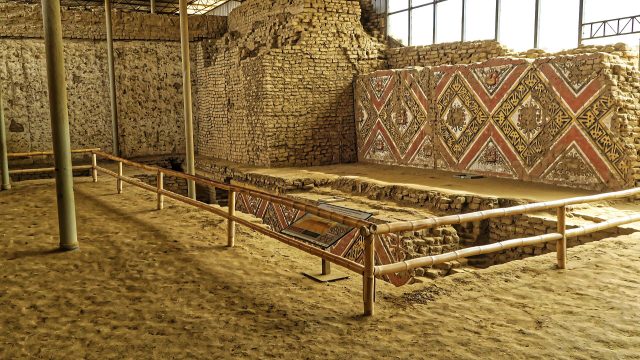
What makes this museum special is its intimacy. There are no vast halls crowded with endless displays, just a carefully curated collection where each piece has its own voice. The focus here is on the Moche and Chimú cultures, which thrived in the Trujillo area from the early centuries AD until the 15th century. The Moche, renowned for their intricate pottery and complex society, left behind more than just ceramics—they crafted delicate gold jewelry, ceremonial tumi knives, and vessels depicting mythological scenes that still puzzle archaeologists. The museum’s collection offers a glimpse into their world, where art and ritual were inseparable.
The Chimú, who succeeded the Moche, built one of the largest pre-Columbian empires in the Americas, with their capital at Chan Chan just outside Trujillo. The museum preserves fragments of their legacy—carved wooden reliefs, textiles with geometric patterns, and pottery adorned with their distinctive motifs. These objects reveal how the Chimú organized their society, worshipped their gods, and adapted to the harsh coastal environment. Walking through the exhibits, you begin to understand how these cultures laid the foundations for the region’s identity.
The building itself is worth lingering in. The colonial architecture, with its central courtyard surrounded by arched galleries, feels like a quiet retreat from the modern world. High ceilings, heavy wooden doors, and the scent of aged wood evoke the days when this space hummed with the activity of mint workers. Now, the only sounds are the soft footsteps of visitors and the occasional rustle of a guidebook. The courtyard, shaded by native plants, is the perfect place to pause and reflect on what you’ve seen.
Beyond the ancient artifacts, the museum also touches on the colonial period, showing how Trujillo transformed after the Spanish conquest. Old maps, documents, and household items illustrate the blending of Indigenous and European traditions, a process that reshaped the city into a key hub of the Viceroyalty of Peru. These exhibits bridge the gap between the pre-Columbian past and the colonial era, offering a fuller picture of how the region evolved.
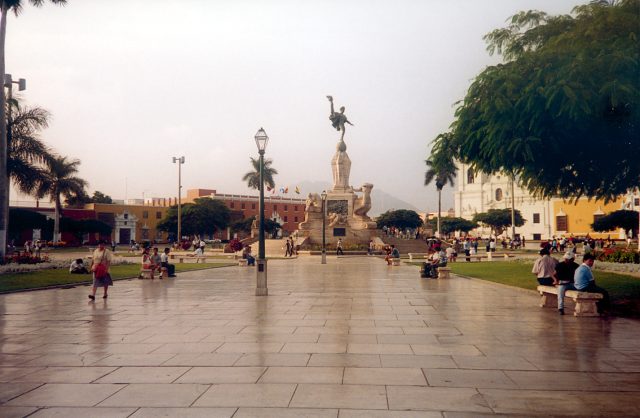
A visit here pairs well with exploring Trujillo’s historic center, where colonial churches and plazas stand in contrast to the ancient ruins nearby. After the museum, Chan Chan is an obvious next stop—the sprawling adobe city that was once the largest of its kind in the world. Or you might head to El Brujo or the Huaca del Sol y de la Luna, where the Moche built towering pyramids and temples. Each of these sites adds another layer to the story begun in the museum’s quiet rooms.
This isn’t a place for rushing. The museum’s charm lies in its unhurried pace, where the focus is on connection rather than spectacle. The artifacts aren’t just behind glass; they’re part of a living narrative about the people who walked this land centuries ago. There are no flashy interactive displays, no crowds jostling for space—just the quiet presence of history, waiting to be discovered.
For anyone drawn to archaeology or the pre-Columbian world, the Casa de la Emisión is an ideal starting point. It offers something rare: a chance to engage with the past without the distractions of mass tourism. Here, the past feels tangible, as if the stories of the Moche and Chimú are still lingering in the air, just beyond the reach of time.