Teatro Segura in Trujillo is one of those rare places where the past doesn’t just linger—it breathes. Built in the mid-19th century, the theater emerged during a time when the city was flourishing, its wealth fueled by the cotton and sugar trades. Trujillo had long been a hub of intellectual and artistic life, and the theater became its natural heart, a gathering place for merchants, aristocrats, and artists who came to debate ideas, share news, and lose themselves in performances. It wasn’t just a building; it was a statement, a declaration that this provincial city could hold its own against the cultural dominance of Lima.
The architecture reflects the ambitions of its time. Designed in the neoclassical style that swept through Latin America in the 19th century, the theater’s facade is a study in symmetry and grandeur. Tall columns and pilasters frame the entrance, leading into an interior where the original elegance still lingers. The ceilings are adorned with intricate plasterwork, the balconies carved from dark wood, and a chandelier—once the centerpiece of the hall—casts a warm glow over the space. Over the years, the theater has been restored, but the care taken in these efforts means that stepping inside still feels like stepping back in time. The details, from the worn velvet of the seats to the faint scent of aged wood, tell a story of countless performances and the generations who have filled the hall.
Teatro Segura was never just a stage for plays. In its early years, it hosted traveling opera companies, orchestras, and political gatherings, serving as the city’s cultural and social epicenter before radio and television became commonplace. Here, audiences watched everything from grand operas to comedies, and the theater often doubled as a ballroom for high-society events. Even today, it remains a vital part of Trujillo’s cultural life, hosting festivals, concerts, and premieres that draw both locals and visitors. The tradition of performance, established nearly two centuries ago, continues unbroken, a thread connecting the city’s past to its present.
What makes the theater’s name particularly interesting is that it wasn’t named after a famous artist or historical figure, but after its founder, José Segura. A local businessman and patron of the arts, Segura didn’t just fund the theater’s construction—he envisioned it as a space that would elevate Trujillo’s cultural standing. His gamble paid off. The theater quickly became one of the most prestigious in northern Peru, attracting top performers and cementing its place in the city’s identity. Segura’s legacy is a reminder of how individual passion can shape a community, turning a personal dream into a lasting institution.
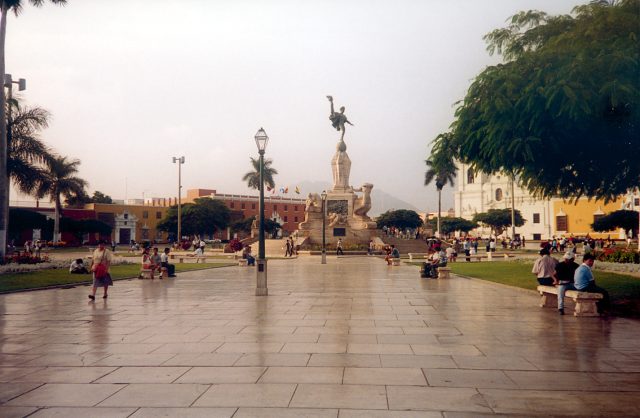
Trujillo itself is often overlooked by travelers drawn to Peru’s more famous destinations, like Cusco or Machu Picchu. But those who take the time to explore this northern city discover a place where history feels lived-in rather than preserved. The streets are lined with colonial-era buildings, their facades weathered by time, and the plazas hum with the quiet rhythm of daily life. Cafés spill onto sidewalks, and in the evenings, locals gather to chat, their voices mingling with the sound of fountains. Teatro Segura fits seamlessly into this landscape, not as a relic, but as an active participant in the city’s story.
Visiting the theater is more than just a chance to admire its architecture. On any given day, you might stumble upon an open rehearsal, a lecture, or an intimate concert featuring local musicians. Even when the hall is empty, the building itself speaks—of the music that once filled the air, the laughter of audiences, the rustle of programs being passed from hand to hand. The theater has witnessed Trujillo’s evolution, from a booming 19th-century trading hub to the quieter, more introspective city it is today. Yet through it all, it has remained a constant, a place where the past and present coexist.
What sets Teatro Segura apart is that it’s not a museum. It’s a living space, still very much in use. Performances, festivals, and cultural events continue to draw crowds, offering visitors a chance to see not just a historic building, but the pulse of modern Trujillo. The audience is a mix of locals and travelers, all united by a shared appreciation for art and history. It’s a place where the line between observer and participant blurs, where the act of sitting in the same seats as generations before you becomes a kind of communion with the past.
Trujillo doesn’t demand attention the way other cities do. It doesn’t rely on flashy attractions or tourist traps. Instead, it invites you to slow down, to wander its streets and discover its secrets at your own pace. You might spend an afternoon exploring its colonial churches, lingering in a café on the main square, or simply watching the world go by from a bench in the park. Teatro Segura is one of those secrets—a place that helps you understand the soul of the city. It’s not just a building; it’s a piece of Trujillo’s history, its culture, and its everyday life. And perhaps that’s why it endures, why it still has the power to inspire, long after the final curtain falls.