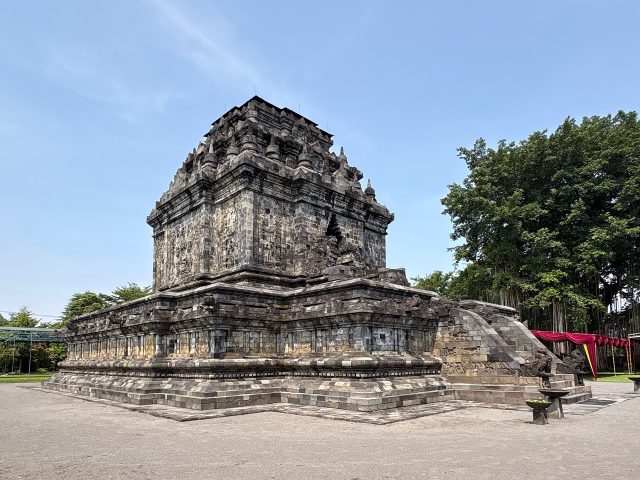
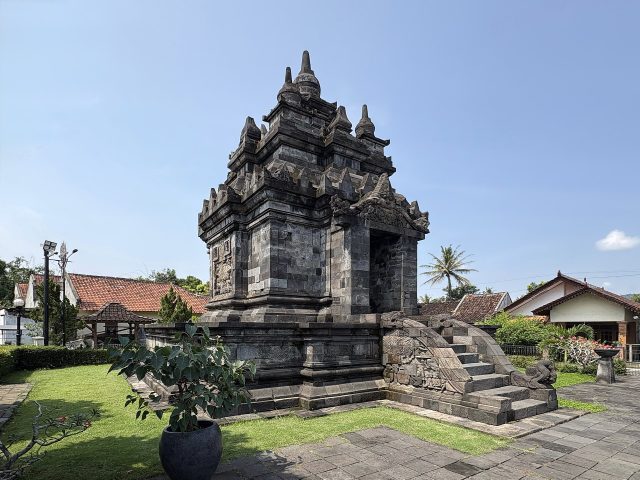
Candi Sewu is one of those places in Java that rarely makes it onto the cover of travel guides, though it could easily hold its own against the island’s more famous landmarks. Tucked away near Borobudur, surrounded by emerald rice fields and gentle hills, it feels like a quiet counterpart to the grand Buddhist stupa nearby. If you’ve already made the journey to Borobudur, it’s worth taking a little extra time to visit this older, lesser-known site. Candi Sewu predates Borobudur by nearly a century, and its story is woven into the early history of Central Java, a time when Buddhism and Hinduism coexisted rather than competed.
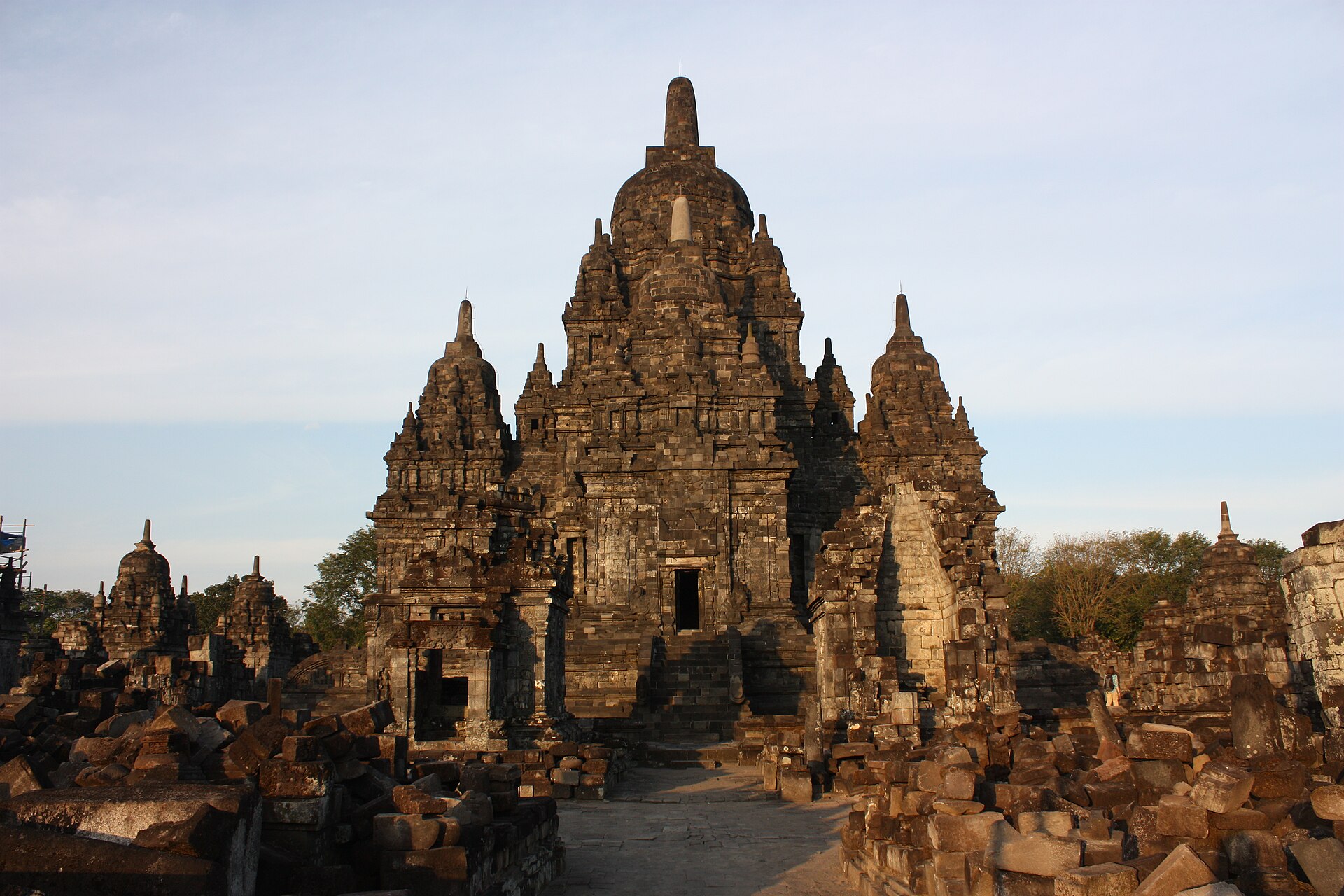
The name translates to "Thousand Temples," though the actual number is closer to two hundred and fifty. The discrepancy isn’t a mistake—on ancient Java, a thousand often symbolized something vast and immeasurable rather than a literal count. Built in the 8th century under the Sailendra dynasty, the same rulers who commissioned Borobudur, Candi Sewu was conceived as a mandala in stone, a sacred diagram where every element had its place. The main temple stands at the center, flanked by four smaller shrines arranged in a cross, with rows of miniature stupas and niches that once housed statues of bodhisattvas. The layout reflects a cosmological order, where architecture and spirituality merge.
The design of Candi Sewu follows the conventions of early Javanese temple architecture, though it has its own distinct character. The walls are adorned with reliefs depicting scenes from Buddhist sutras, though time has worn them down more than those at Borobudur. The stone blocks fit together with remarkable precision, held in place without mortar—a testament to the builders’ skill and their deep understanding of the material. Carved portals frame the entrances, guarded by fierce dvarapala statues meant to ward off malevolent spirits. Inside the central temple, a large Buddha statue once stood, though now only the pedestal remains, the figure itself lost centuries ago.
Unlike Borobudur, which rises dramatically above the plain, Candi Sewu feels more grounded, almost blending into the landscape. This might be because the complex was never fully completed—some sections remain unfinished, while others have succumbed to the passage of time. Earthquakes, common in Java, have also taken their toll, damaging several structures that were later restored in the 20th century. Yet even in its weathered state, the site has a quiet power. There are no crowds here, just the chance to wander among the stone walls and notice details that might otherwise go unnoticed.
For locals, Candi Sewu is a familiar part of the landscape, a place to escape the midday sun under the shade of old trees or sit on the worn steps and watch the light shift over the rice fields. While Borobudur draws reverence and pilgrims, Candi Sewu exists in a more everyday realm. Occasionally, religious ceremonies take place here, especially during Buddhist festivals, but on most days, it belongs to whoever chooses to visit. You might encounter monks circling the shrines or farmers leaving offerings of flowers and incense at the base of the temples, small acts that keep the site alive in the present.
The history of Candi Sewu is closely tied to that of Prambanan, the nearby Hindu temple complex built around the same time. The two sites align along a shared axis, and some scholars suggest this wasn’t a coincidence—perhaps reflecting an intentional harmony between the two faiths. There’s no definitive proof, though, leaving room for speculation about how the people of 8th-century Java perceived these places. What is clear is that for them, this was a site of significance, where the earthly and the divine intersected, and stone became a bridge between worlds.
Today, Candi Sewu stands as both an architectural monument and a reminder of how attitudes toward heritage have evolved. When Dutch colonizers began documenting Java’s ancient sites in the 19th century, the temple was overgrown, half-buried under grass and shrubs. Early restoration efforts cleared the vegetation and stabilized the structures, but the complex was never fully returned to its original state. In some ways, this is a blessing—Candi Sewu retains a sense of authenticity that polished, reconstructed sites often lose. The stones bear the marks of time, not just from the past, but from the ongoing process of decay and renewal.
Visiting in the early morning, when the air is cool and the sun casts long shadows across the ground, you can begin to understand why this place lingers in the imagination. The stones hold the night’s warmth, and the silence isn’t empty—it carries the weight of centuries. It’s easy to picture the rituals that once took place here, the chanting of mantras, the scent of incense mingling with the morning mist. Now, the only sounds are the rustle of leaves and the distant call of birds, but the past isn’t far away. It’s in the way the light falls, in the texture of the stone, in the quiet persistence of a place that has endured.