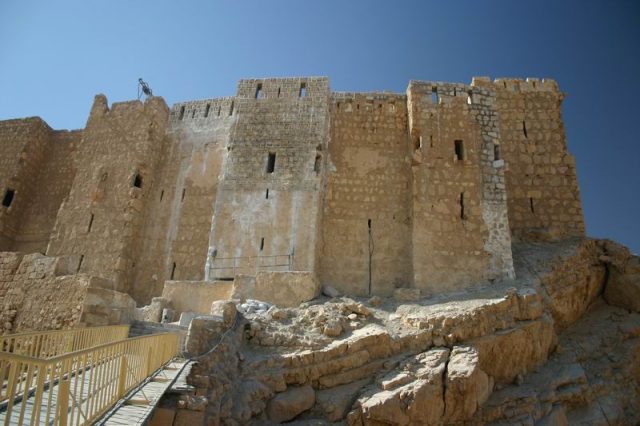
The Temple of Bel in Palmyra is one of those rare places where time seems to stand still, leaving behind only the silent testimony of stone. Once the heart of the city’s religious and civic life, this ancient complex was dedicated to Bel, the supreme deity of the Palmyrene pantheon. Palmyra itself thrived as a crossroads of trade and culture, a bridge between the Roman Empire and the East, and the temple was where its people gathered to worship, trade, and celebrate. Today, its ruins speak of an era when the city was a bustling hub of commerce and ideas, a place where caravans from distant lands converged under the watchful gaze of the gods.
Construction of the temple began in the first century AD, though some scholars suggest its origins may stretch even further back. Bel, revered as the god of the sky, sun, and fertility, was central to Palmyrene identity, and the temple was built to honor him. When Palmyra came under Roman influence, Bel’s cult merged with that of Jupiter, and the temple became known as the Temple of Bel-Jupiter. This blending of traditions is evident in its architecture—a striking fusion of Eastern and Roman styles. The design reflects the city’s unique position in the ancient world, where cultures met and shaped one another.
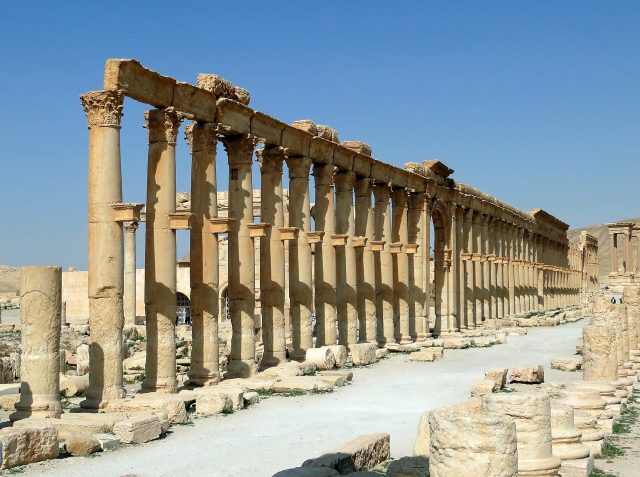
The temple stood on an elevated platform, enclosed by a massive wall lined with columns. Visitors entered through monumental gates adorned with intricate carvings and inscriptions, stepping into a vast courtyard where rituals and sacrifices took place. Unlike many Roman temples, the main altar was open to the sky, a feature more common in Eastern religious architecture. The surrounding colonnade provided shade for pilgrims and merchants, offering respite from the desert heat. The columns, some still standing today, were part of a grand portico that once framed the sacred space, their Corinthian capitals decorated with delicate floral motifs.
Inside the temple, fragments of wall paintings and bas-reliefs have survived, depicting scenes from mythology and daily life in Palmyra. These remnants offer glimpses into the beliefs and customs of the people who once gathered here. The temple was more than a place of worship; it was a social and political hub where deals were struck, alliances forged, and festivals celebrated. The Palmyrenes believed their gods protected the city, and the temple symbolized their unity and prosperity. Even after Palmyra became part of the Roman Empire, the temple remained a place where local traditions endured, a testament to the city’s resilience and identity.
The temple’s fate, like that of Palmyra itself, was marked by both glory and destruction. In the third century, the city briefly became the capital of an independent state under Queen Zenobia, who defied Rome’s authority. But by the end of the century, Roman legions had crushed the rebellion, and Palmyra was left in ruins. The temple fell into decline, later repurposed as a church during the Christian era and then as a mosque after the Arab conquest in the seventh century. Over the centuries, wind, sand, and time wore away at its stones, leaving only the skeletal remains that stand today.
Approaching the Temple of Bel, visitors follow the same path once trodden by caravans and pilgrims. The journey through the desert is a reminder of the harsh yet beautiful landscape that shaped Palmyra’s history. The stones, smoothed by centuries of wind and sand, carry the weight of time, and stepping into the temple’s ruins, it’s impossible not to feel the presence of the past. The columns, bathed in golden light at sunset, still command attention, their grandeur undiminished despite the ravages of history.
For Syria, Palmyra and its temple are more than just archaeological sites—they are symbols of a rich and layered past. The Temple of Bel embodies the resilience of human culture, surviving wars, conquests, and neglect to remind us of the enduring desire to create something lasting. It stands as a monument to the people who built it, a city that once thrived at the crossroads of civilizations, and a history that continues to resonate in every weathered stone. Though much has been lost, the spirit of the place endures, a quiet witness to the passage of time.