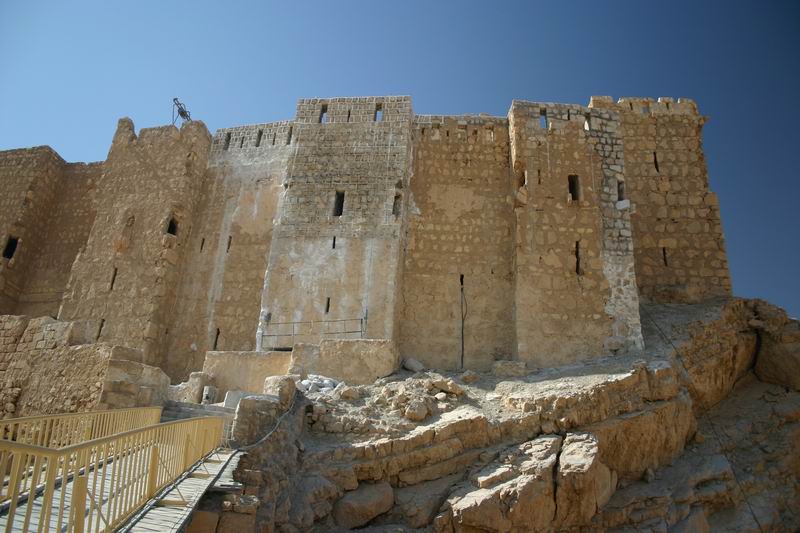
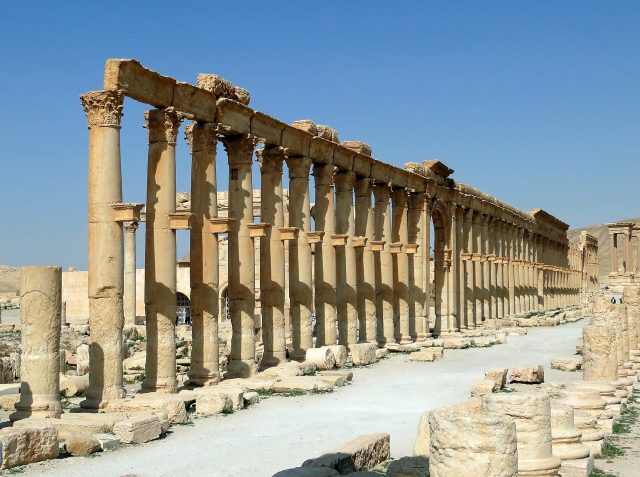
Perched on a rocky hill overlooking the ancient ruins of Palmyra, the Arab Castle stands as a silent witness to centuries of history. From a distance, its weathered stones blend into the desert landscape, but as the sun sets, the fortress glows in warm hues of gold and rose, its silhouette sharp against the fading light. Unlike the grand temples and colonnades below, this structure is relatively young—built in the 13th century, long after Palmyra’s golden age as a thriving trade hub. Yet its presence feels timeless, a reminder that even in decline, this land remained a crossroads of cultures and conflicts.
The castle’s architecture reflects the practical needs of its time. Thick walls, narrow arrow slits, and a central courtyard surrounded by living quarters and storage rooms were designed for defense, not grandeur. Inside, remnants of cisterns and garrison chambers hint at the daily life of those who once manned its battlements. Many of the stones used in its construction were likely repurposed from Palmyra’s older ruins, a common practice in an era when ancient cities served as quarries for new buildings. From the top, the view stretches across the oasis—endless desert to the east, the scattered ruins of Palmyra to the west, and between them, patches of green where palm groves once thrived.
The fortress has seen many hands over the centuries. Originally built by the Mamluks, it later passed to the Ayyubids, then the Ottomans, and even briefly housed a French colonial garrison in the 19th century. Each era left its mark—reinforced walls, altered layouts, or new fortifications—but its strategic importance never faded. The hill it occupies commands the entire valley, making it a natural stronghold. Control over this vantage point meant control over the surrounding land, a fact that shaped its turbulent history.
Today, the castle offers more than just a glimpse into the past; it invites visitors to step into the stories of those who lived here. The climb up the steep path to its gates is quiet, save for the wind whispering through the empty halls. From the ramparts, the contrast between past and present is stark—where once bustling markets and lush gardens flourished, now only sand and scattered ruins remain. Yet there’s a quiet beauty in this desolation, especially at dawn, when the first light touches the ancient columns below while the fortress still lingers in shadow.
Visiting the castle is less about ticking off a landmark and more about immersing yourself in the layers of time. It’s easy to imagine caravans winding through the desert, soldiers scanning the horizon for threats, or merchants haggling in the streets below. The ruins of Palmyra and the fortress on the hill represent two sides of the same story—one of rise and fall, the other of resilience. While the ancient city draws most of the attention, the castle holds its own significance, a testament to the people who fought to preserve what little remained.
Reaching the fortress isn’t effortless. The path to the summit is rocky and steep, and in the heat of the day, the ascent can be demanding. But those who make the journey are rewarded with solitude and sweeping views. Unlike the more frequented ruins below, the castle rarely feels crowded, allowing for a quiet exploration of its crumbling walls. It’s not a polished tourist site but a fragile monument, where every step should be taken with care. Many sections are in disrepair, a reminder of both its age and the challenges of preservation.
The Arab Castle of Palmyra is more than just a relic of stone—it’s a chapter in a story that didn’t end with the fall of empires. It speaks to the enduring human impulse to build, defend, and endure, even in the harshest of environments. While Palmyra is often remembered for its classical past, the fortress offers a glimpse into its later, equally complex history. It has stood for nearly a thousand years, and if given the chance, it may stand for a thousand more.