The Temple of Baalshamin in Palmyra is one of those rare places where time seems to stand still, where the stones themselves whisper of ancient rituals and the caravan routes that once linked East and West. Built in the second century AD, it was dedicated to Baalshamin, the god of the sky, who held a prominent place in Palmyra’s pantheon alongside other local deities. The temple rose on the site of an even older sanctuary, a common practice in these lands where history layered itself like pages in a book, each new chapter built upon the last.
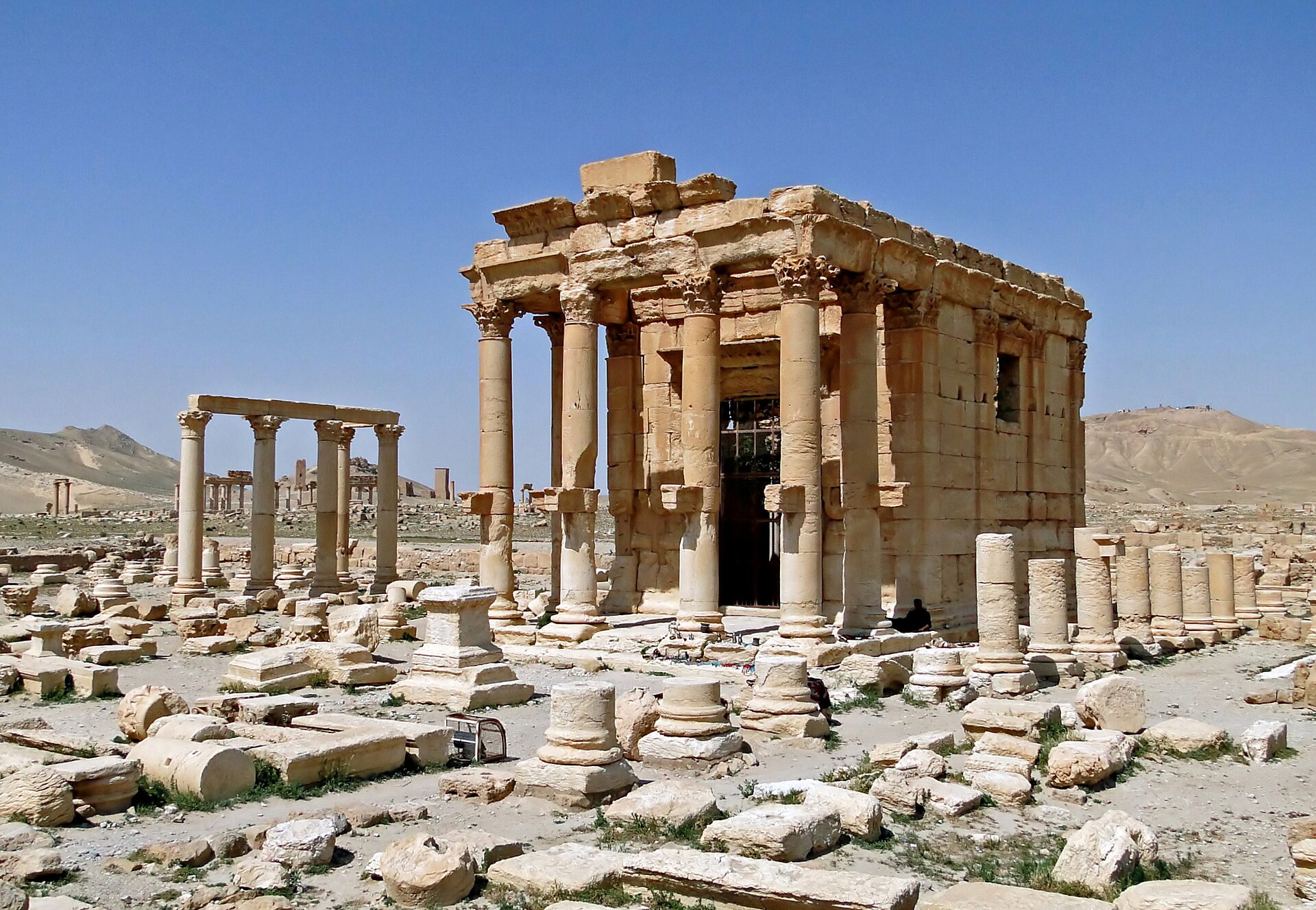
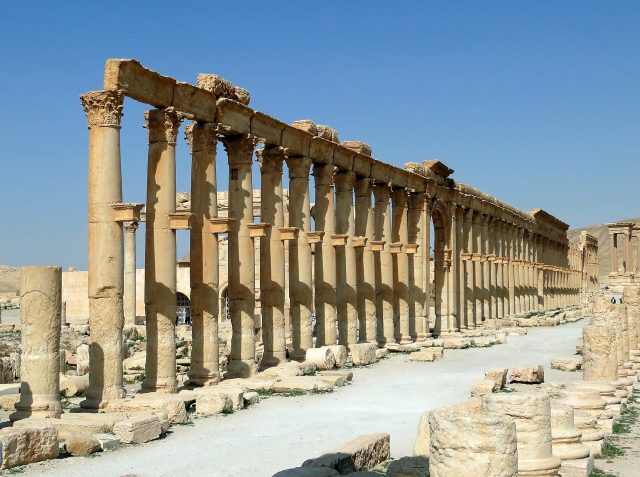
The architecture of the temple reflects the cultural melting pot that was Palmyra. Its colonnade, with Corinthian capitals, speaks of Greco-Roman influence, while its sturdy walls and layout echo Near Eastern traditions. The main entrance led into a spacious courtyard surrounded by porticoes, where pilgrims and merchants once gathered. At its center stood an altar, and beyond it, the sanctuary housing the cult statue of Baalshamin. Unlike many temples of the time, this one was not an isolated monument but a living part of the city, woven into the fabric of daily life.
In its heyday, Palmyra was a thriving hub of trade, where caravans from Persia, India, and China passed on their way to the Mediterranean. The Temple of Baalshamin was more than a religious site—it was a place where deals were struck, disputes settled, and contracts stored. Baalshamin was revered as the protector of travelers, and his blessing was sought by those embarking on the perilous journey across the desert. Here, commerce and faith intertwined, as they often did in the ancient world.
Over the centuries, the temple underwent several transformations. In the third century, when Palmyra reached its peak under Queen Zenobia, the temple was expanded and adorned. Later, as Christianity spread, it lost its original purpose but was not destroyed. Instead, it was repurposed—during the Byzantine era, residential buildings sprang up within its precincts, and by the Middle Ages, it had faded into ruins, buried beneath the sands.
Today, only fragments of its walls and columns remain, yet even these ruins carry the weight of history. Walking through the site, it’s easy to imagine the murmur of prayers, the scent of sacrificial fires rising into the sky, and the bustle of a city that once thrived here. The temple is especially striking at sunset, when the stones glow golden and the shadows stretch long, blurring the line between past and present.
The Temple of Baalshamin is more than an architectural relic—it’s a witness to a history far greater than any single city or era. It stands as a reminder of Palmyra’s role as a crossroads of cultures, where traditions from different peoples merged to create something unique. Even now, in its ruined state, the site draws those who seek to understand the ancient trade routes and the lives of the people who built this place.
In recent decades, the temple, like much of Palmyra, has suffered from conflict and vandalism. Parts of its structure were destroyed, and its intricate carvings and inscriptions damaged. Yet even in its diminished state, it remains a powerful symbol of Syria’s cultural heritage and the broader legacy of the Middle East. There is hope that one day, restoration efforts may bring back some of its former glory, preserving its story for future generations.
Visiting the Temple of Baalshamin is not just about seeing ancient ruins—it’s an opportunity to reflect on the fragility of human memory. Here, among the stones and sand, the weight of centuries is palpable. History is not just a record of dates and events; it’s a living thread connecting us to those who came before. Though the temple is no longer what it once was, it still holds within it the echoes of a world that has faded but not been forgotten.