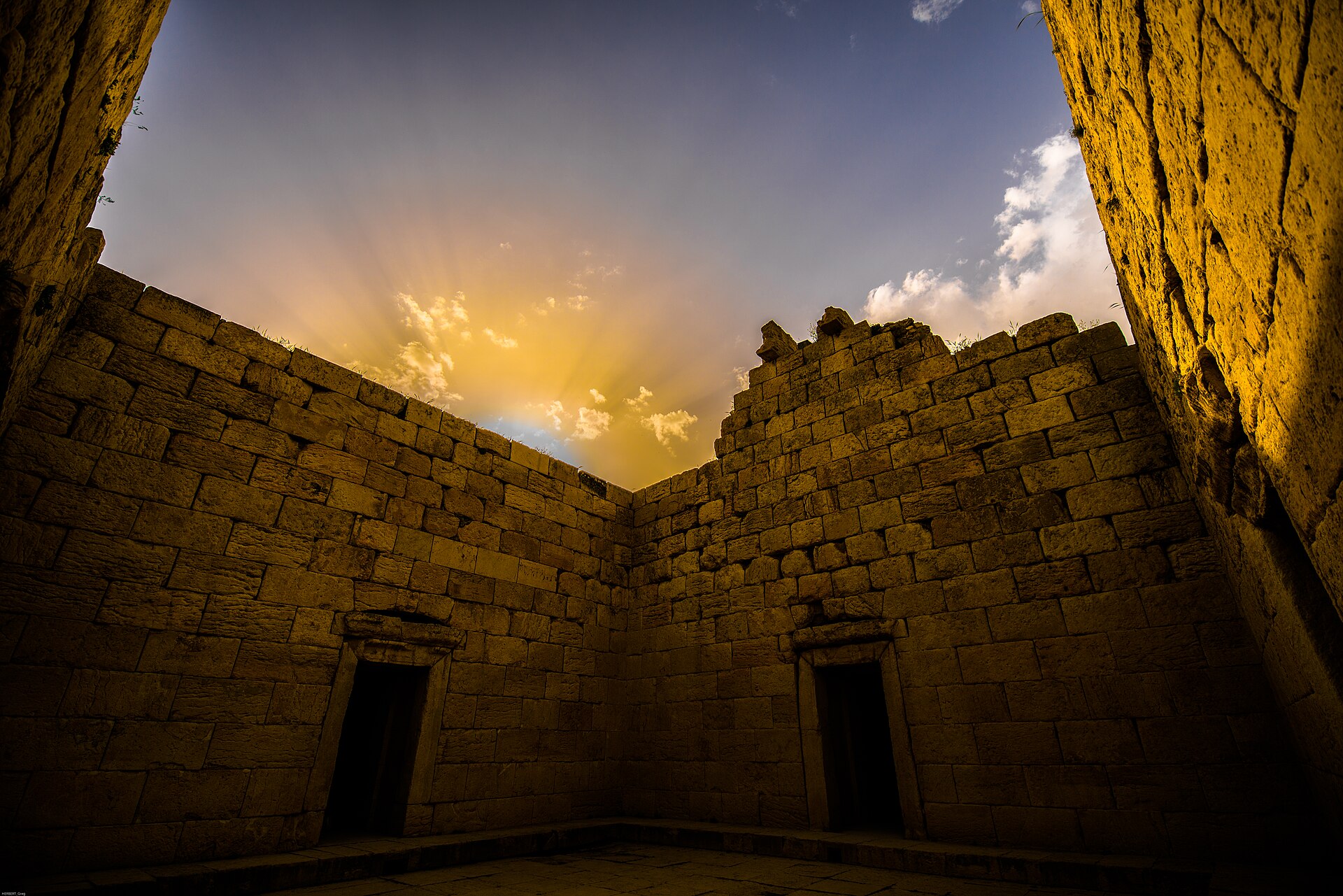
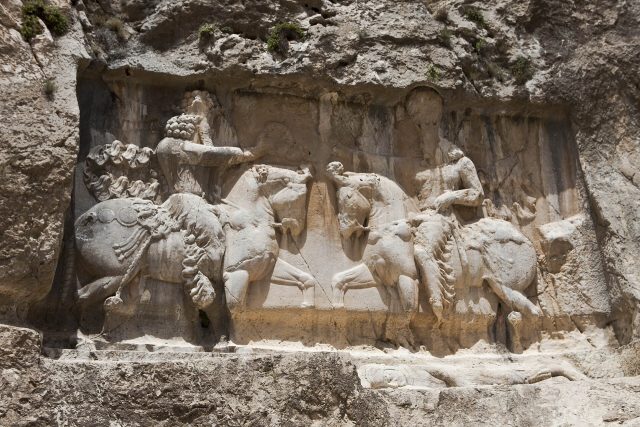
The Temple of Anahita in Kermanshah Province is one of those places where Iran’s ancient past feels almost tangible. It sits on the outskirts of a quiet town, surrounded by low rolling hills. The temple honors Anahita, the pre-Islamic goddess of water, fertility, and purity, whose worship was once central to Zoroastrian traditions across Persia. Though her cult faded with the rise of Islam, this site preserves her legacy.
The ruins reveal a massive stone structure, its square foundation once framed by columns. Builders used large limestone blocks, fitted together without mortar. At the heart of the temple lay a pool, fed by nearby springs. Water, sacred in Zoroastrian belief, was channeled here to honor Anahita’s life-giving power. The pool is now little more than an outline, but its shape still hints at the rituals that once took place.
Scholars date the temple to the Sasanian era, roughly the 3rd or 4th century AD. Some suggest it may have been built over an even older shrine. The Sasanian period marked the height of Zoroastrian influence in Persia. Water, seen as a divine force, made this region a fitting location for such a sanctuary. Kermanshah’s landscape, rich in underground springs, shaped the temple’s placement.
After Islam arrived, the temple’s religious importance faded. Many Zoroastrian sites were destroyed or repurposed, but this one survived. Centuries ago, pilgrims gathered here, leaving offerings and performing ceremonies. Today, the site is quiet, visited only by the occasional traveler or the wind through the grass.
The Temple of Anahita sees few tourists. It’s a place for those who prefer history without crowds, guided tours, or modern distractions. The stones, the sky, and the silence invite you to imagine the temple as it once was.
Kermanshah is a modest town, and the temple is its most notable landmark. The countryside is dotted with fields and orchards, the Zagros Mountains rising in the distance. For locals, the ruins are part of the scenery, though they carry a quiet respect for their history. Sometimes archaeologists visit, but more often, travelers stumble upon it by chance.
Visiting isn’t about ticking off a sightseeing box. There are no explanations or reconstructed displays—just the raw remains of a place that has endured for millennia. Sit on the remnants of a column, listen to the wind, and picture the temple alive with worship and flowing water.
The temple connects Iran’s past and present. It reminds us that history isn’t just about empires and battles. If you’re in this part of the country, visit. Stand among the stones, breathe in the stillness, and let the weight of centuries settle around you.