Bishapur is one of those ancient cities that seem frozen in time, its ruins still whispering of past grandeur. Today, its remains lie in a quiet valley near the modern Iranian city of Kazerun, where fragments of stone tell the story of an empire that once rivaled Rome. The Archaeological Museum of Bishapur, nestled within these ruins, is more than a collection of artifacts—it’s a doorway into the world of the Sassanian dynasty, a civilization that shaped the region’s history.
Founded in the third century by Shah Shapur I, one of the most powerful rulers of the Sassanian Empire, Bishapur was conceived as a new capital, a symbol of strength and cultural flourishing. Shapur didn’t just build a city; he designed it as a statement of imperial ambition, where architecture, art, and military might converged. The city was meant to be more than an administrative hub—it was a melting pot of traditions, blending Persian, Greek, and even Indian influences into something uniquely its own.
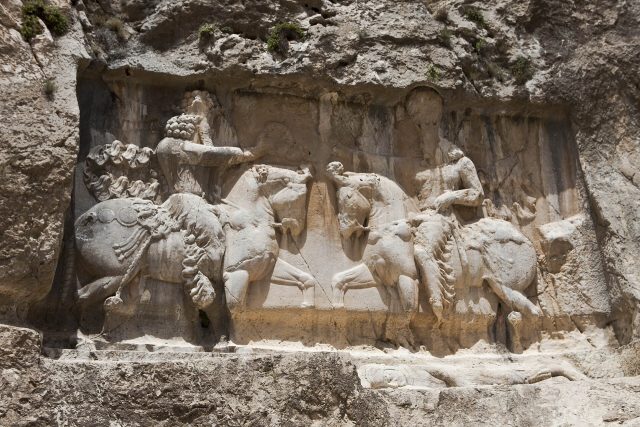
The museum itself is modest but rich in detail, offering a glimpse into daily life under Sassanian rule. Its collection includes fragments of reliefs, statues, pottery, coins, and everyday objects unearthed during excavations. Among the most striking pieces are the stone carvings depicting scenes from Shapur’s reign—his victories over Roman emperors, grand receptions, and hunting expeditions. These weren’t mere decorations; they were tools of propaganda, reinforcing the image of a just and powerful ruler. The level of craftsmanship is remarkable, with details so precise that they reveal the fashion, weaponry, and even hairstyles of the time.
Bishapur was built with careful planning, its layout resembling a chessboard. At its heart stood a palace with a vast hall, its ceiling supported by towering columns, its walls adorned with intricate mosaics. Nearby were temples dedicated to Zoroastrian deities and public baths modeled after Roman designs. One of the city’s most impressive features was its water system—aqueducts and canals channeled water from the surrounding mountains, while underground tunnels provided ventilation and drainage. These engineering feats speak to the sophistication of Sassanian urban planning.
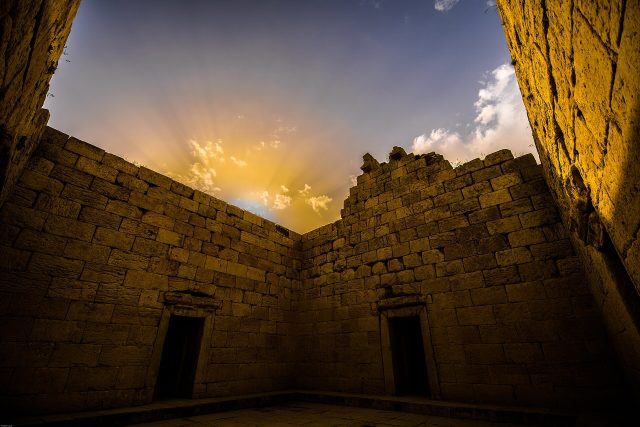
Walking through the ruins today, it’s easy to imagine the city as it once was. The remnants of colonnades and walls hint at a place where merchants traded goods from distant lands, priests performed rituals, and soldiers prepared for battle. The so-called Throne Hall, with its niches where statues of gods and rulers once stood, is particularly evocative. This was where Shapur addressed his subjects, and the space still carries a sense of authority, as if the echoes of his voice linger in the air.
The museum’s exhibits, though small, offer a vivid portrait of life in Bishapur. Clay tablets inscribed in Middle Persian provide insights into laws, commerce, and personal stories, while statues and busts reveal the skill of ancient sculptors. Some pieces are so lifelike that they seem to capture not just the appearance but the character of the people who lived here. Among the artifacts are also objects of luxury—gold jewelry inlaid with precious stones, worn by the city’s elite.
What makes Bishapur truly fascinating is its role as a cultural crossroads. Here, Persian monumentalism met Greek harmony, and Roman engineering blended with local building techniques. The city was a bridge between East and West, a place where different civilizations intersected. Its ruins serve as a reminder of how closely connected the ancient world once was.
Visiting Bishapur is like stepping into a story that feels both distant and strangely familiar. There are no crowds here, just the quiet rustle of wind through the grass and the occasional voices of shepherds tending their flocks nearby. Time moves differently in this valley—slowly, allowing you to take in every stone, every inscription, every trace left by people who lived here over a thousand years ago. It’s one of those rare places in Iran where history doesn’t just exist in books; it feels alive, almost tangible, as if the past is still breathing beneath your feet.