Bishapur is one of those rare places in Iran where time seems to have paused, preserving the traces of an empire and the everyday lives of people who walked these streets nearly two thousand years ago. Founded in the third century by Shapur I, one of the most powerful rulers of the Sassanian dynasty, the city was strategically placed in a valley along the Shapur River. The surrounding mountains offered natural protection, while the fertile land and proximity to ancient trade routes made Bishapur a vital hub in the empire. Today, its ruins lie off the beaten path, far from the crowds of more famous historical sites. This remoteness gives it a quiet charm—here, you can wander among the stones and columns almost alone, trying to imagine the bustling life that once filled these streets during the height of the Sassanian era.
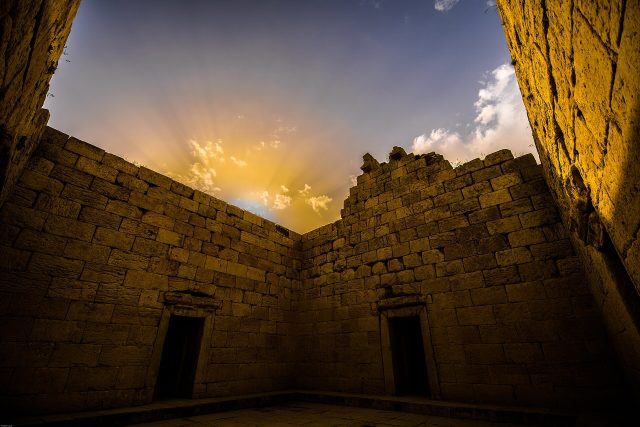
The city’s architecture reflects both ambition and precision. Unlike many settlements of its time, Bishapur was laid out on a grid, with straight streets intersecting at right angles. At its heart stood the royal palace, though now only the foundations and fragments of mosaic floors remain. The most striking structure is the so-called Iwan-e Karkas, a vast vaulted hall that likely served as a throne room. Its towering arches once supported massive columns, and the walls were adorned with intricate reliefs and paintings. Nearby, the remnants of fire temples—central to Zoroastrianism, the empire’s state religion—still convey a sense of sacred grandeur, despite their ruined state.
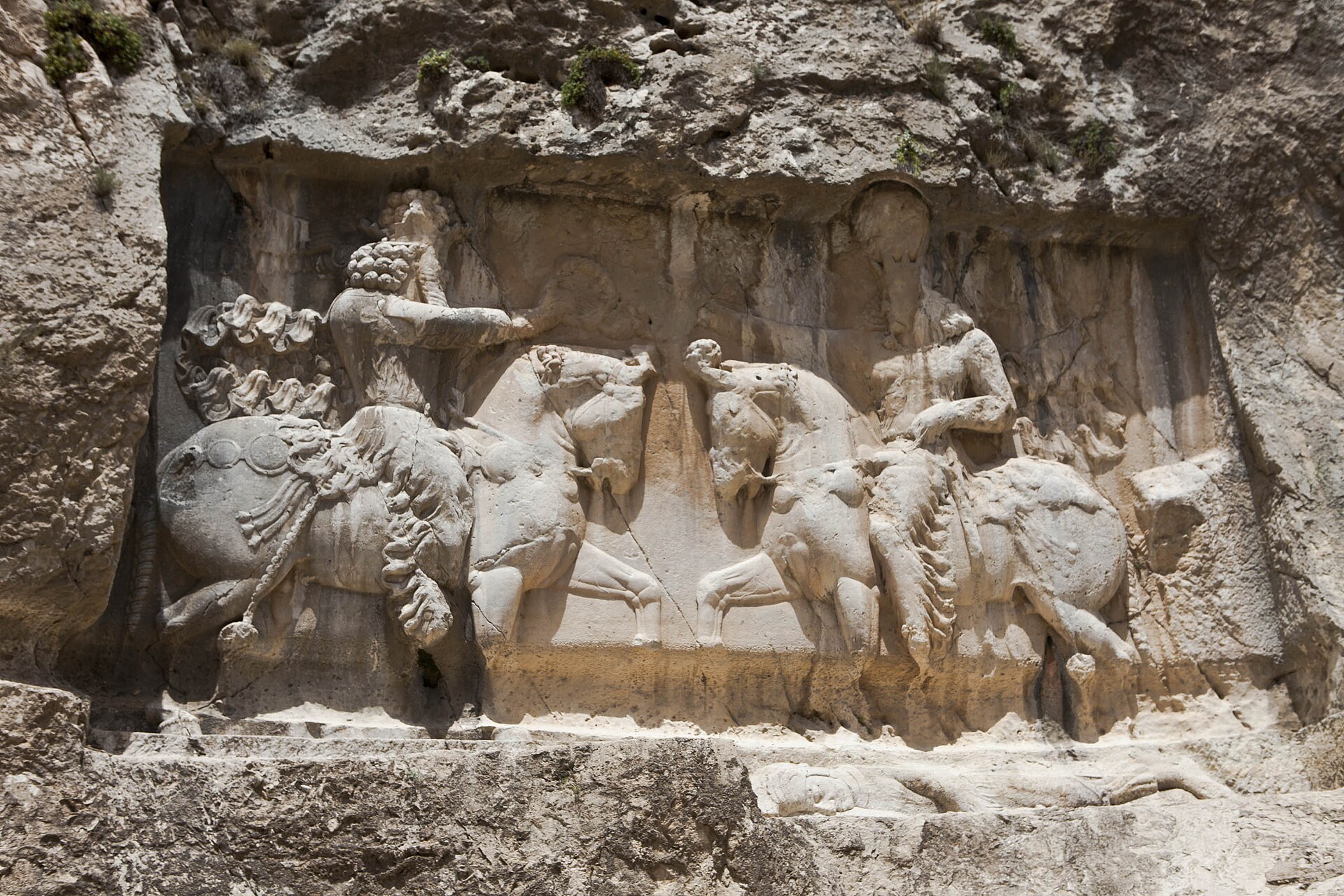
One of Bishapur’s most compelling features is its rock reliefs, carved into the cliffs of the surrounding mountains. These depict Shapur I’s triumphs over Roman emperors, including the capture of Valerian after the Battle of Edessa. More than mere art, these reliefs were political statements, designed to immortalize the empire’s power. The craftsmanship is astonishing—every fold of fabric, every expression on the faces, even the details of horse harnesses, are rendered with care. Nearby lies Shapur’s Cave, where a colossal statue of the king once stood, carved from a single rock. Today, only the torso remains, but its scale still commands awe.
Bishapur was not just a political center but a thriving cultural and economic hub. Archaeological finds reveal a city of skilled artisans—glassmakers, potters, metalworkers, and jewelers who crafted goods from gold and precious stones. Coins and everyday objects unearthed here show trade links with India, China, and even the Roman Empire. The surrounding area still bears traces of the sophisticated aqueducts and irrigation systems that sustained the city’s agriculture, a testament to the engineering prowess of the Sassanian era.
What makes Bishapur special today is its atmosphere. Unlike more tourist-heavy sites, it remains untouched by modern distractions. There are no souvenir stalls or crowded cafes, just the quiet rustle of wind through the grass and the occasional call of shepherds tending their flocks among the ruins. The landscape around the city is much as it was centuries ago—fields of pomegranates and figs stretch toward the distant mountains, where the light shifts over the ancient stones as the sun sets. Time here feels different, as if the past lingers just beneath the surface.
Visiting Bishapur is less about ticking off sights and more about stepping into another era. You can spend hours tracing the outlines of streets, trying to reconstruct the city in your mind, or sit on the steps of a ruined temple, wondering how many generations have walked these same paths. There are no flashy reconstructions or interactive displays—just the quiet presence of history, waiting to be discovered on its own terms. For some, it’s a history lesson; for others, a place for reflection; and for many, simply a beautiful landscape where the past and nature exist in harmony.
Reaching Bishapur isn’t always easy, especially for independent travelers, but that’s part of its appeal. The journey itself feels like a step away from the modern world. Once there, you can spend the day without rushing, bringing food and water to settle on the grass near the ruins, watching how the light plays across the ancient stones. If you’re lucky, you might meet locals who share stories about the area or point out hidden corners not marked on any map.
Bishapur is more than a collection of ruins—it’s a living piece of history, woven into the land and the memories of those who know it. The city has seen rise and fall, war and peace, yet it still carries the spirit of the time when it was a center of the world. That’s why it draws those who seek more than just scenery; it offers a connection to something deeper. Here, you don’t just visit history—you feel it, as if the past isn’t gone, just waiting in a different form.