The Church of Alexander Nevsky in Bizerte is one of those places that feels like an accidental transplant—foreign yet strangely at home in its surroundings. Built in the early 20th century, it stands as a quiet monument to the Russian émigrés who found refuge in Tunisia after the revolution and civil war. For thousands of officers, soldiers, and their families fleeing chaos, this small church on the Mediterranean coast became more than a place of worship. It was a fragment of the homeland they had lost, a reminder of a world that no longer existed.
The building itself is unmistakably Russian, its white stone and onion domes a stark contrast to the warm hues of Tunisian architecture. There’s something almost surreal about seeing this modest, traditional church under the North African sun, as if a piece of rural Russia had been gently placed here. Inside, the church retains the atmosphere of its early years. The iconostasis, frescoes, and religious artifacts were either brought from Russia or crafted by the hands of the exiles themselves, preserving a sense of continuity with the past.
The church’s history is tied to the fate of the Russian Squadron, which arrived in Bizerte in 1920. After the White Army’s defeat in Crimea, the fleet, under Admiral Kedrov, carried not just military personnel but civilians—women, children, the elderly—seeking safety. The French authorities, who then controlled Tunisia, allowed them to establish a parish, and the church was consecrated in 1938, long after most Russians had left Bizerte. By then, the city had briefly become a Russian enclave in North Africa, and the church remains one of the few tangible traces of that time.
Today, the Church of Alexander Nevsky is both an active place of worship and a historical landmark. Visitors can see memorial plaques bearing the names of those buried here, along with photographs and documents that tell the story of the Russian community in Bizerte. Services are infrequent, but attending one offers a rare glimpse into the continuity of tradition, a thread connecting this small church to Russia across decades and distances.
The area around the church still holds echoes of that era. Some descendants of the original émigrés remain in Bizerte, though their numbers have dwindled. A few maintain ties to the church, attending services or helping with its upkeep. The city itself treats the church with quiet respect—it’s not a typical tourist attraction, but rather a place valued for its historical significance.
Visiting the church feels less like a tour and more like stepping into a forgotten chapter of history. There are no crowds, no guides, no souvenir stalls—just silence, the scent of incense, and the sense that time has stood still. For some, it’s a place to reflect on the lives of those forced to leave their homeland; for others, it’s a chance to see how Russian culture took root in an unexpected corner of the world.
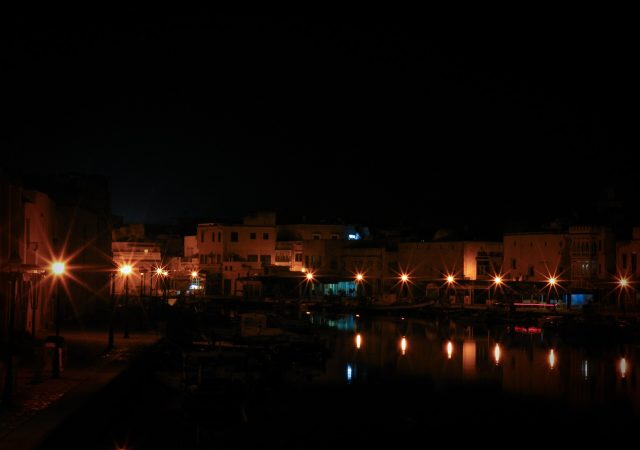
The church sits on a small hill, offering a view of Bizerte and its harbor. On clear days, the sea stretches out below, the same waters that once carried Russian refugees to these shores. Now, it’s simply part of the landscape, a quiet witness to the past. What makes this place special is its unassuming presence—it doesn’t try to be a museum or a memorial. It simply exists, a reminder that history isn’t always written where it begins, but where fate carries people.