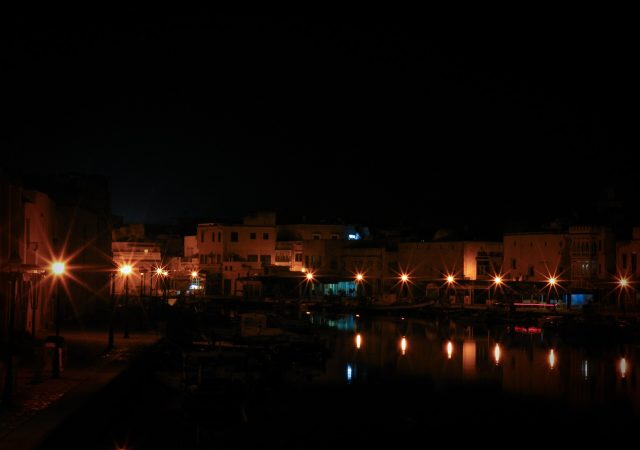
Perched on the northern edge of Bizerta, the Kasbah stands as a quiet witness to centuries of Mediterranean history. Its weathered stone walls rise above the old port, where fishing boats still bob in the harbor and the scent of saltwater lingers in the air. The fortress wasn’t always the peaceful landmark it is today—it has seen sieges, conquests, and the slow passage of empires, each leaving its mark on the structure. Built during the Hafsid dynasty in the 13th century, the Kasbah was designed to guard the entrance to Bizerta’s lagoon, a strategic point for trade and naval power. Over time, it evolved from a military stronghold into a residential quarter, its narrow alleys and whitewashed houses absorbing the rhythms of daily life.
The architecture of the Kasbah tells a story of adaptation. The original fortifications were reinforced by the Ottomans in the 16th century, who added thicker walls and a more imposing gate to deter invaders. Later, under French colonial rule, parts of the structure were repurposed, blending European influences with the existing North African design. Walking through its arched passageways, you can still spot the remnants of these layers—crude stonework from the medieval era, Ottoman-era bastions, and the occasional wrought-iron balcony added in the 19th century. The fortress was never just a single building but a complex of walls, towers, and courtyards, some of which have crumbled with time while others remain surprisingly intact.
At the heart of the Kasbah is the Great Mosque, a modest yet striking structure with a square minaret that has become one of Bizerta’s most recognizable landmarks. Unlike the grand mosques of Tunis or Kairouan, this one feels intimately tied to the community, its walls echoing with the calls to prayer that have sounded here for generations. The mosque’s courtyard, shaded by a lone olive tree, offers a moment of respite from the sun, its cool stones worn smooth by centuries of footsteps. Nearby, the old medina spills out in a labyrinth of alleys, where vendors sell fresh sardines, handwoven baskets, and spice blends that have traveled from the souks of the interior.
The Kasbah’s position overlooking the sea gives it a commanding view of Bizerta’s twin harbors—the old port, where wooden fishing boats unload their catch at dawn, and the larger commercial docks beyond. From the fortress walls, you can watch the light change over the water, turning the lagoon from a deep blue in the morning to a shimmering gold at sunset. This vantage point was once crucial for defense, but today it’s simply one of the best places in the city to take in the slow, unhurried pace of life along the coast. The sea breeze carries the sounds of the port—fishermen haggling over prices, the clatter of nets being mended, the occasional horn of a distant ship.
Life inside the Kasbah has always been shaped by the sea. For centuries, its residents were fishermen, sailors, and merchants, their livelihoods tied to the rhythms of the Mediterranean. Even now, the old port remains a working harbor, not a polished tourist attraction. The Kasbah’s houses, many of them built directly into the fortress walls, were designed to withstand both the elements and the occasional attack. Their thick walls and small windows keep the interiors cool in summer and warm in winter, a practical solution that also gives the neighborhood its distinctive, fortress-like appearance. Some of these homes have been passed down through generations, their interiors filled with the same furniture and family heirlooms that have been there for decades.
The Kasbah’s decline as a military stronghold began in the 19th century, when Bizerta’s strategic importance shifted with the construction of a modern naval base by the French. The fortress was no longer needed to defend the city, and over time, its walls became less a barrier and more a part of the urban fabric. By the mid-20th century, the Kasbah had taken on a new role as a residential and commercial district, its narrow streets lined with small shops and cafés. Today, it’s a place where history feels lived-in rather than preserved behind glass. The old cannons that once pointed out to sea are now rusted and silent, their purpose long forgotten by the children who play around them.
Visiting the Kasbah is less about ticking off a list of sights and more about wandering without a fixed plan. There’s no grand entrance or ticket booth—just a series of arched gateways that lead you deeper into the maze of streets. Some alleys dead-end at the water’s edge, where the sea laps against the base of the fortress walls. Others open into small squares where elderly men sit playing dominoes under the shade of a fig tree. The absence of crowds makes it easy to imagine what life here must have been like centuries ago, when the Kasbah was the heart of Bizerta rather than a quiet corner of it.
The fortress has survived not just as a monument but as a living neighborhood. While other historic sites in Tunisia have been restored to a pristine, almost museum-like state, the Kasbah retains a sense of authenticity. Its walls are chipped, its streets uneven, and its buildings show the patina of age. This isn’t a place that has been scrubbed clean for tourists—it’s a place where people still go about their daily routines, where the past and present coexist without fanfare. The occasional visitor who stumbles upon it might feel like they’ve discovered a secret, though the locals would probably just shrug and say it’s always been here.
For those who take the time to explore, the Kasbah offers a glimpse into a side of Tunisia that’s often overshadowed by the country’s more famous ruins and resorts. It’s a reminder that history isn’t just about grand palaces and ancient temples but also about the quiet, unassuming places where people have lived, worked, and endured. The fortress may no longer guard Bizerta from invaders, but it still stands as a testament to the city’s resilience—a place where the sea, the sky, and the weight of centuries come together in an unspoken harmony.