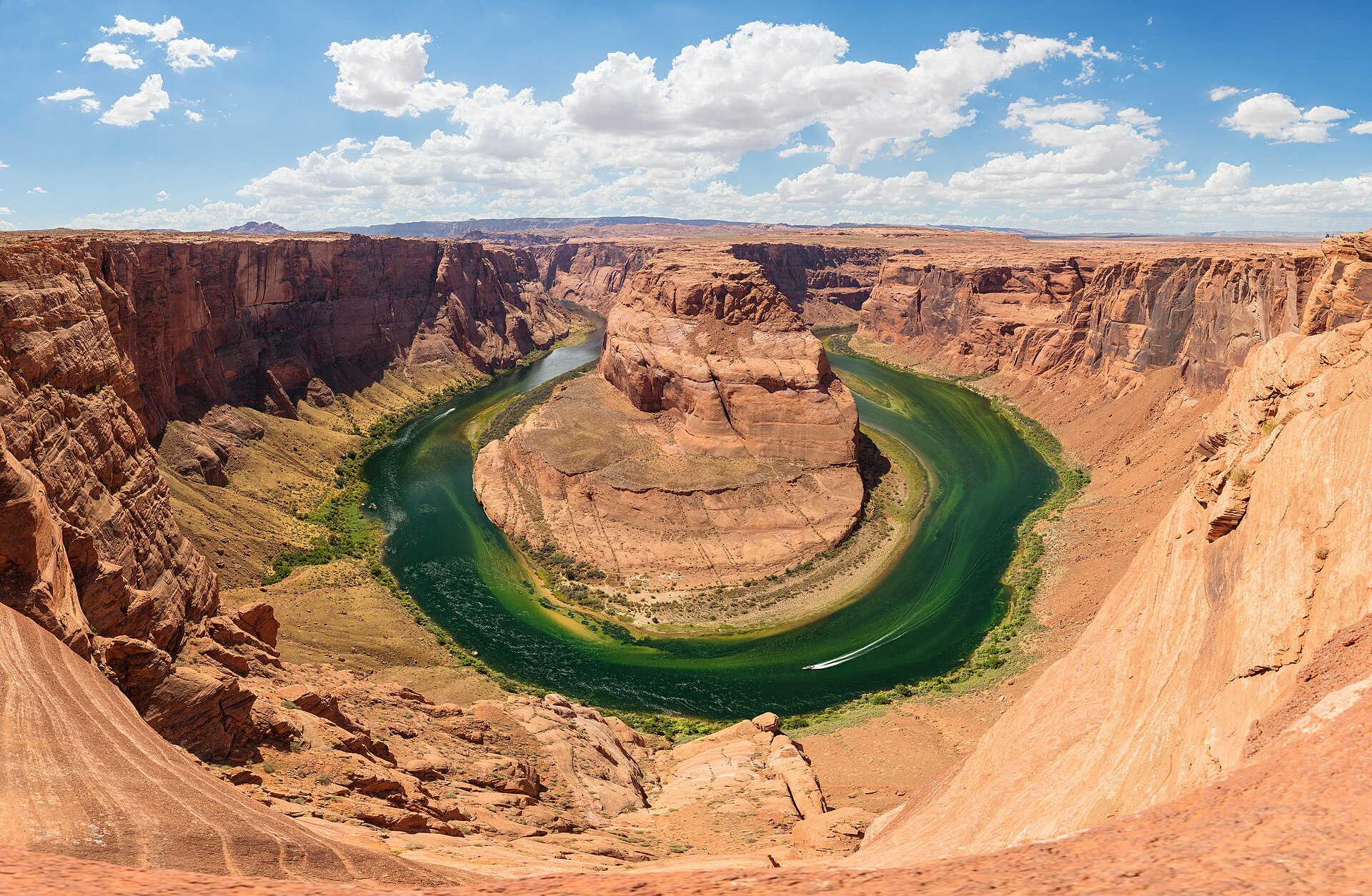
Horseshoe Bend is the kind of place that lingers in your memory long after you’ve left, not because it’s loud or crowded, but because it feels like stumbling upon something ancient and untouched. Carved by the Colorado River into the sandstone cliffs near Page, Arizona, the bend forms a near-perfect horseshoe shape, its red rock walls framing a ribbon of blue water far below. The contrast is striking—dry, sunbaked earth against the river’s steady flow, a reminder of how patiently the land has been shaped over millions of years. Unlike the Grand Canyon, which draws crowds year-round, Horseshoe Bend offers a quieter kind of grandeur, one that feels almost personal.
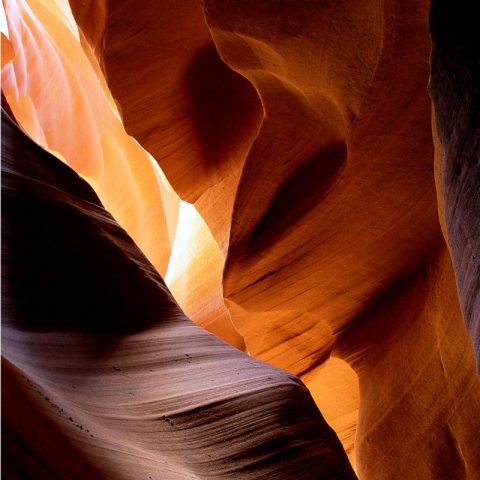
The story of this place begins long before humans ever set foot here. The sandstone that makes up the cliffs was once vast desert dunes, their grains compacted over time into solid rock. The Colorado River, cutting through the plateau with relentless persistence, gradually wore away the softer layers, sculpting the bend into its current form. Geologists estimate the process took millions of years, a timeline that puts human existence into perspective. When you stand at the edge, it’s hard not to feel small in the face of such slow, deliberate change.
Getting to the overlook isn’t difficult, but it does require a little effort. The trail from the parking area is about a mile long, winding upward over uneven ground. In the summer, the Arizona heat can make the walk feel longer, the sun pressing down without much shade. Yet the moment you reach the rim, the discomfort fades. The view is immediate and overwhelming—the river curving sharply below, the cliffs dropping away in sheer walls, the vastness of the landscape stretching in every direction. There are no railings, no signs warning you to step back, just the raw edge of the earth and the space beyond.
Horseshoe Bend wasn’t always a well-known destination. A few decades ago, it was mostly locals and the occasional adventurous traveler who knew about it. Today, the parking lot fills up by midday, and the trail is well-trodden, but the place still retains a sense of wildness. There’s no visitor center, no gift shop, no interpretive displays—just the land as it’s been for millennia. That lack of infrastructure can be unnerving at first; the drop is steep, and the wind sometimes gusts unexpectedly. But it also makes the experience feel more real, less like a curated attraction and more like a discovery.
The best time to visit is early morning or late afternoon, when the light is soft and the shadows deepen the textures of the rock. At these hours, the crowds thin out, and the only sounds are the wind rustling through the sparse desert vegetation and the distant murmur of the river. Photographs of Horseshoe Bend are iconic, often used to represent the stark beauty of the American Southwest, but no image can capture the way the air feels here—the dry heat, the faint scent of sagebrush, the way the light seems to bend along with the river.
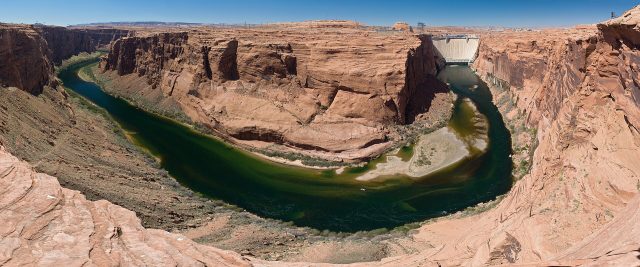
It’s worth remembering that Horseshoe Bend is just one small part of the Colorado River’s vast network of canyons. The Grand Canyon lies less than a hundred miles away, but even in its shadow, this place holds its own. There’s something humbling about standing at the edge of a formation that took millions of years to create, knowing the river is still at work, still carving, still shaping the land. You can sit for hours watching the way the light shifts across the cliffs, how the water below glints in the sun, how the whole scene seems to breathe with a quiet, ancient rhythm.
For those willing to put in the effort, there’s a way to see Horseshoe Bend from below. The hike down to the river is steep and takes several hours, with no marked trail to follow. It’s not for the unprepared, but those who make the journey are rewarded with a different perspective—the river looming larger, the cliffs towering overhead, the sense of being swallowed by the landscape. Most visitors, though, are content with the view from above. It’s enough to stand at the rim, to feel the weight of the space around you, to let the silence settle in.
What makes Horseshoe Bend special isn’t just its beauty, but the way it makes you feel. There’s no agenda here, no guided tour, no scripted experience. It’s just you, the rock, the river, and the sky. In a world where so many natural wonders have been turned into attractions, this place still feels like a secret, even though it’s no longer one. It’s a reminder that some things can’t be tamed or packaged, that the earth still has corners where time moves differently. And for those who make the trip, it’s a place that stays with you, not just in photographs, but in the quiet moments afterward, when you close your eyes and see the bend all over again.