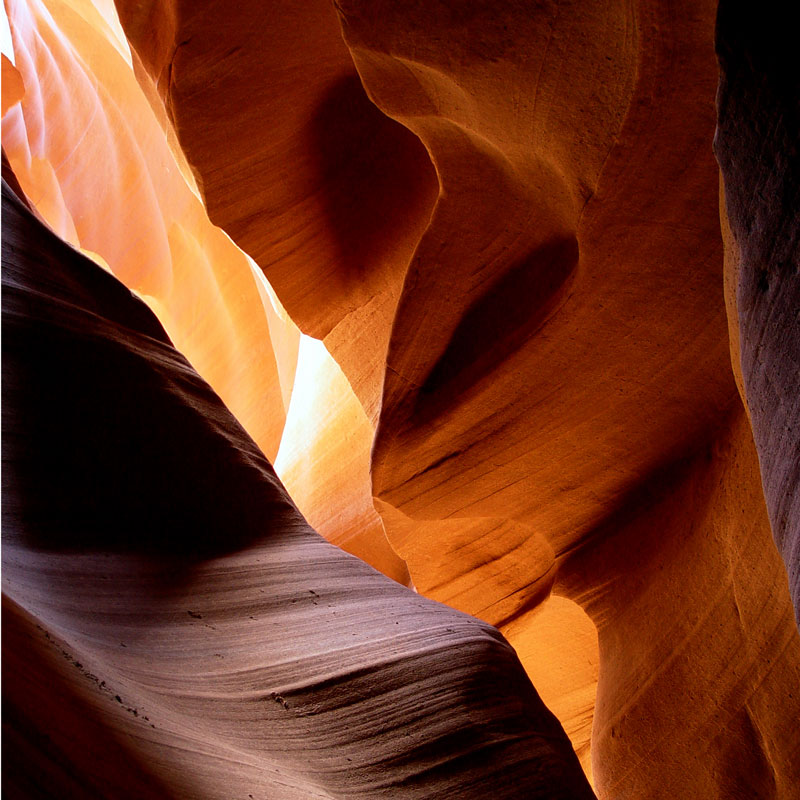
Antelope Canyon feels like a place where nature took its time, carving something so precise it almost looks intentional. Tucked near the small town of Page in northern Arizona, the canyon’s winding walls seem sculpted from sandstone by some unseen hand. Over millions of years, water and wind smoothed the rock into sinuous curves, painting it in layers of rust, amber, and deep red. When sunlight spills into the narrow passageways, the colors shift and glow, as if the stone itself is alive. There are no straight lines here—just fluid shapes that ripple like frozen waves or the folds of heavy fabric. Time moves differently inside these walls, where even the quietest whisper bounces back as an echo.
The canyon is split into two sections: Upper and Lower. Upper Antelope, often called "The Crack," is the more accessible of the two, with a gentler path and some of the most dramatic light effects. Around midday, when the sun is directly overhead, beams of light slice through the opening above, casting glowing columns against the walls—like natural spotlights. Lower Antelope, or "The Corkscrew," is narrower and more winding, requiring careful steps down ladders and through tight spaces. It’s less crowded, though, offering a quieter, more intimate experience. Both parts have their own magic, whether you’re drawn to the bold play of light or the sense of stepping into a hidden maze.
The canyon holds deep significance for the Navajo people, who consider it a sacred place. In their language, it’s called *Tsé bighánílíní*, meaning "the place where water runs through rocks." According to Navajo stories, the canyon was shaped by the spirits of water and wind, who carved its paths as a route for ancestral spirits. For the Navajo, it’s not just a tourist attraction but a living part of their culture and spirituality. Today, the canyon lies within the Navajo Nation, and visiting it requires a guide from the local community. This isn’t just a rule—it’s a way to honor traditions and protect the delicate landscape.
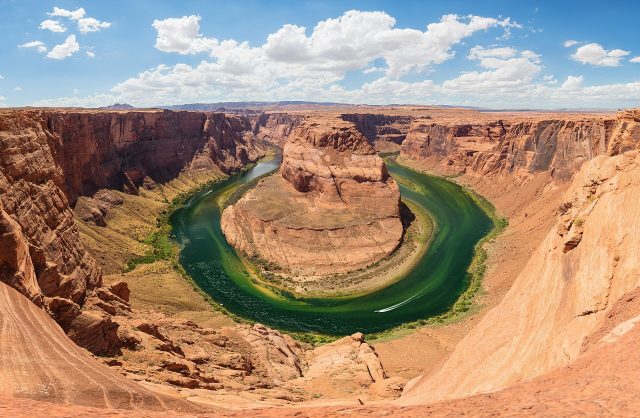
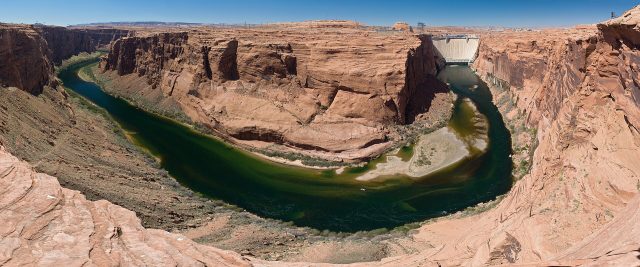
The formation of Antelope Canyon began nearly 190 million years ago, when the land that is now Arizona was covered by an ancient sea. Over time, shifting sands hardened into sandstone, and the slow rise of the Colorado Plateau lifted the rock into the air. The Colorado River and its tributaries, along with seasonal floods, gradually wore away the softer stone, cutting deep, narrow slots into the earth. Water remains the canyon’s master sculptor—during heavy rains, flash floods can reshape its walls in a matter of hours. That’s why visits are only allowed in dry conditions, and access is often closed after storms due to the risk of sudden flooding.
The mood of the canyon shifts with the time of day and season. In summer, when the sun blazes overhead, the walls seem to radiate heat, and the air inside feels thick and still. In spring and fall, the light softens, casting longer shadows and bathing the rock in muted, earthy tones. Winter brings a rare quiet, with fewer visitors and sharp contrasts between light and dark. Photographers flock here to capture these moments, but even the best images can’t fully convey the experience—the warmth of the stone under your fingers, the way sound carries in the stillness, the sense of being wrapped in something ancient and unchanging.
Visiting the canyon takes a little planning. All tours are led by Navajo guides, who ensure safety while sharing stories about the land. The paths aren’t strenuous, but the uneven ground, narrow passages, and ladder climbs call for sturdy shoes and caution. During peak season, from May to September, the canyon gets crowded, so booking ahead is wise. In the off-season, there are fewer people, but the weather can be unpredictable—scorching heat one day, sudden rain the next. No matter when you go, it’s worth bringing water, a hat, and a camera, because Antelope Canyon is the kind of place you don’t just see—you carry with you.
For many, the canyon leaves a lasting impression, lingering long after the visit. Maybe it’s the way it puts time into perspective—millions of years etched into stone, while human lives pass in an instant. Or perhaps it’s the reminder of nature’s fragility, how easily something so enduring can be altered. Then again, maybe it’s simpler than that. In the quiet of the canyon, with its curves of light and shadow, people find different things: inspiration, stillness, or just the chance to pause and see the world with the wonder of a child discovering something extraordinary for the first time.