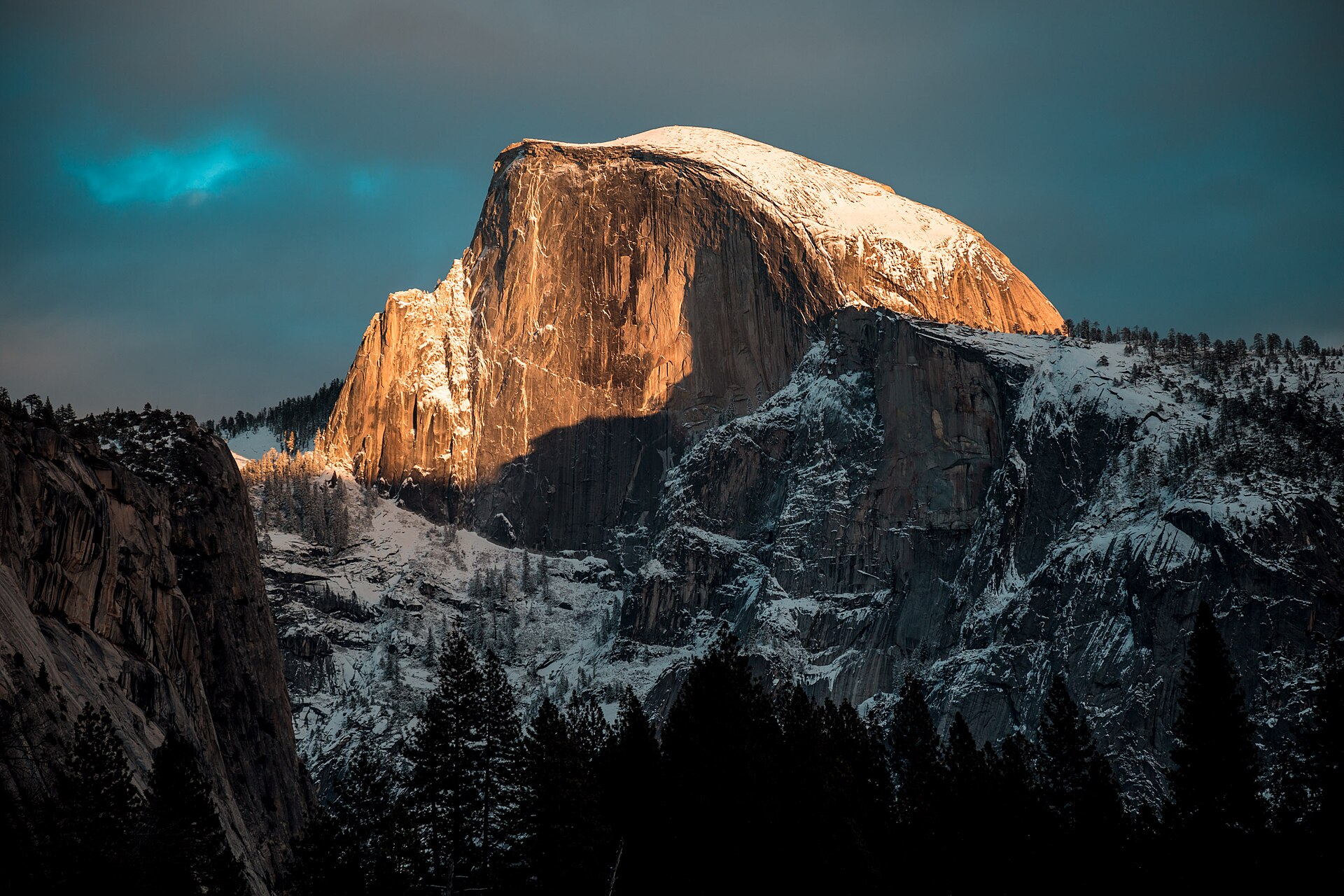
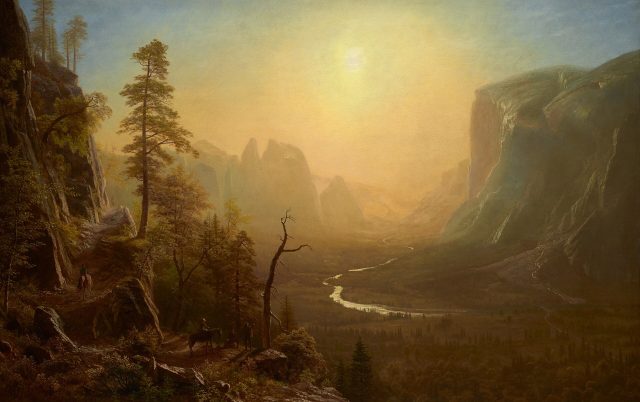
Half Dome is the kind of natural landmark that lingers in your memory long after you’ve seen it. Rising nearly 2,700 meters above sea level, this granite monolith dominates the skyline of Yosemite Valley, its sheer face and smooth, rounded back forming a shape that feels almost sculpted by human hands—though nature, of course, took millions of years to craft it. From one angle, it appears as a perfect, polished dome, its surface gleaming under the sun; from another, it’s a vertical cliff, as if sliced clean by some colossal blade. It’s no wonder this rock has become an icon, drawing hikers, climbers, and dreamers from all over the world. Even if you never set foot on its summit, the sight of Half Dome from the valley floor or one of the surrounding trails is enough to leave a lasting impression.
The story of Half Dome begins long before humans ever laid eyes on it. The granite that forms its bulk was forged deep underground, pushed upward by tectonic forces and shaped by volcanic activity over countless millennia. Then came the glaciers, grinding and carving the landscape into what we see today. For the Indigenous people of the region, particularly the Ahwahneechee, this was no ordinary rock. They called it Tis-sa-ack, meaning "big mountain," and saw it as a sacred place, alive with the spirits of their ancestors. To them, Half Dome wasn’t just a geological feature—it was a living entity, a part of the world’s soul.
The first Europeans to encounter Half Dome arrived in the mid-19th century, when explorers and prospectors began filtering into Yosemite Valley. In 1868, geologist Josiah Whitney—whose name would later be given to California’s highest peak—described it as a "magnificent granite dome, towering above the valley like a monument of nature." That same era saw the first attempts to reach its summit. In 1875, a team led by George Anderson succeeded, using ropes and wooden ladders to scale the final, near-vertical pitch. Their route would eventually become the famous Half Dome Trail, a path that remains one of the most popular (and demanding) ways to reach the top today.
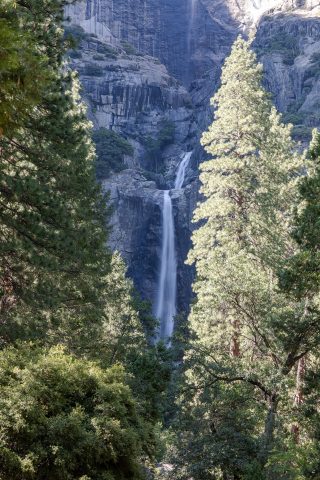
Hiking to the summit of Half Dome is an experience that stays with you. The trail stretches nearly 13 kilometers one way, beginning in the valley and winding past waterfalls like Vernal and Nevada before steepening into a relentless climb. The first half is manageable, but the real challenge comes near the end: a 120-meter ascent up the dome’s sheer face, where hikers rely on a series of steel cables bolted into the rock. These cables, installed in the early 1900s, have since become a lifeline for thousands, though they demand both physical stamina and a steady nerve. The exposure is real—every step reinforces just how high you are, and the wind at the top can be fierce.
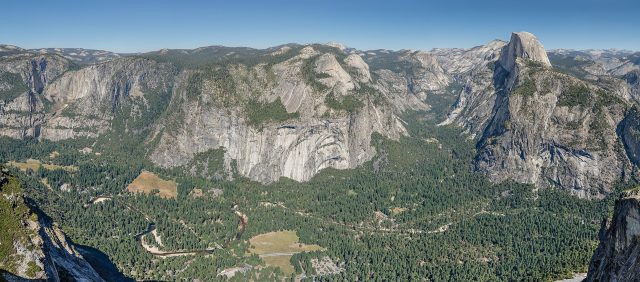
Standing on the summit of Half Dome feels like stepping into another world. The view is vast and humbling: Yosemite Valley sprawls below like a living map, its meadows glowing green, its rivers threading silver through the landscape, and its other granite giants—El Capitan, Glacier Point—standing sentinel in the distance. On clear days, the horizon seems endless, and the clouds drifting over the valley create the illusion of floating above the earth. Many make the journey for sunrise or sunset, when the light turns the rock golden and the shadows stretch long and dramatic across the land.
But Half Dome is more than just a destination for hikers and climbers. It has come to symbolize something larger—the human drive to conquer nature, yes, but also nature’s own awe-inspiring power. When Yosemite National Park was designated a UNESCO World Heritage Site in 1984, Half Dome was a key reason why. It embodies the park’s unique blend of geological history, natural beauty, and cultural significance. Standing there, you can’t help but feel connected to something beyond yourself: to the land, to the people who came before, to the very idea of endurance.
Of course, Half Dome’s popularity comes with challenges. In recent decades, the sheer number of visitors has forced the park to implement a permit system for the cable route, ensuring the trail and the fragile ecosystem around it aren’t overwhelmed. Summer brings the biggest crowds, so those seeking solitude might prefer an early morning hike or a visit in the off-season. Winter makes the ascent nearly impossible—snow and ice render the cables unusable, and the trail closes until conditions improve. Even if you don’t make it to the top, though, there are plenty of other places in the valley to admire Half Dome, from Glacier Point to the banks of the Merced River.
Half Dome has a way of leaving its mark on everyone who encounters it. For some, it’s a challenge to be met, a test of strength and will. For others, it’s simply a breathtaking sight, a reminder of the world’s beauty. And for a few, it remains a sacred space, steeped in the stories of those who came before. Whatever it means to you, one thing is certain: once you’ve seen it, you understand why Yosemite Valley is considered one of the most extraordinary places on Earth. Half Dome isn’t just a rock. It’s a symbol of nature’s grandeur, its fragility, and its timelessness.