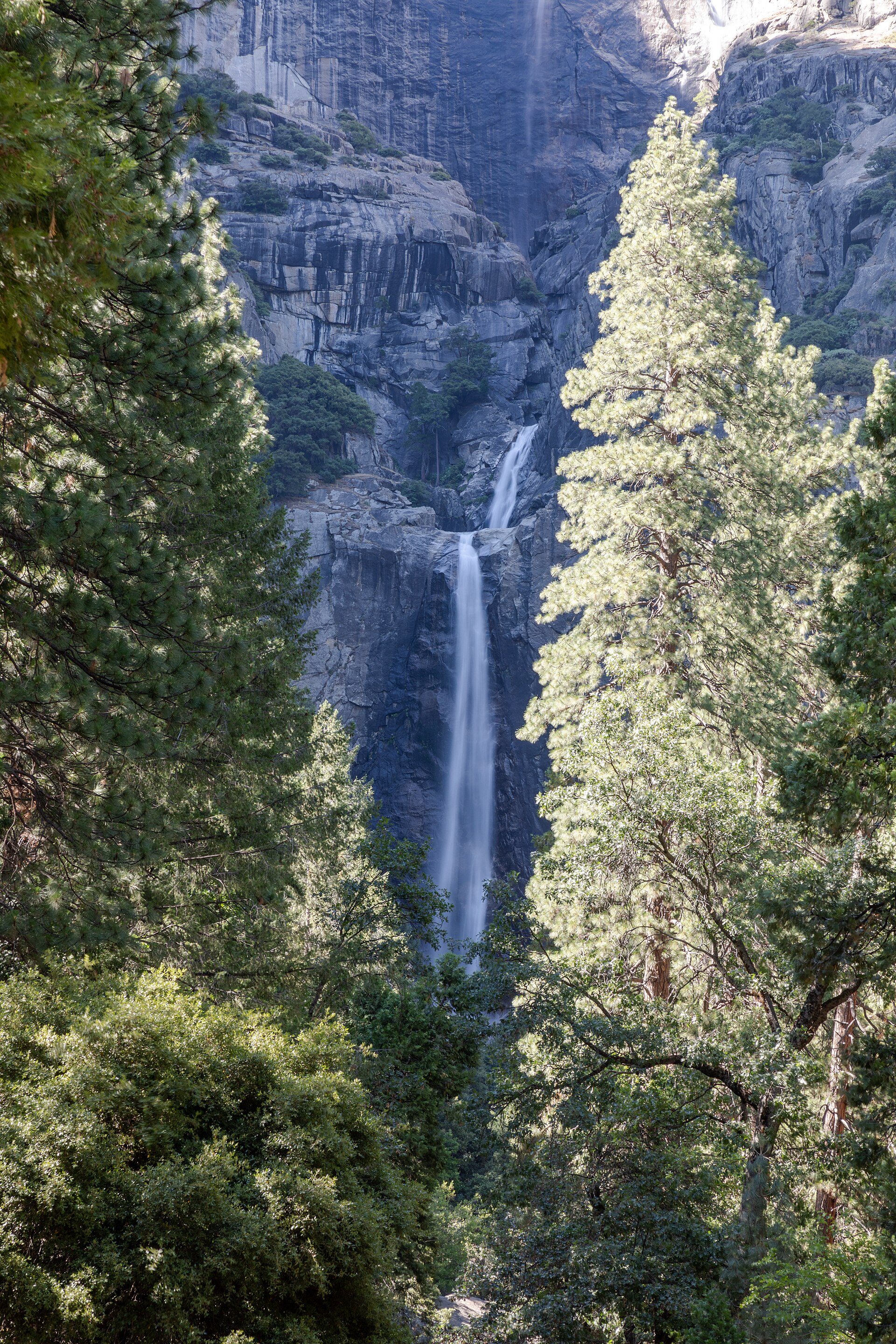
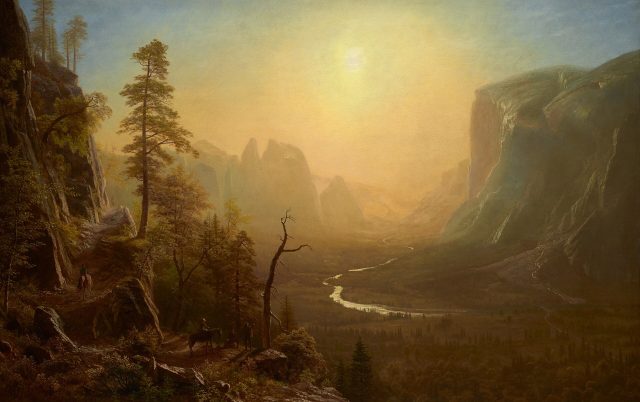
Yosemite Falls isn’t just a waterfall—it’s one of those rare places where nature seems to have gathered every dramatic element it could find and arranged them into something unforgettable. Long before you see the water, you feel its presence. The deep, resonant roar carries through the valley, blending with the rustle of pine needles and the distant calls of birds. On clear days, a rainbow arcs through the mist, so vivid it almost feels like you could reach out and touch it. There’s no need for grand descriptions here; the falls speak for themselves. Water plunges nearly 2,400 feet in a series of cascades, crashing against granite boulders and dissolving into a fine spray that hangs in the air like a ghost of the river itself.
The falls are actually three distinct drops, each with its own personality. The Upper Fall is the most dramatic—a sheer, 1,430-foot plunge where the water seems to vanish into thin air before reappearing below. The Middle Cascades, hidden from view until you round a bend, are less theatrical but no less essential. Here, the water tumbles down a series of ledges, gathering speed before the final descent. The Lower Fall, the most accessible, greets visitors with a cool, damp breeze, especially welcome on hot summer afternoons. The waterfall’s mood shifts with the seasons. In spring, fed by melting snow, it becomes a thunderous force of nature, while by late summer, it can dwindle to a trickle, leaving behind only damp rocks and an eerie quiet.
This place carries more than just natural beauty—it holds history in its mist. The Ahwahneechee people, the valley’s original inhabitants, called it *Cholock*, meaning simply "the fall." For them, it was a sacred site, woven into stories and ceremonies. The first recorded European to see it was explorer Lafayette Bunnell in 1851, whose accounts helped draw attention to Yosemite Valley. Within a decade, visitors began arriving, and in 1864, the valley was set aside as a public trust, one of the first steps toward the U.S. national park system. Today, the falls remain a symbol of Yosemite, but their significance runs deeper. They’re a reminder of how fragile and yet how enduring the natural world can be.
The "architecture" here is entirely natural, but no less impressive than any human-made wonder. The granite walls framing the falls were shaped over millions of years by glaciers that carved and polished the stone, leaving behind smooth, rounded cliffs. The water itself is an artist, slowly eroding the rock, creating new ledges and hollows with each passing year. If you look closely, you can see the changes—the way once-vertical walls have been worn into terraces, or how the force of the falls has hollowed out deep pools at its base. It’s a slow, relentless process, one that continues long after visitors have gone home.
The best time to visit depends on what you want to experience. Spring is when the falls are at their most powerful, a roaring torrent that drowns out all other sounds. The mist rises high into the air, and the ground trembles slightly underfoot. By summer, the flow weakens, but the trails to the base become passable, allowing you to stand close enough to feel the spray on your skin. Autumn brings a different kind of beauty—the falls may nearly disappear, but the valley erupts in gold and crimson, a stark contrast to the gray granite. Winter transforms the scene again. The water slows to a trickle, freezing into delicate ice formations, while snow blankets the trails, making the hike quieter and more solitary.
There are several ways to reach the falls, each offering a different perspective. The easiest is the short but steep trail from the valley floor to the base of the Lower Fall. It’s a popular route, especially in the morning when the air is cool. For those willing to put in more effort, the hike to the top of the falls is a rewarding challenge. The trail climbs steadily, offering sweeping views of the valley below, and the reward at the end is a sense of scale that’s hard to find anywhere else. Alternatively, you can take one of the park’s shuttle buses to a viewpoint that frames the falls against the surrounding cliffs. Whichever path you choose, the key is to take your time. Stop often, listen to the water, and let the place work its way into you.
What makes Yosemite Falls special isn’t just its height or its beauty—it’s the atmosphere that surrounds it. Even in peak season, the valley doesn’t feel crowded in the way other famous landmarks do. There’s no sense of being herded from one photo spot to the next. Instead, there’s space to simply be. People come here for different reasons, but many leave with the same quiet realization: that the world is vast, and our daily concerns are small in comparison. The falls don’t demand anything from visitors. They don’t need to be explained or admired in a particular way. They just exist, and that’s enough.
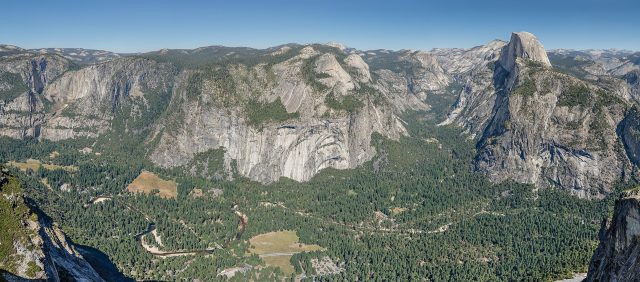
But the falls are also part of something larger. They’re one piece of Yosemite Valley, a place that rewards those who take the time to explore it. You could spend days here, hiking to hidden viewpoints, following the Merced River as it winds through meadows, or simply sitting by the water with no agenda at all. The falls set the tone for the entire valley—their power and grace remind you that nature doesn’t need embellishment to be magnificent. It just is. And in a world that often feels overrun with noise and distraction, that simplicity is its own kind of magic.