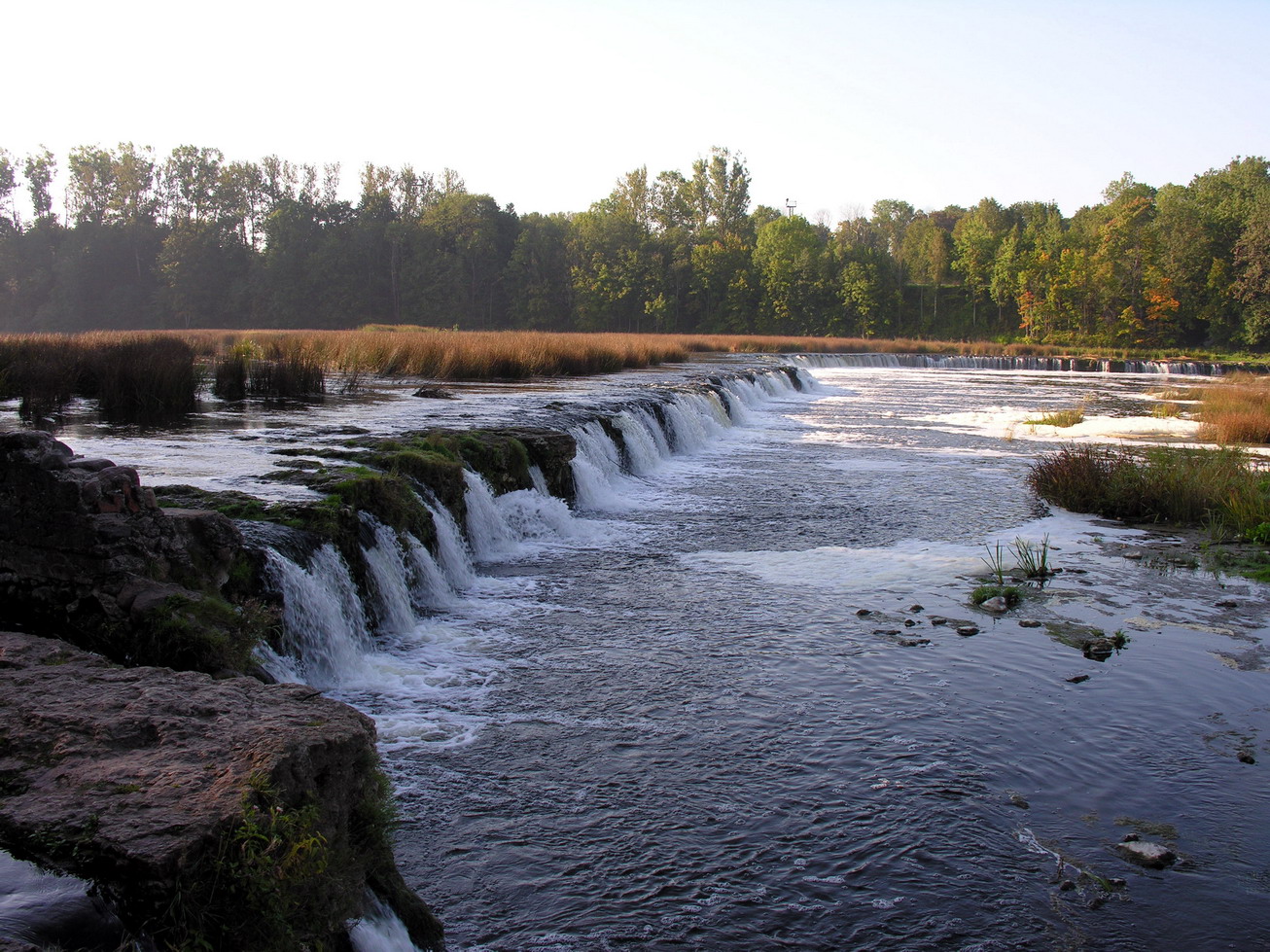
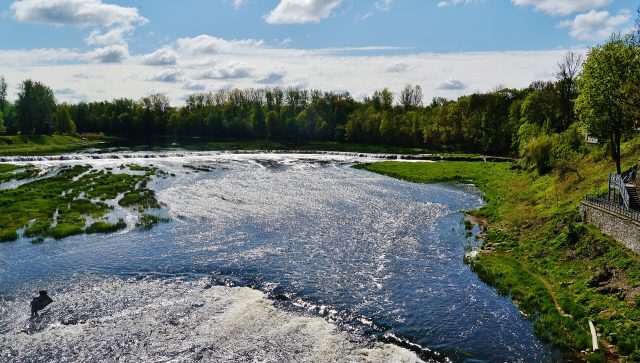
Kuldīga is a town where time seems to slow down, where the Venta River meanders through the landscape as if recalling the days when merchants traveled its banks and trade flourished along its waters. But here, in this quiet corner of Latvia, the river suddenly transforms. Instead of flowing gently, it cascades over a ledge, creating Ventas Rumba—one of Europe’s widest waterfalls. It’s not just a natural wonder; it’s a place where water, stone, and history intertwine so seamlessly that you can almost feel the weight of centuries in the air.
The waterfall’s scale is what first strikes you. During spring floods, it stretches nearly a hundred meters across, a vast sheet of water tumbling over the rocks. Even in drier months, it never narrows to less than forty meters, giving the impression of a river that has simply decided to spread itself thin rather than rush downward. The drop itself is modest—just two meters—but the sheer volume of water makes it feel more like a living, breathing force than a dramatic plunge. In winter, the falls freeze into an otherworldly labyrinth of ice, while in summer, the sound of rushing water blends with the rustling leaves and the cries of gulls circling overhead.
Kuldīga has long been known as the heart of the Kurzeme region, and its history is deeply tied to the Venta. Founded in the 13th century, the town was once a key stop on trade routes, with the river serving as both a natural defense and a lifeline for its people. The waterfall became more than just a landmark—it was a symbol of the town’s resilience and adaptability. In the Middle Ages, watermills stood here, harnessing the river’s power, and in the 19th century, there were even attempts to build a hydroelectric plant. The project never came to fruition, but remnants of the old structures still peek out from among the rocks, hinting at the ambitions of those who once tried to tame the river.
The town itself feels like an extension of the waterfall. Narrow cobblestone streets wind down to the river, where pastel-colored houses with red-tiled roofs reflect in the water. Nearby stands the old brick bridge over the Venta—one of the longest in Europe, built in the 19th century. Walking across it, you get a different perspective on the falls, the wind carrying mist from the water below while the roar of the river fills the air. It’s a place that invites you to linger, to lean against the railing and watch the light play on the water’s surface.
Ventas Rumba isn’t the kind of waterfall that dazzles with sheer height or thundering power. Instead, it has a quiet, understated beauty that grows on you the longer you stay. In summer, locals and visitors spread out picnic blankets on the banks, watching the sunlight dance in the spray. Autumn turns the river into a mirror for the golden leaves, the air thick with the scent of damp earth and fallen foliage. Winter transforms the falls into a frozen wonderland, where you can wander among the ice formations, listening to the crackle of frost underfoot.
One of the most unusual sights here happens in spring and autumn, when the river swells with rain and melting snow. That’s when you might see the "flying fish"—salmon and trout leaping out of the water in their struggle to clear the falls. Locals have long caught them mid-air with baskets, a tradition that still continues today. In May and September, festivals celebrate this natural spectacle, drawing crowds to witness the fish’s determined, almost acrobatic attempts to make it upstream.
Kuldīga and its waterfall feel like they were made for unhurried exploration. There’s no tourist hustle here, just the steady rhythm of the river and the occasional call of a bird. You could spend hours sitting on the bank, watching how the light changes the water’s color—silver in the morning, deep blue by midday, and warm gold as the sun sets. It’s the kind of place that makes you understand why people keep coming back, not just as visitors, but as part of the landscape itself.
What makes Ventas Rumba special isn’t just its size or its beauty, but the way it feels alive. It’s not a postcard-perfect attraction, but a place where nature and human history coexist without pretense. There are no flashy amusements or guided tours here—just the raw, unfiltered presence of the river. Maybe that’s why it resonates so deeply. It doesn’t try to impress; it simply exists, offering something different to everyone who visits—a moment of quiet reflection, a sense of connection to the past, or just the simple pleasure of watching water flow over stone.