Kuldīga’s Lutheran church stands on a gentle rise in the heart of the old town, its spire crowned with a weathercock that seems to brush the clouds. From here, the winding Venta River unfolds below, its banks lined with the red-tiled roofs of centuries-old houses. The church isn’t just a landmark—it’s a place where the town’s rhythm slows, where people come not only for services but to stand in quiet, listen to the organ, or watch sunlight filter through the stained glass.
Built in the 17th century, when Kuldīga thrived as a trading hub under the Duchy of Courland, the church was both a spiritual center and a gathering place for the town’s merchants and craftsmen. The Kettler dukes, who ruled here, were patrons of Lutheranism, and the church became a symbol of their influence. Its architecture blends late Gothic and early Baroque elements—tall, pointed windows, sturdy buttresses, and a restrained yet striking portal. Inside, traces of the original decor remain, like the intricately carved wooden pulpit and altar, though much was lost to wars and fires over the centuries.
The interior feels vast, its high vaulted ceilings and pale walls creating a sense of openness. The 19th-century organ still fills the space with deep, resonant notes during services and concerts. On clear mornings, sunlight streams through the stained glass, casting shifting patterns across the stone floor—a quiet spectacle that draws visitors and locals alike. The church also holds old books and documents tied to the town’s history, though access to these is limited.
Like the town itself, the church has endured its share of upheavals. A fire damaged it in the 18th century, and later renovations altered parts of its structure. During World War II, it survived while much of Kuldīga was destroyed. In the Soviet era, the building was repurposed as a warehouse, and only after Latvia regained independence in the 1990s was it returned to the congregation. Restoration took years, but today it stands as if time has barely touched it—though closer inspection reveals the marks of history: cracks in the stone, darkened beams, and faint scars from bullets on the facade.
For Kuldīga’s residents, the church is more than a historic building. It’s where generations have been baptized, married, and laid to rest. During the Soviet period, when religious life was suppressed, people still came in secret to light a candle or sit in silence. Now, the church is open again, hosting services, concerts, and exhibitions. Christmas and Easter bring the biggest crowds, when the interior is adorned with pine branches and candles, and the choir sings traditional hymns.
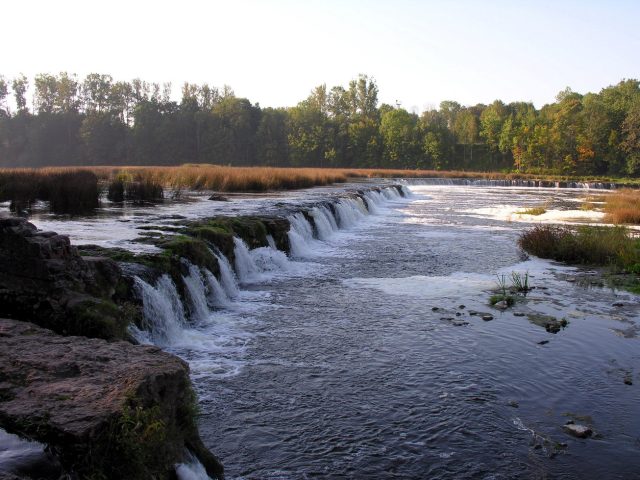
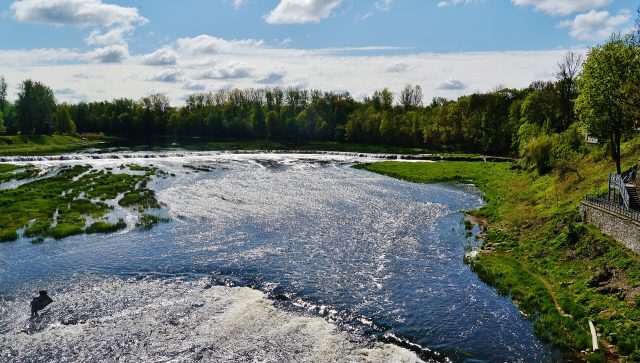
A small park surrounds the church, a favorite spot for locals to stroll in summer. From here, the Venta River is visible, along with its famous waterfall, once called the "Niagara of Courland." On clear days, the view stretches over the town’s medieval streets and out to the modern outskirts. In the evening, floodlights illuminate the church, making it glow against the sky—a reminder that history here isn’t just something from the past, but a living part of daily life.
The church’s appeal lies in its atmosphere as much as its history. Inside, it’s always cool, even on the hottest summer days, and the silence is broken only by the rustle of prayer books or the distant chime of bells. If you’re lucky, you might hear the organ being played—local musicians often practice here, and the music carries through the town. Occasionally, exhibitions of old photographs or handcrafts are held inside, offering a glimpse of how Kuldīga has changed over the centuries.
Unlike grand cathedrals that dazzle with opulence, Kuldīga’s Lutheran church charms with its simplicity. There are no crowds of tourists rushing for photos, just quiet, light, and the sense that time moves a little slower here. That’s why it remains one of the town’s most beloved places—not just for worshippers, but for anyone who values authenticity and stillness. It’s a place where the past and present coexist, unhurried and unpretentious.