Kuldīga is a town where time seems to slow down, its narrow streets and old buildings holding stories from different eras. Among them, St. Catherine’s Catholic Church stands out as one of the oldest and most significant landmarks in the area. Built in the 17th century, it has served as both a spiritual center for locals and a silent witness to the changes Latvia has undergone over the centuries.
The church was constructed when Kuldīga was part of the Polish-Lithuanian Commonwealth, and its architecture reflects the Baroque style popular in Europe at the time. The exterior is simple and restrained, avoiding excessive ornamentation, but the interior tells a different story. High vaulted ceilings, sturdy columns, and intricate stucco work create a sense of grandeur, even though the church isn’t among the largest in the region. The craftsmanship inside feels both deliberate and understated, a quiet testament to the skill of its builders.
The altar is particularly striking, designed in the tradition of Catholic art. Carved wooden figures of saints and delicate patterns frame the central image of St. Catherine of Alexandria, the church’s patron saint. According to legend, she was a martyr who stood firm in her faith, and her story has long been associated with wisdom and resilience. It’s easy to see why the church became a place of pilgrimage for those seeking spiritual comfort, a role it still holds today.
The history of St. Catherine’s is closely tied to the fate of Kuldīga itself. When the town came under Russian rule in the 18th century, the church remained a vital religious center for the Catholic minority. Though Catholicism wasn’t the dominant faith in the region, the church continued to serve its community, preserving its cultural significance. Later, during the Soviet era, like many religious sites, it faced hardships—closure, repurposing—but the building endured. After Latvia regained independence, the church reopened its doors, reclaiming its place in the town’s life.
Now, St. Catherine’s is more than just an active parish; it’s part of Kuldīga’s cultural heritage. Visitors come not only for religious reasons but also to admire its architecture and history. Inside, the atmosphere is one of quiet reverence—soft light filtering through stained glass, the scent of candle wax lingering in the air. It’s a place where the past feels tangible, where you can almost hear the echoes of centuries-old prayers and hymns.
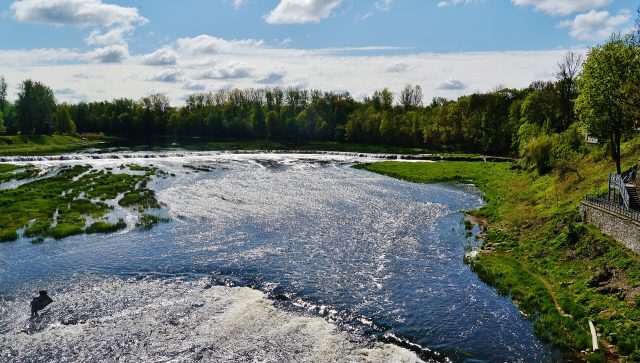
Outside, a small park surrounds the church, offering a peaceful spot to sit after exploring. In summer, the trees provide shade, while in winter, snow blankets the old gravestones in the adjacent cemetery, reinforcing the sense that life in Kuldīga moves at its own unhurried pace. The church sits on a slight elevation, and from its steps, you can look out over the town—the red-tiled roofs, the winding Venta River, and the historic houses that seem plucked from an old painting.
St. Catherine’s is a place where history and the present intersect. It serves as a reminder that Kuldīga wasn’t always a quiet provincial town but once played a key role in the cultural and economic life of the Courland region. Today, the church remains a living part of the community, hosting services, baptisms, weddings, and occasional organ concerts. The music fills the space, adding another layer to the church’s timeless charm.
If you find yourself in Kuldīga, visiting St. Catherine’s isn’t just about seeing another historic building. It’s an opportunity to step into a place that has offered solace and reflection for generations. Whether you spend a few moments in silence, lost in thought, or simply soak in the atmosphere, the church feels like a quiet refuge from the rush of the modern world. These are the kinds of places that make traveling through Latvia feel truly meaningful.