Hadrian’s Villa in Tivoli is one of those rare places where time feels suspended, not erased. Built in the early second century by Emperor Hadrian as his retreat from Rome, it was more than a palace—it was a vision of harmony between architecture and nature, a blend of Roman grandeur and Greek elegance. Here, away from the capital’s noise, Hadrian spent his final years surrounded by gardens, pools, and structures that carried meaning far beyond their function. The villa wasn’t just a residence; it was a world unto itself, where philosophy, art, and daily life intertwined.
The scale of the complex is staggering even now, nearly two thousand years later. Hadrian didn’t merely replicate the buildings he admired—he reimagined them, weaving together elements of Egyptian temples, Greek theaters, and Roman baths into a single, cohesive whole. Among the ruins, you can still trace the outlines of the Golden Square, where marble colonnades once framed living quarters, libraries, and reception halls. The Canopus, a long rectangular pool lined with statues and flanked by porticoes, was where Hadrian liked to stroll, lost in thought or conversation. The water still reflects the sky, just as it did when the emperor walked these paths.
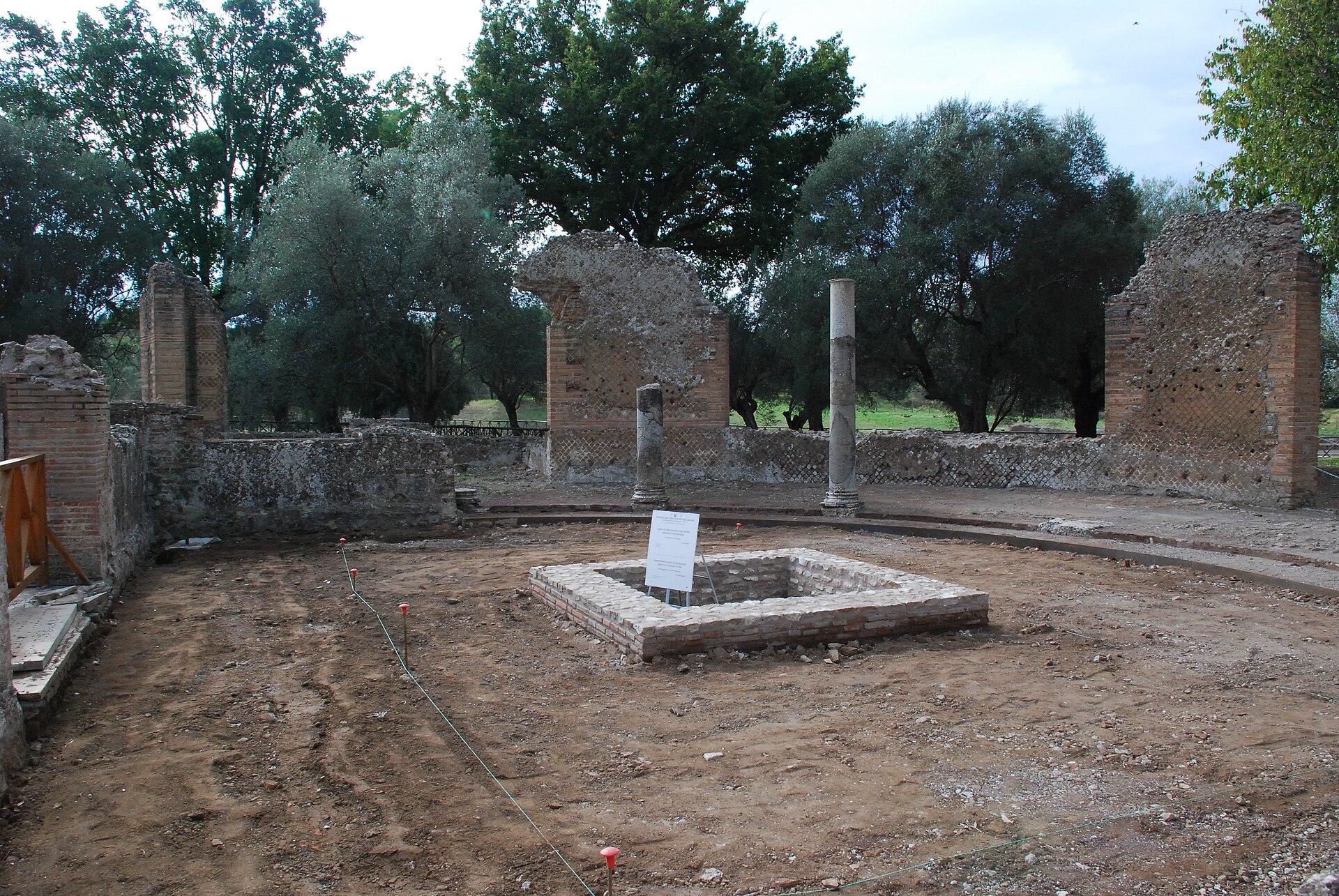
One of the most intriguing structures is the Maritime Theatre, a circular island encircled by a moat, where a small villa once stood. It’s thought to have been Hadrian’s private retreat, a place to escape the burdens of empire. Today, only the foundations remain, but the isolation of the island is palpable—the water in the moat laps gently against the stone, as if whispering secrets of the past. Nearby, the baths preserve their mosaics and vaulted ceilings, offering a glimpse into the rituals of Roman life, where voices once echoed off the walls and steam rose from heated pools.
Hadrian’s Villa is more than an architectural marvel; it’s a testament to the cultural synthesis that defined the Roman Empire. Greek classical motifs, Egyptian obelisks, and Roman engineering coexist here in a way that feels both deliberate and effortless. The Pompeian Portico, with its clean lines and columns, evokes the villas of Pompeii, while the Temple of Venus, perched on a rise, echoes the sanctuaries of Greece. Even the names of certain structures—like the Academy or the Lyceum—hint at Hadrian’s desire to recreate the atmosphere of ancient philosophical schools.
Today, the villa is an expansive archaeological park where ruins and nature intertwine. Walking its paths, it’s easy to imagine how the space once functioned—how the roads connected buildings, how shaded alleys led to fountains and pools, how water flowed through the canals. Spring brings almond blossoms, while autumn paints the trees in gold; summer can be harsh, but early mornings and late afternoons offer quiet moments among the stones. The landscape feels alive, as if the past is still breathing beneath the surface.
It’s no surprise that Hadrian’s Villa is a UNESCO World Heritage site. This isn’t just a place where history is preserved—it’s where it still lives. Roman soldiers, philosophers, and craftsmen once walked these same paths, just as visitors do today. The ruins don’t evoke sadness; instead, they remind us of the enduring human pursuit of beauty, balance, and peace. The villa feels less like a relic and more like a bridge between eras.
Visiting Hadrian’s Villa isn’t just a tour—it’s a journey into the past. Every corner holds a story, even if the details are lost to time. The atmosphere speaks for itself: standing by the Canopus or among the columns of the Pompeian Portico, it’s easy to forget the modern world. This isn’t an open-air museum; it’s a living place, one that continues to change, inspire, and invite reflection. The stones remember, and if you listen closely, they might just share their secrets.