Zagreb’s Upper Town is where the city’s past feels most alive, a quiet hilltop enclave that grew from two rival medieval settlements. Kaptol, clustered around the cathedral, and Gradec, perched on the neighboring rise, spent centuries as uneasy neighbors before finally merging in the nineteenth century. Today, their combined legacy shapes the character of the place—narrow cobblestone streets, low stone buildings, and an atmosphere that lingers somewhere between a small provincial town and a capital’s historic core.
The most recognizable landmark here is St. Mark’s Church, its colorful tiled roof displaying the coats of arms of Croatia, Slavonia, Dalmatia, and Zagreb itself. The design is simple but striking, a visual shorthand for the city that appears on postcards and in guidebooks. Nearby, the Croatian Parliament and government buildings stand in quiet dignity, their facades a mix of neoclassical and more modern styles. Just steps away, the Stone Gate serves as an unexpected place of pilgrimage. Inside, an image of the Virgin Mary survived a devastating fire in 1731, and to this day, visitors leave candles and prayers at the small altar, the scent of wax mingling with the cool stone.
Time in the Upper Town moves to its own rhythm, marked by the daily cannon fire from Lotrščak Tower. Every day at noon, the shot rings out, a tradition dating back to 1877 when it helped synchronize the city’s church bells. The sound carries across the rooftops, a reminder of how small Zagreb once was, when such signals still mattered. The tower itself is unassuming, but the view from its base—over the red-tiled roofs of the Lower Town—makes the climb worthwhile.
Getting up here is part of the experience. The funicular, one of the world’s shortest, whisks passengers up the steep slope in under a minute. Built in 1890, it’s a charming relic of the past, its wooden carriages and creaking cables adding to the sense of stepping back in time. For those who prefer to walk, a short flight of stairs runs parallel to the tracks, offering a quick but steep ascent. Either way, the journey is brief, but the change in atmosphere is immediate—the noise of the city fades, replaced by the quiet hum of history.
The Upper Town is home to some of Zagreb’s most intriguing museums. The Museum of Broken Relationships collects the remnants of failed love stories, each object accompanied by a personal note, turning heartbreak into something strangely moving. Nearby, the Croatian Museum of Naïve Art showcases works by self-taught painters, their vibrant, often whimsical pieces offering a glimpse into a lesser-known side of the country’s artistic heritage. The Zagreb City Museum, housed in a former convent, traces the city’s evolution from its medieval origins to the present day. Evenings here have a particular magic, as the gas lamps flicker to life, tended by a lamplighter who still makes his rounds, a living link to an earlier era.
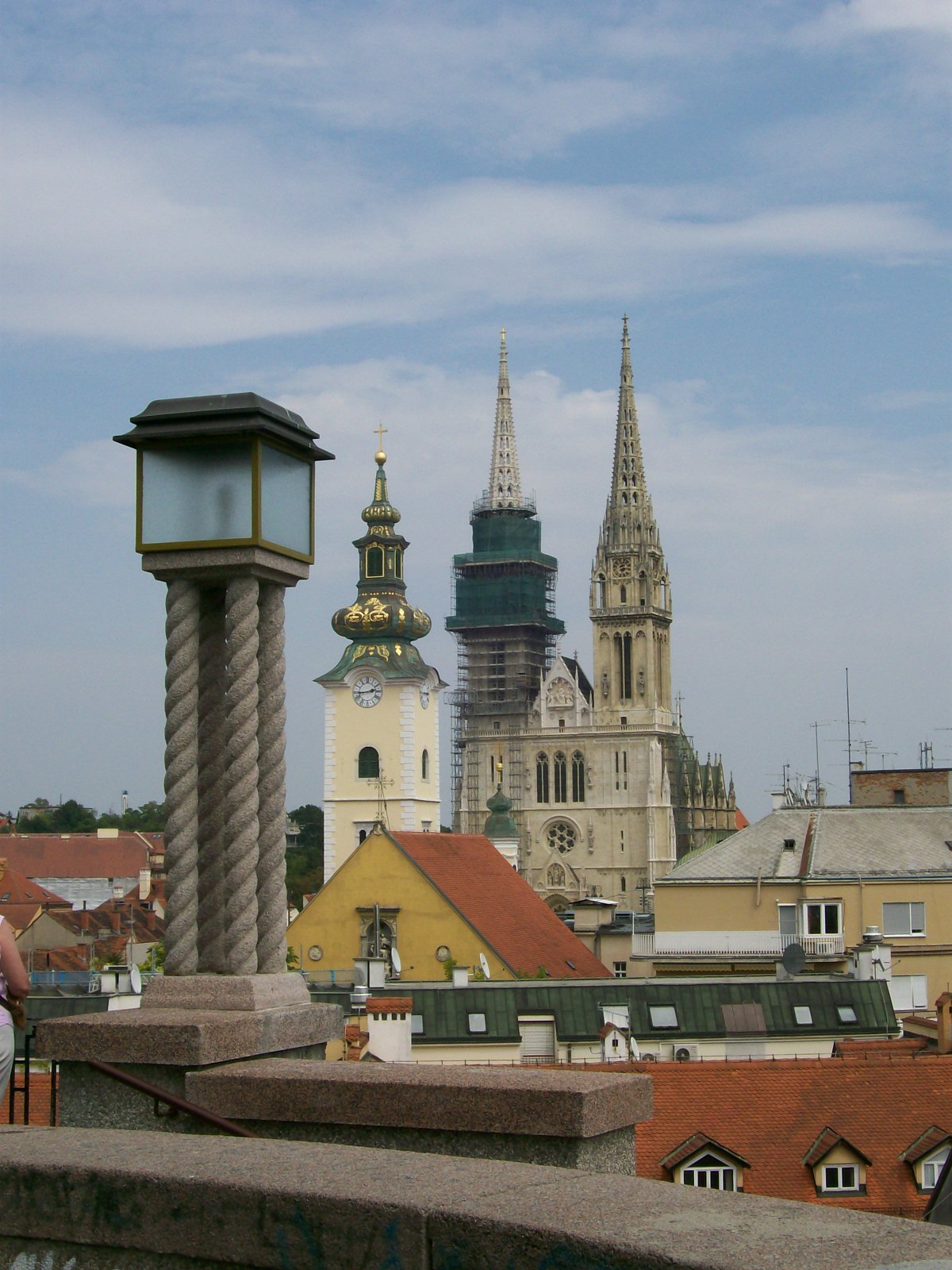
The streets are narrow and mostly free of cars, their quiet interrupted only by the occasional clatter of footsteps or the murmur of conversation from a nearby café. From the terraces of small restaurants, the view stretches over the Lower Town, where the spires of the cathedral rise above the rooftops. It’s a perspective that makes the city feel intimate, as if you could reach out and touch the past. Just a short walk away, Dolac Market buzzes with activity, its stalls overflowing with fresh produce, flowers, and local delicacies—a reminder that the Upper Town, for all its tranquility, is still very much part of the living city.
The best times to visit are spring and autumn, when the crowds thin and the light softens, casting long shadows across the cobblestones. Summer brings festivals and open-air performances, the streets filling with music and laughter, while winter wraps the Upper Town in a quiet hush, the gas lamps glowing against the early dusk. No matter the season, there’s a sense of timelessness here, a place where the past isn’t just preserved but still very much alive.
For all its history, the Upper Town doesn’t feel like a museum. It’s a neighborhood where people live, work, and gather, where the daily rituals—morning coffee at a sidewalk table, the midday cannon shot, the evening lamplighter’s rounds—connect the present to the past in small but meaningful ways. It’s the kind of place where you might find yourself lingering longer than planned, drawn in by the quiet charm of a city that has learned to wear its history lightly.