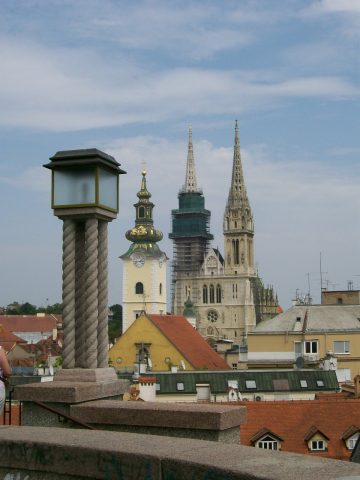
Zagreb Cathedral, with its twin spires piercing the skyline, is the tallest structure in Croatia and the city’s most recognizable landmark. The site has been a place of worship since the 11th century, though the original church was destroyed during the Mongol invasion in 1242. What stands today is a testament to resilience, rebuilt and reshaped over centuries.
The cathedral’s current neo-Gothic appearance took form after the devastating earthquake of 1880, when architect Hermann Bollé redesigned it, adding the iconic spires that now define Zagreb’s silhouette. Those spires, however, have been a fragile part of the structure. In 2020, another earthquake caused the top of the southern tower to collapse, leaving the cathedral shrouded in scaffolding for years as restoration work continues. Access to the interior is often restricted, but when open, it offers a glimpse into layers of history.
Inside, the cathedral blends architectural styles. The soaring Gothic vaults contrast with the ornate Baroque pulpit, while the tomb of Cardinal Alojzije Stepinac, carved by renowned sculptor Ivan Meštrović, adds a touch of modern artistry. The space feels both grand and intimate, with light filtering through stained glass and the scent of incense lingering in the air.
Surrounding the cathedral are the remnants of 16th-century fortifications, built to defend against Ottoman advances. The walls and towers, though weathered, still stand as silent witnesses to a turbulent past. Just beyond them, the square comes alive with the sound of water from the fountain featuring the golden statue of the Virgin Mary, flanked by four angels. It’s a quiet spot where locals and visitors pause, especially in the early morning or late afternoon when the light softens the stone.
Steps away, Dolac Market buzzes with energy. The city’s main market has been operating for generations, its red umbrellas shading stalls piled high with fresh produce, cheese, and flowers. The upper level is a riot of color from fruits and vegetables, while the lower level offers meat, fish, and local delicacies. It’s a place where Zagreb’s daily rhythm unfolds, from the early morning rush of vendors setting up to the late afternoon lull as the crowds thin.
From the cathedral, the path leads upward into the historic Upper Town. A short ride on the funicular or a steep walk brings you to Lotrščak Tower, where the city’s medieval past feels closer. The route is lined with cafés and small shops, making it easy to linger. Below, the Lower Town spreads out, its grid of streets leading to Ban Jelačić Square, just a five-minute walk from the cathedral. The square is the heart of Zagreb, a place where trams rattle past and people gather at outdoor tables, sipping coffee or watching the world go by.
The cathedral remains an active place of worship, with daily services that draw both the faithful and the curious. The schedule is posted near the entrance, and while entry is free, modest dress is expected, as in any working church. Even when the interior is closed, the exterior is worth seeing, especially at night when the spires are illuminated, casting a warm glow over the city.
Zagreb Cathedral is more than just a building; it’s a thread woven into the fabric of the city. Whether you come for the history, the architecture, or simply to stand in the shadow of its towers, it offers a quiet moment in a place that has seen centuries of change. The restoration may take years, but the cathedral endures, as it always has.