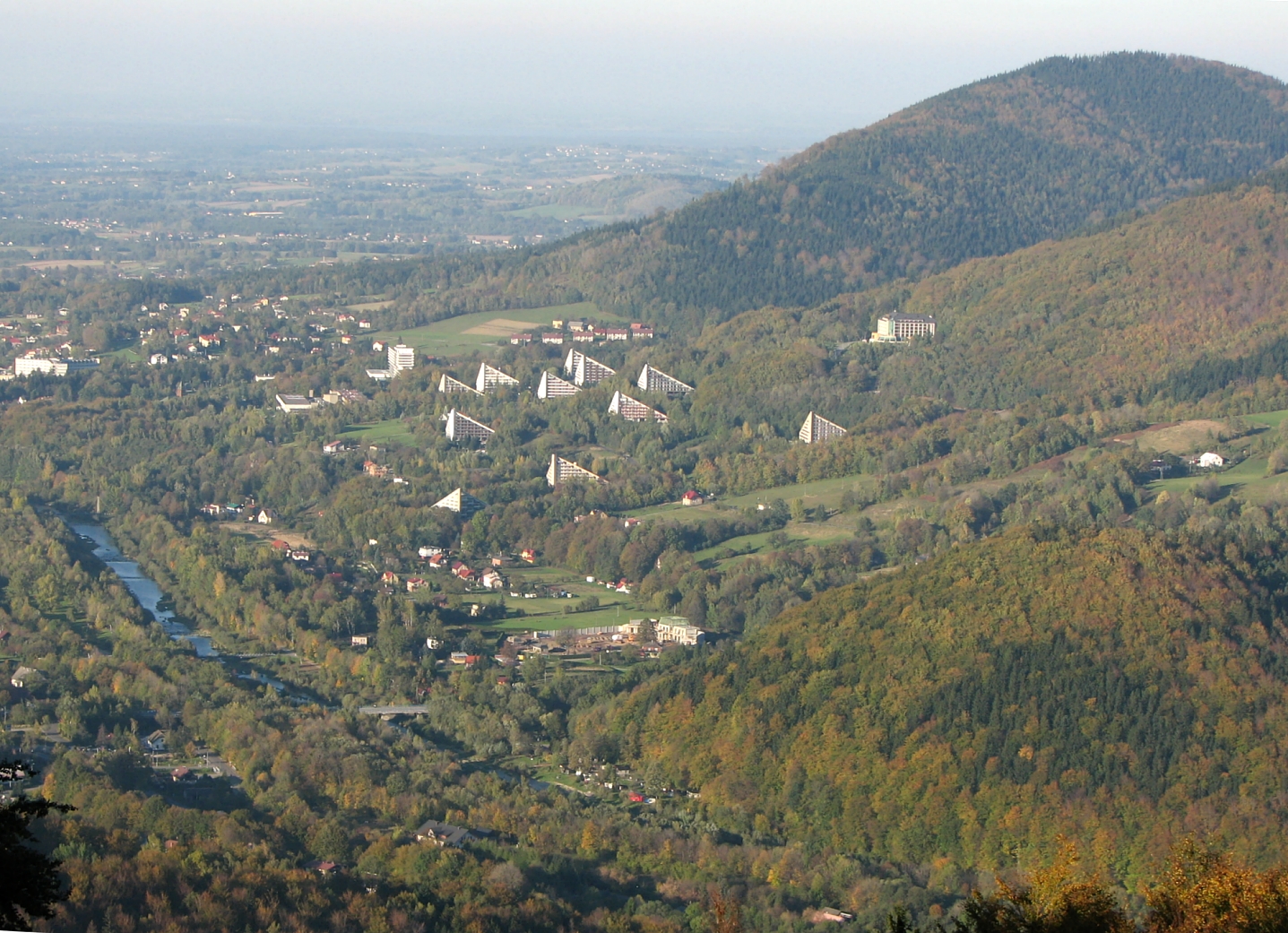
Ustroń sits quietly in the southern reaches of Poland, cradled in a valley where the Vistula River winds through the foothills of the Silesian Beskids. There’s no rush here, no grand spectacle to draw crowds—just the steady rhythm of a place where mountain air mingles with the quiet of provincial life. The town unfolds slowly, like a well-worn book whose pages you don’t want to turn too quickly. It doesn’t demand attention; it simply offers itself, unhurried and unassuming, to those who take the time to notice.
For over two centuries, Ustroń has been known as a retreat, a place where people come to rest and heal. In the 19th century, its mineral springs and gentle climate drew visitors from across Europe, who built grand villas and sanatoriums in the hope of rejuvenation. The town grew around these places of rest, yet it never lost its understated charm. Even now, walking through its streets, you’ll pass buildings from that era—ornate facades in Art Nouveau or Neo-Gothic styles, their details softened by time. They stand as quiet reminders of a past when Ustroń was a destination for those seeking solace rather than adventure.
One of the town’s most enduring symbols is the cable car to Czantoria Mountain, a modest but beloved fixture since the mid-20th century. It’s not a high-speed lift or a flashy attraction, just a simple, creaking ride that carries passengers upward in small wooden cabins. The journey itself feels like a step back in time, a reminder of an era when technology still had a human scale. At the top, the view stretches across the Vistula Valley and the surrounding hills, a panorama that makes the climb worthwhile. In summer, the mountain is a starting point for gentle hikes; in winter, skiers glide down its slopes, though the season here is shorter and quieter than in Poland’s more famous resorts.
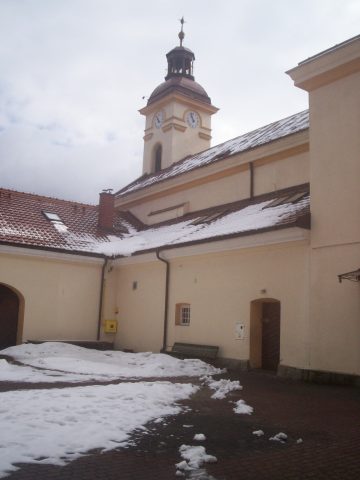
Ustroń’s architecture doesn’t shout for attention, but it has a quiet harmony of its own. Many of the older buildings are made of wood, their warm tones blending into the landscape rather than dominating it. Even newer structures seem to respect the natural surroundings, as if the town itself has decided to keep things simple. In the center, the Neo-Gothic Church of St. Clement stands as a focal point, its pointed arches and stained glass offering a sense of calm. Nearby, small cafés and shops sell local goods—smoked meats, cheeses, honey—not as tourist trinkets, but as everyday staples of life here. There’s no pretense, just the straightforward rhythm of a town that doesn’t need to impress.
The real draw of Ustroń, though, is the landscape that surrounds it. The Silesian Beskids aren’t towering peaks, but their gentle slopes and dense forests make them perfect for walking, cycling, or simply wandering without a fixed plan. The trails here aren’t as challenging as those in the Tatras, but they’re no less rewarding. You might hike to Żermanice Lake, where the water reflects the sky, or follow the Vistulka River through quiet valleys where the only sounds are the rustle of leaves and the murmur of the current. In autumn, the forests blaze with color; in winter, they’re blanketed in snow, turning the hills into something out of a fairy tale. The locals don’t come for speed or spectacle—they come to breathe, to listen, to be still.
Ustroń is also a place where the traditions of the Gorals, the highland people of the Beskids, are still alive. Their culture—music, crafts, folklore—isn’t just preserved for tourists; it’s part of the town’s fabric. You might meet a woodcarver shaping a traditional figurine, or hear the strains of a folk instrument drifting from a local gathering. In summer, festivals celebrate this heritage with music, dance, and food, inviting visitors to join in rather than just observe. It’s not a performance; it’s a way of life, one that has endured for generations.
Despite its reputation as a resort, Ustroń hasn’t become a place solely for visitors. It’s still a town where people live, work, and go about their daily routines. There are no crowds, no long lines, no pressure to keep up with a tourist’s schedule. Instead, there’s the quiet hum of a community that moves at its own pace. In the evenings, the streets are peaceful, lit by the warm glow of windows. You might stop at a small café where the coffee is strong and the pastries are homemade, or browse a shop selling handmade woolens. The locals are friendly but unobtrusive, creating an atmosphere that feels welcoming without being overbearing.
This is a place for those who want to step away from the noise, to slow down and listen—not just to the world around them, but to themselves. There’s no need to fill the days with activities or check off a list of sights. You can walk through the woods, sit by the river, or watch the sunset from a hillside without feeling like you’re missing something. Ustroń doesn’t offer grand experiences; it offers space. Space to think, to rest, to simply be. That’s why it appeals to those who are tired of rushing, who want to remember what it’s like to move at the speed of the Vistula’s current.
Time here doesn’t hurry. It lingers, shaped by the weather—soft sunlight one moment, mist curling over the hills the next. In summer, the river is cool and inviting; in winter, the town becomes a cozy refuge, where the scent of woodsmoke and the sight of falling snow make everything feel a little slower, a little softer. There are no sharp contrasts, no dramatic shifts—just the steady, unhurried flow of seasons, each one blending into the next.
Ustroń won’t claim to be Poland’s most famous or most beautiful town. It doesn’t need to. It exists quietly, comfortably, as a place that doesn’t ask for much but gives plenty in return. You don’t come here to be dazzled; you come to be still. And in that stillness, you might find something far more lasting than a fleeting impression. The town doesn’t demand your attention, but it doesn’t let you forget it either. It’s simply there, like an old friend who’s always happy to see you but never insists on staying in the spotlight.