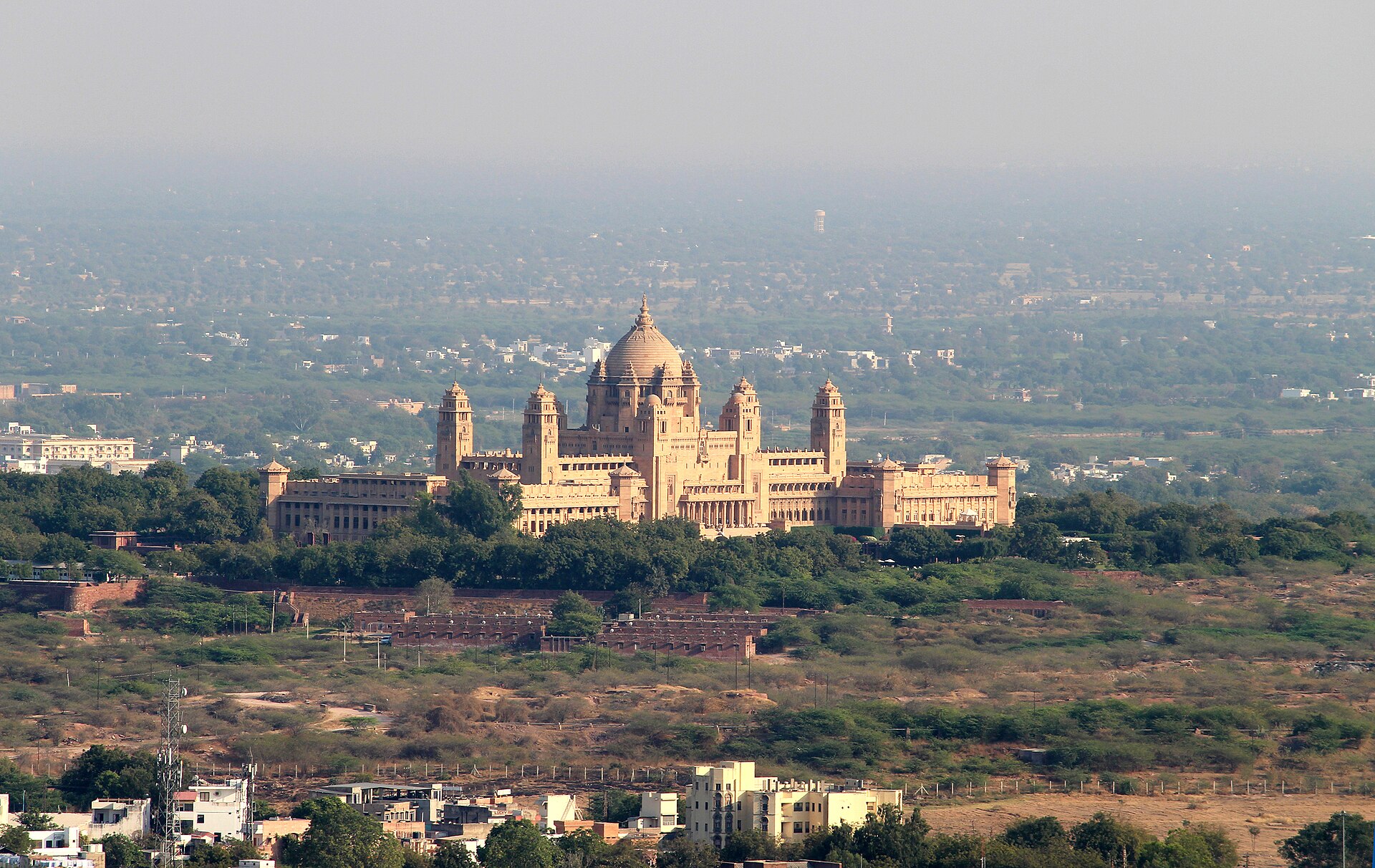
Perched on Chittar Hill, Umaid Bhawan Palace isn’t just a building—it’s one of the last grand statements of India’s princely era, a monument built when tradition was already giving way to the modern world. Construction began in 1929 under Maharaja Umaid Singh II, not as an indulgence in luxury, but as a lifeline for a region crippled by famine. For years, thousands of laborers—stonemasons, carvers, and craftsmen—worked on the palace, earning wages that kept their families fed. The project stretched into the 1940s, its completion overshadowed by the larger upheavals of Indian independence, yet its walls still hold the stories of those who built it and the ruler who saw it as his duty to provide for his people.
The palace’s architecture reflects the crossroads of its time. Designed by British architect Henry Vaughan Lanchester, it blends Rajput grandeur with Art Deco influences, a style that mirrored the shifting tastes of the colonial era. The golden-yellow sandstone, quarried nearby, glows warmly in the sunlight, especially at dusk when the fading light deepens its hues. Intricate carvings adorn the balconies and domes, while inside, the opulence of marble floors, painted ceilings, and antique furnishings transports visitors to an age of royal excess. Yet there’s a restraint to the design, a nod to the practicality of its origins—this was never just a vanity project.
Today, the palace is divided between three roles: a private residence for the royal family, a museum, and a luxury hotel. The museum offers a glimpse into the lives of Jodhpur’s rulers, with displays of vintage cars, royal portraits, and personal artifacts like the illuminated *Umaid Singh Hours*, a manuscript commissioned for the maharaja. One section is dedicated to the palace’s construction, featuring tools and photographs of the workers who built it—a rare acknowledgment of the labor behind such grandeur. For many, this is the most compelling part of the visit, a reminder that history is shaped as much by ordinary hands as by those who sit on thrones.
The hotel portion of Umaid Bhawan feels like stepping into a living archive. The grand halls, with their sweeping staircases and chandeliers, have hosted generations of guests, from dignitaries to film stars. The rooms, furnished with antiques, retain the air of a private residence, while the gardens—once the maharaja’s retreat—offer quiet corners where time seems to slow. The restaurant serves Rajasthani dishes, though the real draw is the atmosphere: dining under portraits of long-dead rulers, surrounded by the same walls that once echoed with their conversations. It’s an experience that blurs the line between guest and witness to history.
Beyond the palace walls, the sprawling gardens provide a respite from the city’s heat. Planted during Umaid Singh’s reign, they were designed for leisure, with shaded walkways, flowering shrubs, and a small pond where swans once glided. Locals come here in the evenings, when the air cools and the palace lights up against the darkening sky. For visitors, the gardens offer a moment of stillness, a chance to reflect on the layers of history embedded in the place. The contrast between the meticulously maintained grounds and the dusty streets of Jodhpur outside is striking—here, the past is preserved, while just beyond the gates, life moves forward.
Umaid Bhawan’s significance goes beyond its architecture. It stands as a symbol of the transitions that defined 20th-century India: the decline of princely states, the struggle for independence, and the country’s uneasy embrace of modernity. The palace was completed in 1943, just four years before India gained freedom, and its dual role as a royal home and a public space mirrors the broader shifts of the era. For tourists, it’s often the highlight of a visit to Jodhpur, a place where the stories of rulers and laborers, of tradition and change, coexist in the same walls.
Jodhpur is known as the Blue City for the indigo-tinted houses of its old quarter, but Umaid Bhawan’s golden sandstone stands apart, a reminder of the city’s layered identity. From almost anywhere in Jodhpur, the palace’s silhouette is visible, a constant presence on the skyline. For locals, it’s a point of pride, a relic of a time when their city was a princely capital. For outsiders, it’s a window into a world that feels both distant and strangely familiar—a place where the past isn’t just remembered, but still lived.
What makes Umaid Bhawan unique is its refusal to be frozen in time. Part of it remains a private home, occasionally hosting events for the royal family. The museum rotates exhibits, ensuring that each visit offers something new. The hotel continues to welcome guests, its staff maintaining the delicate balance between preservation and hospitality. It’s this adaptability that keeps the palace relevant, a place where history isn’t just observed but actively engaged with. To walk through its halls is to understand that some legacies aren’t meant to be static—they’re meant to endure, even as the world around them changes.